Department of Molecular and Cell Biology, Centro Nacional de Biotecnología (CNB-CSIC), Campus Universidad Autónoma de Madrid, Madrid, Spain.
PLoS Pathog. 2011 Oct;7(10):e1002315. doi: 10.1371/journal.ppat.1002315. Epub 2011 Oct 20.
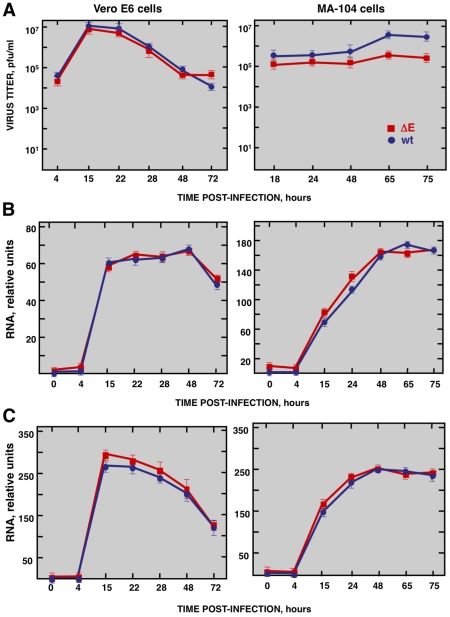
Severe acute respiratory syndrome virus (SARS-CoV) that lacks the envelope (E) gene (rSARS-CoV-ΔE) is attenuated in vivo. To identify factors that contribute to rSARS-CoV-ΔE attenuation, gene expression in cells infected by SARS-CoV with or without E gene was compared. Twenty-five stress response genes were preferentially upregulated during infection in the absence of the E gene. In addition, genes involved in signal transduction, transcription, cell metabolism, immunoregulation, inflammation, apoptosis and cell cycle and differentiation were differentially regulated in cells infected with rSARS-CoV with or without the E gene. Administration of E protein in trans reduced the stress response in cells infected with rSARS-CoV-ΔE or with respiratory syncytial virus, or treated with drugs, such as tunicamycin and thapsigargin that elicit cell stress by different mechanisms. In addition, SARS-CoV E protein down-regulated the signaling pathway inositol-requiring enzyme 1 (IRE-1) of the unfolded protein response, but not the PKR-like ER kinase (PERK) or activating transcription factor 6 (ATF-6) pathways, and reduced cell apoptosis. Overall, the activation of the IRE-1 pathway was not able to restore cell homeostasis, and apoptosis was induced probably as a measure to protect the host by limiting virus production and dissemination. The expression of proinflammatory cytokines was reduced in rSARS-CoV-ΔE-infected cells compared to rSARS-CoV-infected cells, suggesting that the increase in stress responses and the reduction of inflammation in the absence of the E gene contributed to the attenuation of rSARS-CoV-ΔE.
严重急性呼吸综合征冠状病毒(SARS-CoV)缺失包膜(E)基因(rSARS-CoV-ΔE)在体内减毒。为了鉴定导致 rSARS-CoV-ΔE 衰减的因素,比较了感染 SARS-CoV 时有无 E 基因的细胞中的基因表达。在没有 E 基因的情况下,有 25 个应激反应基因在感染过程中被优先上调。此外,在感染 rSARS-CoV 或缺失 E 基因的细胞中,信号转导、转录、细胞代谢、免疫调节、炎症、细胞凋亡和细胞周期及分化相关的基因也被差异调控。转染 E 蛋白可降低 rSARS-CoV-ΔE 感染或呼吸道合胞病毒感染细胞的应激反应,或降低衣霉素和他普西醇等药物处理细胞的应激反应,这些药物通过不同的机制引发细胞应激。此外,SARS-CoV E 蛋白下调未折叠蛋白反应中肌醇需求酶 1(IRE-1)的信号通路,但不影响 PKR 样内质网激酶(PERK)或激活转录因子 6(ATF-6)通路,且降低细胞凋亡。总的来说,IRE-1 通路的激活不能恢复细胞的内稳态,细胞凋亡可能是作为一种限制病毒产生和传播以保护宿主的措施而被诱导。与 rSARS-CoV 感染细胞相比,rSARS-CoV-ΔE 感染细胞中的促炎细胞因子表达减少,这表明在没有 E 基因的情况下,应激反应的增加和炎症的减少有助于 rSARS-CoV-ΔE 的衰减。