Li Aihui, Lao Lixing, Wang Yi, Xin Jiajia, Ren Ke, Berman Brian M, Tan Ming, Zhang Ruixin
Center for Integrative Medicine, School of Medicine, University of Maryland, Baltimore, MD 21201, USA.
BMC Complement Altern Med. 2008 May 12;8:20. doi: 10.1186/1472-6882-8-20.
Studies show that electroacupuncture (EA) has beneficial effects in patients with inflammatory diseases. This study investigated the mechanisms of EA anti-inflammation, using a rat model of complete Freund's adjuvant (CFA)-induced hind paw inflammation and hyperalgesia.
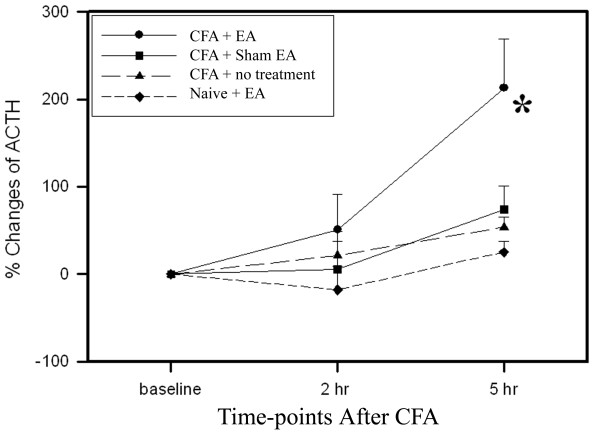
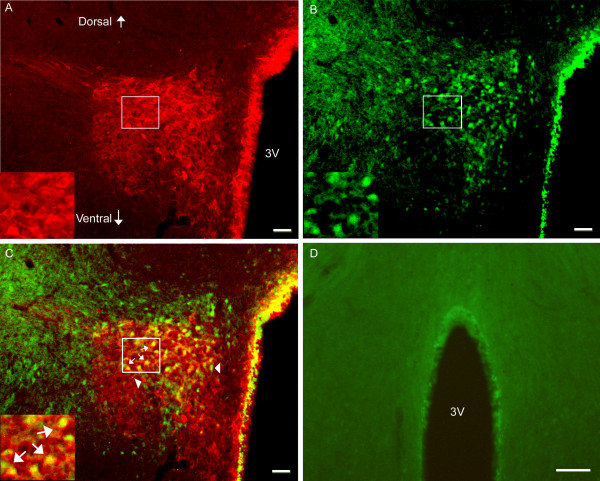
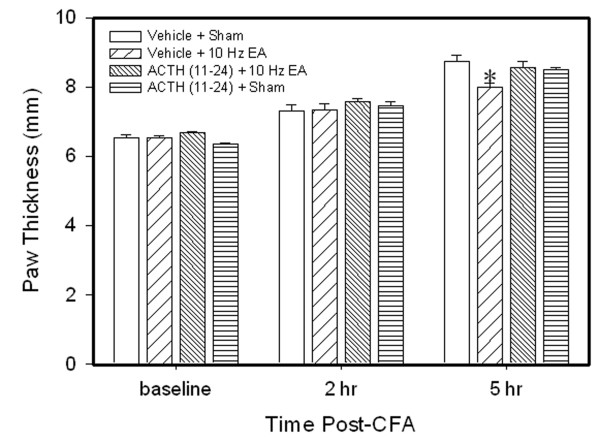
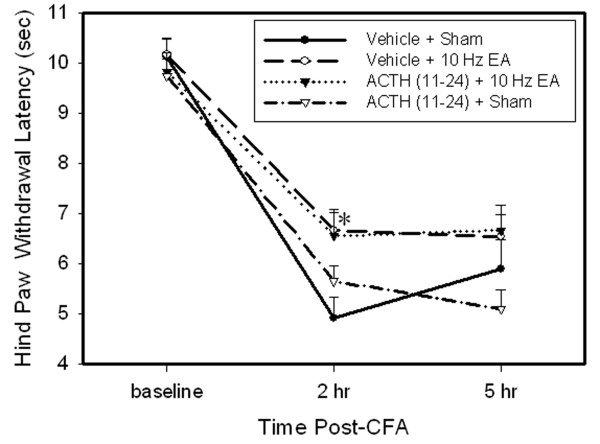
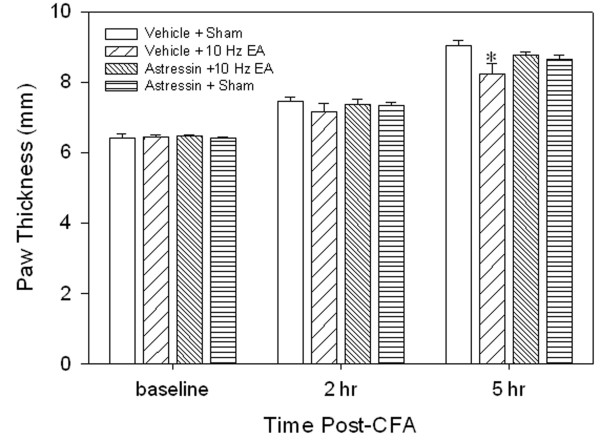
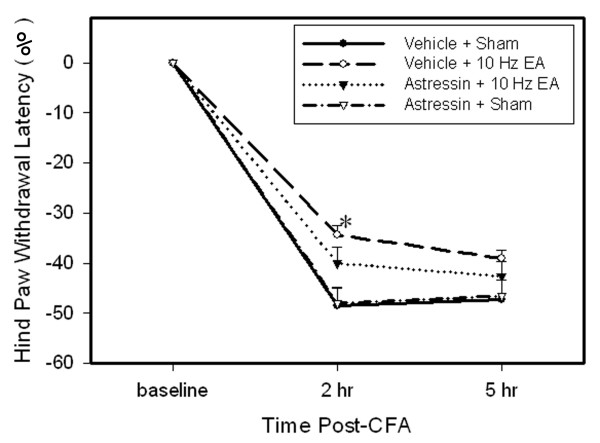
Four experiments were conducted on male Sprague-Dawley rats (n = 6-7/per group). Inflammation was induced by injecting CFA into the plantar surface of one hind paw. Experiment 1 examined whether EA increases plasma adrenocorticotropic hormone (ACTH) levels. Experiments 2 and 3 studied the effects of the ACTH and corticotropin-releasing hormone (CRH) receptor antagonists, ACTH(11-24) and astressin, on the EA anti-edema. Experiment 4 determined whether EA activates CRH neurons in the paraventricular nucleus of the hypothalammus. EA treatment, 10 Hz at 3 mA and 0.1 ms pulse width, was given twice for 20 min each, once immediately post and again 2 hr post-CFA. Plasma ACTH levels, paw thickness, and paw withdrawal latency to a noxious thermal stimulus were measured 2 h and 5 h after the CFA.
EA significantly increased ACTH levels 5 h (2 folds) after CFA compared to sham EA control, but EA alone in naive rats and CFA alone did not induce significant increases in ACTH. ACTH(11-24) and astressin blocked EA anti-edema but not EA anti-hyperalgesia. EA induced phosphorylation of NR1, an essential subunit of the N-methyl-D-aspartic acid (NMDA) receptor, in CRH-containing neurons of the paraventricular nucleus.
The data demonstrate that EA activates CRH neurons to significantly increase plasma ACTH levels and suppress edema through CRH and ACTH receptors in a rat model of inflammation.
研究表明,电针(EA)对炎症性疾病患者具有有益作用。本研究使用完全弗氏佐剂(CFA)诱导的大鼠后爪炎症和痛觉过敏模型,探讨了电针抗炎的机制。
对雄性Sprague-Dawley大鼠(每组n = 6 - 7只)进行了四项实验。通过将CFA注射到一只后爪的足底表面诱导炎症。实验1检测电针是否会增加血浆促肾上腺皮质激素(ACTH)水平。实验2和3研究了ACTH和促肾上腺皮质激素释放激素(CRH)受体拮抗剂ACTH(11 - 24)和阿斯特辛对电针抗水肿的影响。实验4确定电针是否激活下丘脑室旁核中的CRH神经元。电针治疗采用3 mA、10 Hz、0.1 ms脉冲宽度,每次20分钟,共两次,分别在CFA注射后立即和2小时后进行。在CFA注射后2小时和5小时测量血浆ACTH水平、爪厚度以及对有害热刺激的爪退缩潜伏期。
与假电针对照组相比,电针在CFA注射后5小时显著提高了ACTH水平(2倍),但单纯电针处理的未致敏大鼠和单纯CFA处理均未导致ACTH显著升高。ACTH(11 - 24)和阿斯特辛阻断了电针的抗水肿作用,但未阻断电针的抗痛觉过敏作用。电针诱导室旁核中含CRH神经元的N - 甲基 - D - 天冬氨酸(NMDA)受体的必需亚基NR1发生磷酸化。
数据表明,在大鼠炎症模型中,电针通过激活CRH神经元,经CRH和ACTH受体显著提高血浆ACTH水平并抑制水肿。