Kay D G, Gravel C, Robitaille Y, Jolicoeur P
Laboratory of Molecular Biology, Clinical Research Institute of Montreal, Canada.
Proc Natl Acad Sci U S A. 1991 Feb 15;88(4):1281-5. doi: 10.1073/pnas.88.4.1281.
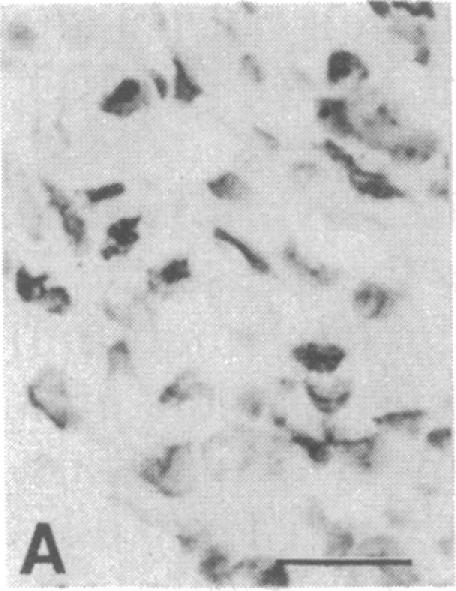
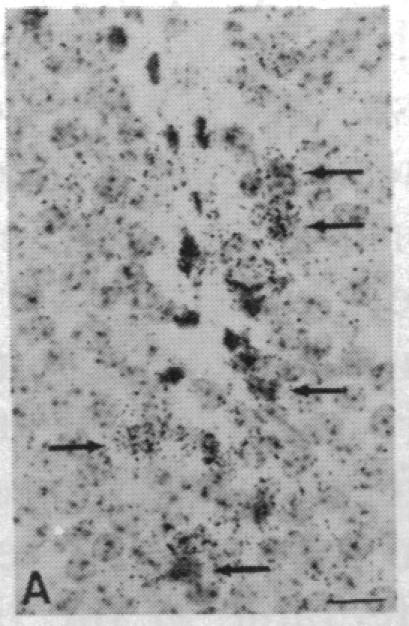
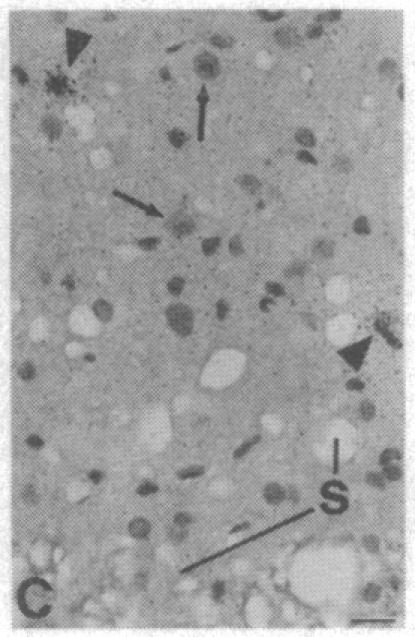
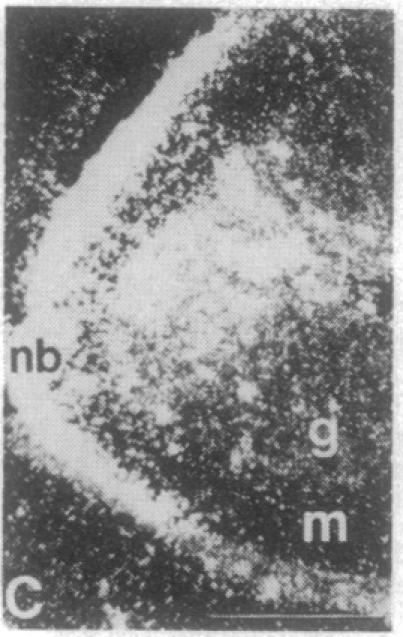
The Cas-Br-E murine leukemia virus (MuLV) induces a spongiform myeloencephalopathy resulting in a progressive hindlimb paralysis. We have used in situ hybridization with a Cas-Br-E MuLV-specific probe to study viral expression in the central nervous system. Infected cells were concentrated in regions where spongiform lesions and gliosis are detected (lumbosacral spinal cord, brainstem, deep cerebellar regions), suggesting a causative link between the level of virus expression and the degree of pathological changes in this disease. However, viral expression was not in itself sufficient to cause disease, since significant viral expression was observed in regions that did not exhibit pathological changes (cerebellar cortex, hippocampus, corpus callosum, peripheral nervous system). In both diseased and nondiseased regions, endothelial and glial cells were identified as the main target cells. Neurons in diseased regions did not show viral expression. The regional distribution of the spongiform changes appears to be laid down very early following infection, since expression could be detected at 10 days postinfection in regions that become diseased. These results indicate that nonneuronal cells have distinct properties in various regions of the central nervous system and suggest an indirect mechanism of neuronal loss consequent to viral expression in nonneuronal cells.
卡斯 - 布 - 埃氏鼠白血病病毒(MuLV)可引发一种海绵状脊髓脑病,导致后肢进行性麻痹。我们使用了与卡斯 - 布 - 埃氏MuLV特异性探针进行原位杂交,以研究病毒在中枢神经系统中的表达。受感染细胞集中在检测到海绵状病变和胶质增生的区域(腰骶脊髓、脑干、小脑深部区域),这表明病毒表达水平与该疾病的病理变化程度之间存在因果关系。然而,病毒表达本身并不足以引发疾病,因为在未出现病理变化的区域(小脑皮质、海马体、胼胝体、外周神经系统)也观察到了显著的病毒表达。在患病和未患病区域,内皮细胞和神经胶质细胞均被确定为主要靶细胞。患病区域的神经元未显示病毒表达。海绵状变化的区域分布似乎在感染后很早就已确定,因为在感染后10天就可以在患病区域检测到表达。这些结果表明,非神经元细胞在中枢神经系统的各个区域具有不同特性,并提示非神经元细胞中病毒表达导致神经元丢失的间接机制。