Schikora Adam, Carreri Alessandro, Charpentier Emmanuelle, Hirt Heribert
Unité de Recherche en Génomique Végétale, Institut National de la Recherche Agronomique/Centre National de la Recherche Scientifique/University of Evry Val d'Essonne, Evry, France.
PLoS One. 2008 May 28;3(5):e2279. doi: 10.1371/journal.pone.0002279.
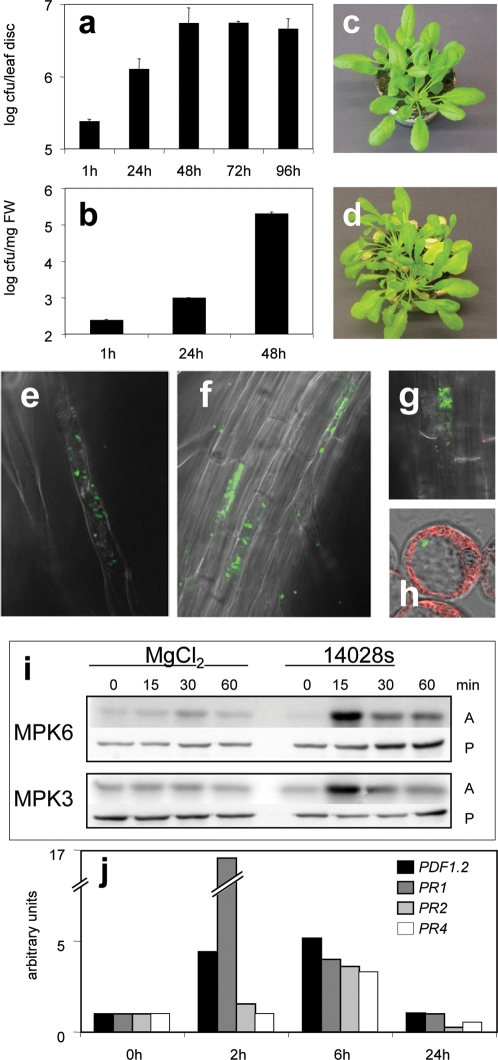
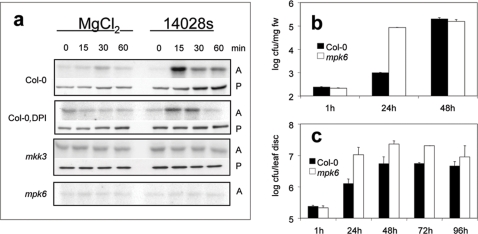
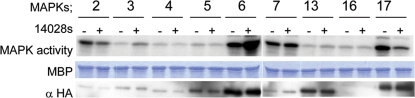
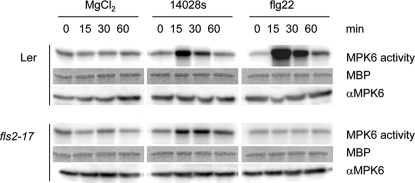
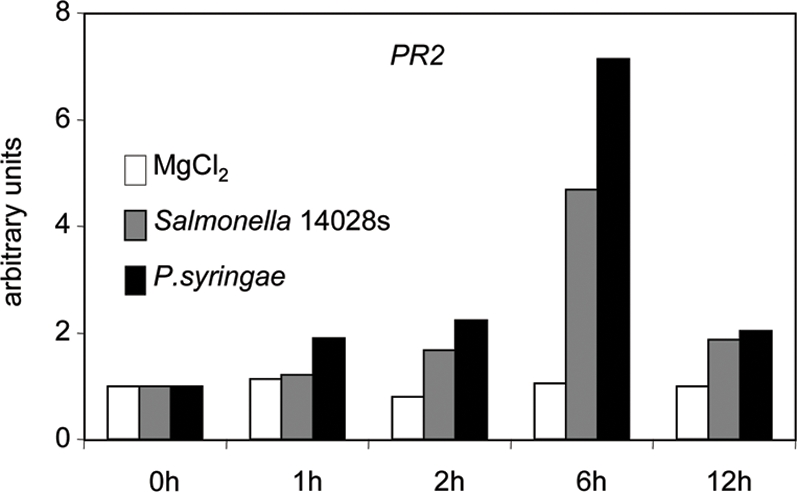
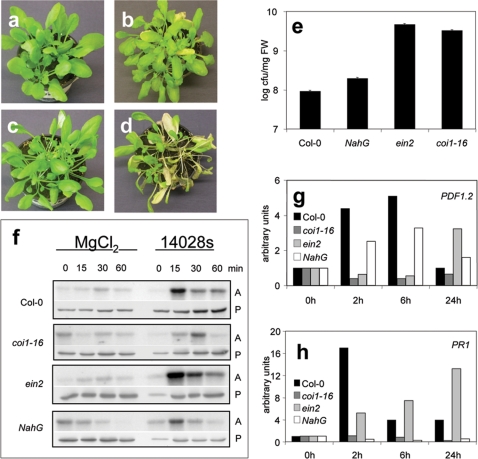
Salmonella enterica serovar typhimurium contaminated vegetables and fruits are considerable sources of human infections. Bacteria present in raw plant-derived nutrients cause salmonellosis, the world wide most spread food poisoning. This facultative endopathogen enters and replicates in host cells and actively suppresses host immune responses. Although Salmonella survives on plants, the underlying bacterial infection mechanisms are only poorly understood. In this report we investigated the possibility to use Arabidopsis thaliana as a genetically tractable host system to study Salmonella-plant interactions. Using green fluorescent protein (GFP) marked bacteria, we show here that Salmonella can infect various Arabidopsis tissues and proliferate in intracellular cellular compartments. Salmonella infection of Arabidopsis cells can occur via intact shoot or root tissues resulting in wilting, chlorosis and eventually death of the infected organs. Arabidopsis reacts to Salmonella by inducing the activation of mitogen-activated protein kinase (MAPK) cascades and enhanced expression of pathogenesis related (PR) genes. The induction of defense responses fails in plants that are compromised in ethylene or jasmonic acid signaling or in the MKK3-MPK6 MAPK pathway. These findings demonstrate that Arabidopsis represents a true host system for Salmonella, offering unique possibilities to study the interaction of this human pathogen with plants at the molecular level for developing novel drug targets and addressing current safety issues in human nutrition.
肠炎沙门氏菌鼠伤寒血清型污染的蔬菜和水果是人类感染的重要来源。存在于未经加工的植物性营养物质中的细菌会导致沙门氏菌病,这是全球传播最广的食物中毒。这种兼性胞内病原体进入宿主细胞并在其中复制,同时积极抑制宿主免疫反应。尽管沙门氏菌能在植物上存活,但对其潜在的细菌感染机制却知之甚少。在本报告中,我们研究了利用拟南芥作为遗传易处理的宿主系统来研究沙门氏菌与植物相互作用的可能性。利用绿色荧光蛋白(GFP)标记的细菌,我们在此表明沙门氏菌可感染拟南芥的各种组织并在细胞内区室中增殖。沙门氏菌对拟南芥细胞的感染可通过完整的地上部或根部组织发生,导致受感染器官萎蔫、黄化并最终死亡。拟南芥通过诱导丝裂原活化蛋白激酶(MAPK)级联反应的激活和病程相关(PR)基因的表达增强来对沙门氏菌作出反应。在乙烯或茉莉酸信号传导或MKK3 - MPK6 MAPK途径受损的植物中,防御反应的诱导失败。这些发现表明拟南芥是沙门氏菌的一个真正宿主系统,为在分子水平上研究这种人类病原体与植物的相互作用提供了独特的可能性,以开发新的药物靶点并解决当前人类营养中的安全问题。