Totsline Noah, Kniel Kalmia E, Bais Harsh P
Department of Plant and Soil Sciences, AP Biopharma, University of Delaware, Newark, DE, USA.
Department of Animal and Food Sciences, University of Delaware, Newark, DE, USA.
NPJ Microgravity. 2023 Sep 7;9(1):71. doi: 10.1038/s41526-023-00323-x.
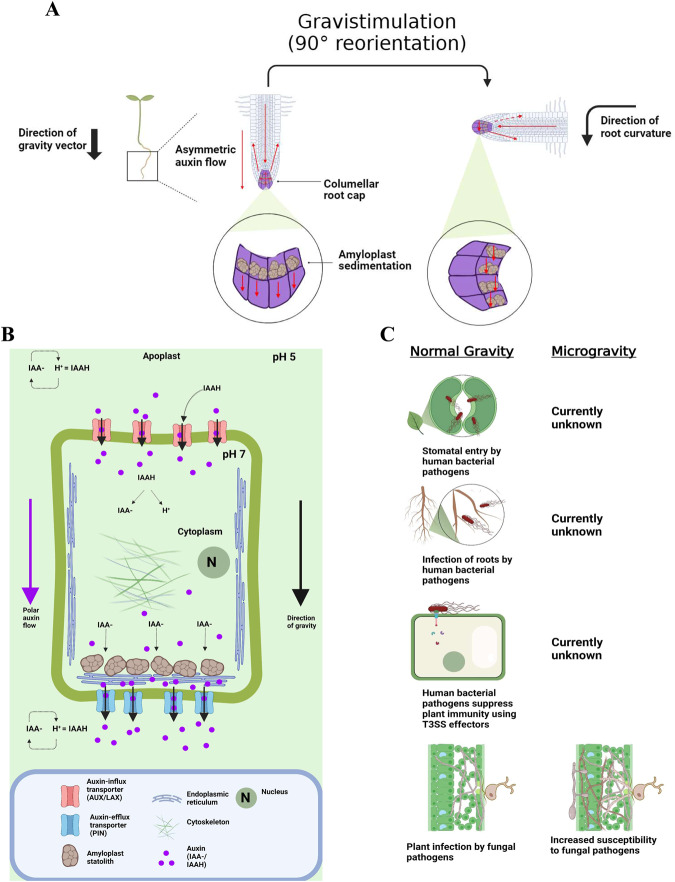
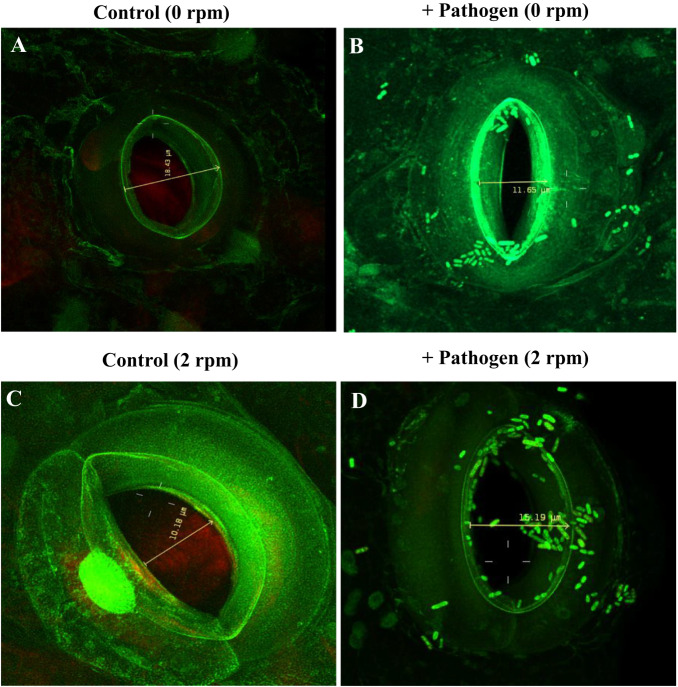
Spaceflight microgravity and modeled-microgravity analogs (MMA) broadly alter gene expression and physiology in both pathogens and plants. Research elucidating plant and bacterial responses to normal gravity or microgravity has shown the involvement of both physiological and molecular mechanisms. Under true and simulated microgravity, plants display differential expression of pathogen-defense genes while human bacterial pathogens exhibit increased virulence, antibiotic resistance, stress tolerance, and reduced LD in animal hosts. Human bacterial pathogens including Salmonella enterica and E. coli act as cross-kingdom foodborne pathogens by evading and suppressing the innate immunity of plants for colonization of intracellular spaces. It is unknown if evasion and colonization of plants by human pathogens occurs under microgravity and if there is increased infection capability as demonstrated using animal hosts. Understanding the relationship between microgravity, plant immunity, and human pathogens could prevent potentially deadly outbreaks of foodborne disease during spaceflight. This review will summarize (1) alterations to the virulency of human pathogens under microgravity and MMA, (2) alterations to plant physiology and gene expression under microgravity and MMA, (3) suppression and evasion of plant immunity by human pathogens under normal gravity, (4) studies of plant-microbe interactions under microgravity and MMA. A conclusion suggests future study of interactions between plants and human pathogens under microgravity is beneficial to human safety, and an investment in humanity's long and short-term space travel goals.
太空飞行微重力和模拟微重力类似物(MMA)广泛改变病原体和植物的基因表达及生理状态。阐明植物和细菌对正常重力或微重力反应的研究表明,生理和分子机制均参与其中。在真实和模拟微重力条件下,植物会表现出病原体防御基因的差异表达,而人类细菌病原体在动物宿主中则表现出毒力增强、抗生素耐药性增加、应激耐受性提高以及半数致死剂量降低。包括肠炎沙门氏菌和大肠杆菌在内的人类细菌病原体,通过逃避和抑制植物的先天免疫以定殖于细胞内空间,从而成为跨界食源性病原体。尚不清楚人类病原体在微重力条件下是否会侵染植物以及是否会像在动物宿主中那样增加感染能力。了解微重力、植物免疫和人类病原体之间的关系,有助于预防太空飞行期间可能致命的食源性疾病爆发。本综述将总结:(1)微重力和MMA条件下人类病原体毒力的变化;(2)微重力和MMA条件下植物生理和基因表达的变化;(3)正常重力条件下人类病原体对植物免疫的抑制和逃避;(4)微重力和MMA条件下植物-微生物相互作用的研究。结论表明,未来对微重力条件下植物与人类病原体相互作用的研究,有利于人类安全,也是对人类长期和短期太空旅行目标的一种投入。