Titz Björn, Rajagopala Seesandra V, Goll Johannes, Häuser Roman, McKevitt Matthew T, Palzkill Timothy, Uetz Peter
Institute of Genetics, Forschungszentrum Karlsruhe, Karlsruhe, Germany.
PLoS One. 2008 May 28;3(5):e2292. doi: 10.1371/journal.pone.0002292.
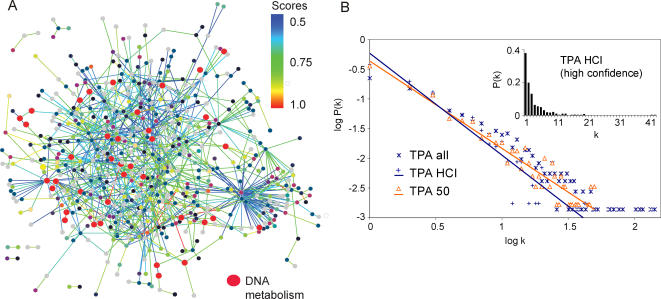
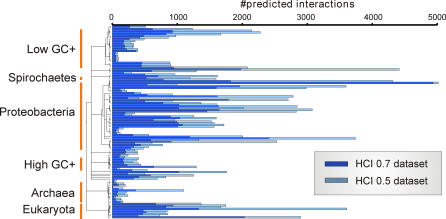
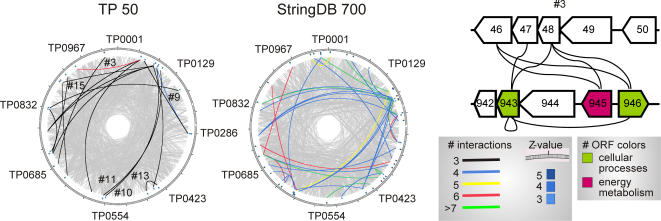
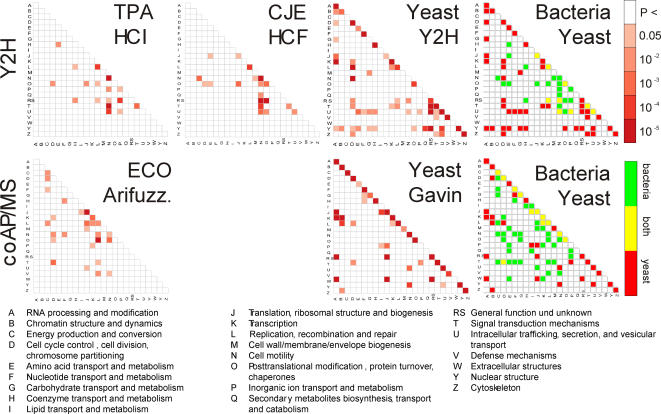
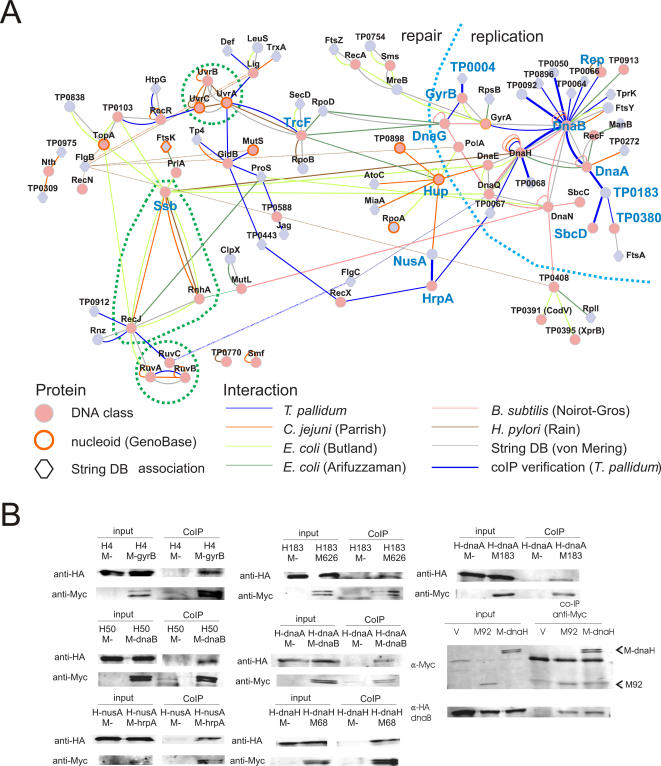
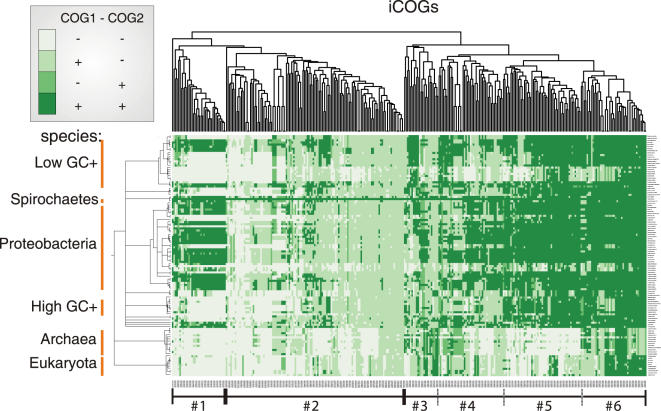
Protein interaction networks shed light on the global organization of proteomes but can also place individual proteins into a functional context. If we know the function of bacterial proteins we will be able to understand how these species have adapted to diverse environments including many extreme habitats. Here we present the protein interaction network for the syphilis spirochete Treponema pallidum which encodes 1,039 proteins, 726 (or 70%) of which interact via 3,649 interactions as revealed by systematic yeast two-hybrid screens. A high-confidence subset of 991 interactions links 576 proteins. To derive further biological insights from our data, we constructed an integrated network of proteins involved in DNA metabolism. Combining our data with additional evidences, we provide improved annotations for at least 18 proteins (including TP0004, TP0050, and TP0183 which are suggested to be involved in DNA metabolism). We estimate that this "minimal" bacterium contains on the order of 3,000 protein interactions. Profiles of functional interconnections indicate that bacterial proteins interact more promiscuously than eukaryotic proteins, reflecting the non-compartmentalized structure of the bacterial cell. Using our high-confidence interactions, we also predict 417,329 homologous interactions ("interologs") for 372 completely sequenced genomes and provide evidence that at least one third of them can be experimentally confirmed.
蛋白质相互作用网络揭示了蛋白质组的全局组织情况,同时也能将单个蛋白质置于功能背景中。如果我们了解细菌蛋白质的功能,就能明白这些物种是如何适应包括许多极端栖息地在内的多样环境的。在此,我们展示了梅毒螺旋体苍白密螺旋体的蛋白质相互作用网络,该螺旋体编码1039种蛋白质,通过系统的酵母双杂交筛选发现其中726种(即70%)通过3649种相互作用彼此关联。991种相互作用的高可信度子集连接了576种蛋白质。为了从我们的数据中获得更多生物学见解,我们构建了一个参与DNA代谢的蛋白质综合网络。将我们的数据与其他证据相结合,我们对至少18种蛋白质(包括被认为参与DNA代谢的TP0004、TP0050和TP0183)进行了改进注释。我们估计这种“最小化”细菌含有约3000种蛋白质相互作用。功能互连图谱表明,细菌蛋白质的相互作用比真核蛋白质更为杂乱,这反映了细菌细胞的非区室化结构。利用我们的高可信度相互作用,我们还为372个完全测序的基因组预测了417329种同源相互作用(“互作同源物”),并提供证据表明其中至少三分之一能够通过实验得到证实。