Norris S J
Department of Pathology, University of Texas Medical School at Houston 77225.
Microbiol Rev. 1993 Sep;57(3):750-79. doi: 10.1128/mr.57.3.750-779.1993.
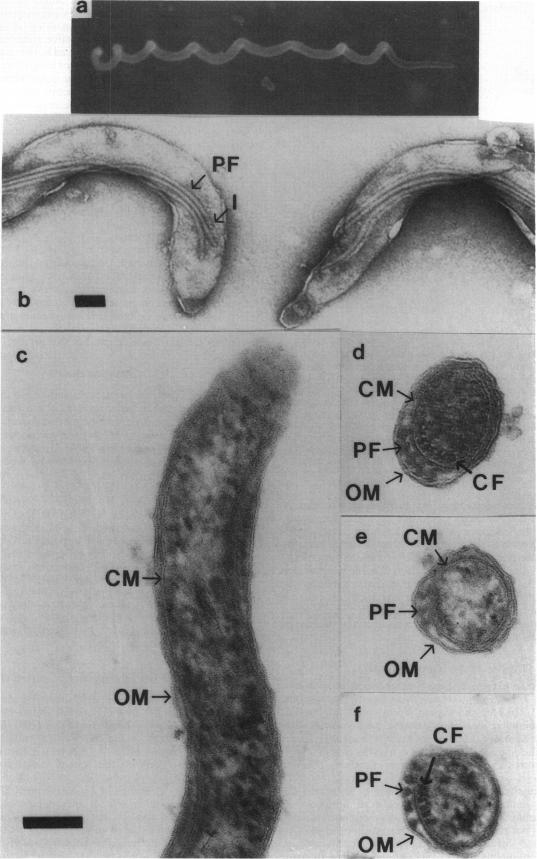
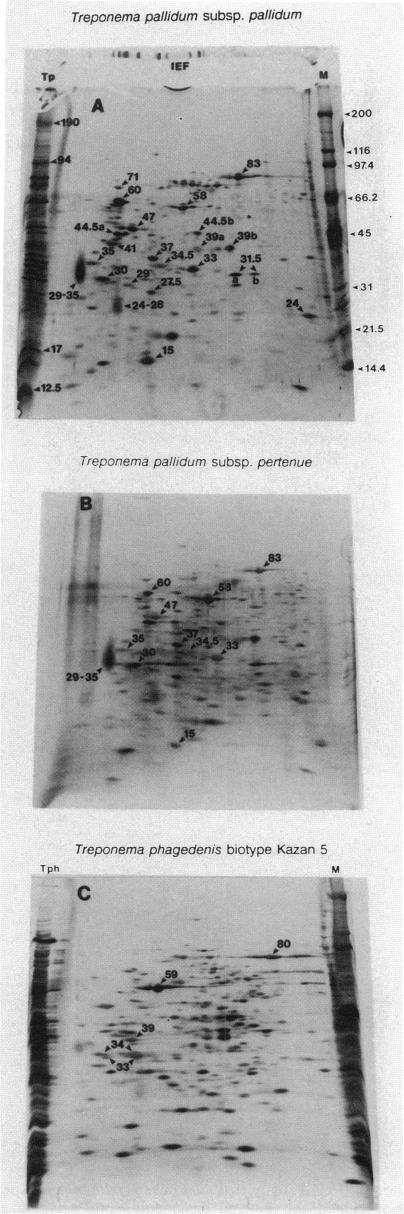
Treponema pallidum subsp. pallidum, the spirochete that causes syphilis, is unusual in a number of respects, including its small genome size, inability to grow under standard in vitro culture conditions, microaerophilism, apparent paucity of outer membrane proteins, structurally complex periplasmic flagella, and ability to evade the host immune responses and cause disease over a period of years to decades. Many of these attributes are related ultimately to its protein content. Our knowledge of the activities, structure, and immunogenicity of its proteins has been expanded by the application of recombinant DNA, hybridoma, and structural fractionation techniques. The purpose of this monograph is to summarize and correlate this new information by using two-dimensional gel electrophoresis, monoclonal antibody reactivity, sequence data, and other properties as the bases of polypeptide identification. The protein profiles of the T. pallidum subspecies causing syphilis, yaws, and endemic syphilis are virtually indistinguishable but differ considerably from those of other treponemal species. Among the most abundant polypeptides are a group of lipoproteins of unknown function that appear to be important in the immune response during syphilitic infection. The periplasmic flagella of T. pallidum and other spirochetes are unique with regard to their protein content and ultrastructure, as well as their periplasmic location. They are composed of three core proteins (homologous to the other members of the eubacterial flagellin family) and a single, unrelated sheath protein; the functional significance of this arrangement is not understood at present. Although the bacterium contains the chaperonins GroEL and DnaK, these proteins are not under the control of the heat shock regulon as they are in most organisms. Studies of the immunogenicity of T. pallidum proteins indicate that many may be useful for immunodiagnosis and immunoprotection. Future goals in T. pallidum polypeptide research include continued elucidation of their structural locations and functional activities, identification and characterization of the low-abundance outer membrane proteins, further study of the immunoprotective and immunodiagnostic potential of T. pallidum proteins, and clarification of the roles of treponemal proteins in pathogenesis.
梅毒螺旋体亚种苍白亚种是引起梅毒的螺旋体,在许多方面都很不寻常,包括其基因组规模小、无法在标准体外培养条件下生长、微需氧、外膜蛋白明显稀少、周质鞭毛结构复杂,以及能够逃避宿主免疫反应并在数年至数十年内引发疾病。这些特性中的许多最终都与其蛋白质含量有关。通过应用重组DNA、杂交瘤和结构分级技术,我们对其蛋白质的活性、结构和免疫原性的了解得到了扩展。本专著的目的是通过使用二维凝胶电泳、单克隆抗体反应性、序列数据和其他特性作为多肽鉴定的基础,来总结并关联这些新信息。引起梅毒、雅司病和地方性梅毒的梅毒螺旋体亚种的蛋白质谱实际上难以区分,但与其他密螺旋体物种的蛋白质谱有很大差异。最丰富的多肽中有一组功能未知的脂蛋白,它们似乎在梅毒感染期间的免疫反应中很重要。梅毒螺旋体和其他螺旋体的周质鞭毛在蛋白质含量、超微结构以及周质位置方面都很独特。它们由三种核心蛋白(与真细菌鞭毛蛋白家族的其他成员同源)和一种单一的、不相关的鞘蛋白组成;目前尚不清楚这种排列的功能意义。尽管该细菌含有伴侣蛋白GroEL和DnaK,但这些蛋白质并不像大多数生物体那样受热休克调节子的控制。对梅毒螺旋体蛋白质免疫原性的研究表明,许多蛋白质可能对免疫诊断和免疫保护有用。梅毒螺旋体多肽研究的未来目标包括继续阐明它们的结构位置和功能活性、鉴定和表征低丰度外膜蛋白、进一步研究梅毒螺旋体蛋白质的免疫保护和免疫诊断潜力,以及阐明密螺旋体蛋白质在发病机制中的作用。