Park Catherine C, Zhang Hui J, Yao Evelyn S, Park Chong J, Bissell Mina J
Department of Radiation Oncology, University of California Comprehensive Cancer Center, San Francisco, CA 94143-1708, USA.
Cancer Res. 2008 Jun 1;68(11):4398-405. doi: 10.1158/0008-5472.CAN-07-6390.
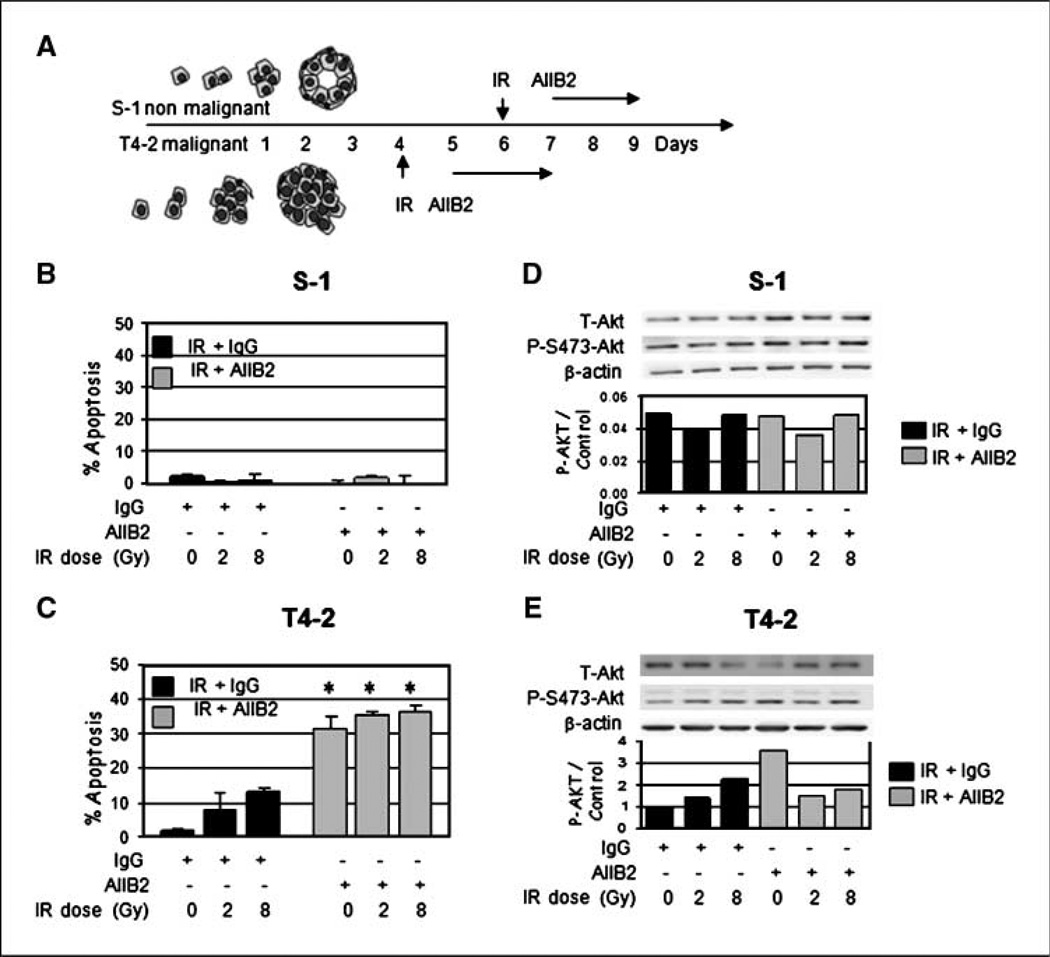
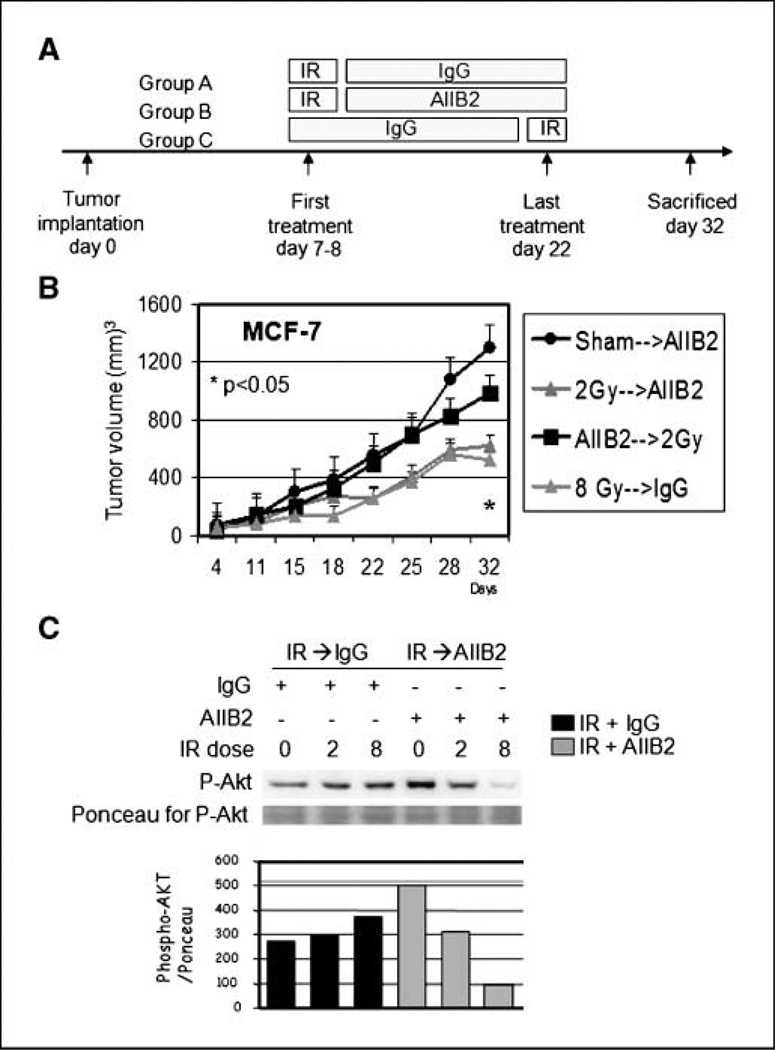
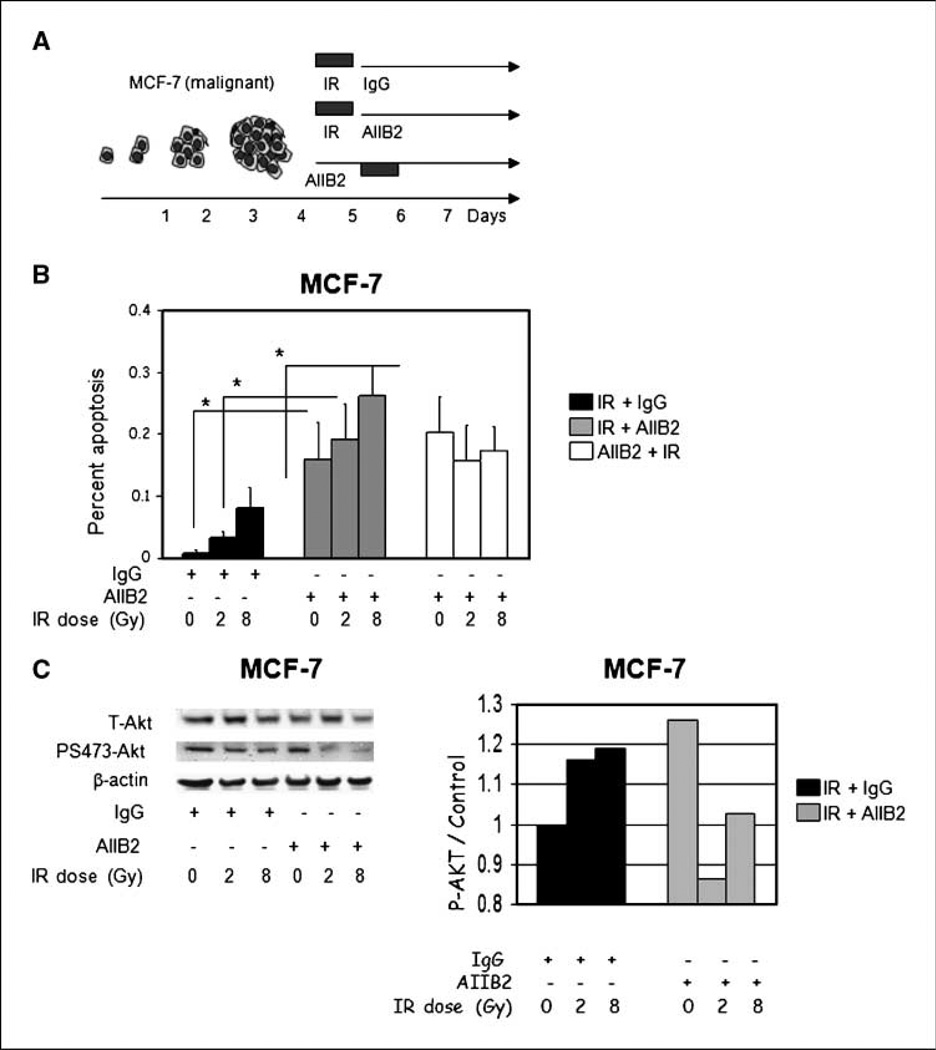
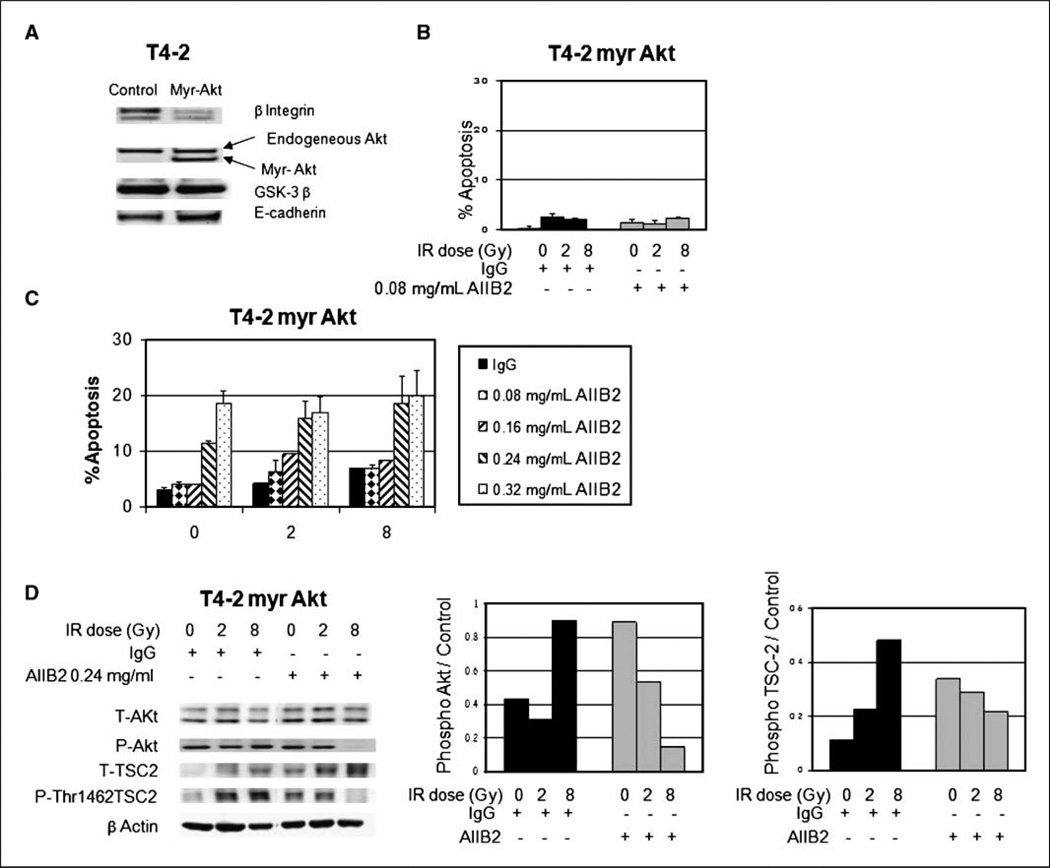
Beta(1) integrin signaling has been shown to mediate cellular resistance to apoptosis after exposure to ionizing radiation (IR). Other signaling molecules that increase resistance include Akt, which promotes cell survival downstream of beta(1) integrin signaling. We previously showed that beta(1) integrin inhibitory antibodies (e.g., AIIB2) enhance apoptosis and decrease growth in human breast cancer cells in three-dimensional laminin-rich extracellular matrix (lrECM) cultures and in vivo. Here, we asked whether AIIB2 could synergize with IR to modify Akt-mediated IR resistance. We used three-dimensional lrECM cultures to test the optimal combination of AIIB2 with IR treatment of two breast cancer cell lines, MCF-7 and HMT3522-T4-2, as well as T4-2 myr-Akt breast cancer colonies or HMT3522-S-1, which form normal organotypic structures in three-dimensional lrECM. Colonies were assayed for apoptosis and beta(1) integrin/Akt signaling pathways were evaluated using Western blot. In addition, mice bearing MCF-7 xenografts were used to validate the findings in three-dimensional lrECM. We report that AIIB2 increased apoptosis optimally post-IR by down-regulating Akt in breast cancer colonies in three-dimensional lrECM. In vivo, addition of AIIB2 after IR significantly enhanced tumor growth inhibition and apoptosis compared with either treatment alone. Remarkably, the degree of tumor growth inhibition using AIIB2 plus 2 Gy radiation was similar to that of 8 Gy alone. We previously showed that AIIB2 had no discernible toxicity in mice; here, its addition allowed for a significant reduction in the IR dose that was necessary to achieve comparable growth inhibition and apoptosis in breast cancer xenografts in vivo.
β(1)整合素信号已被证明可介导细胞在受到电离辐射(IR)后对凋亡的抗性。其他增加抗性的信号分子包括Akt,它在β(1)整合素信号下游促进细胞存活。我们之前表明,β(1)整合素抑制性抗体(如AIIB2)在富含层粘连蛋白的三维细胞外基质(lrECM)培养物中和体内可增强人乳腺癌细胞的凋亡并降低其生长。在此,我们探讨AIIB2是否能与IR协同作用以改变Akt介导的IR抗性。我们使用三维lrECM培养物来测试AIIB2与IR处理两种乳腺癌细胞系MCF-7和HMT3522-T4-2以及T4-2 myr-Akt乳腺癌集落或HMT3522-S-1(其在三维lrECM中形成正常器官样结构)的最佳组合。对集落进行凋亡检测,并使用蛋白质免疫印迹法评估β(1)整合素/Akt信号通路。此外,使用携带MCF-7异种移植物的小鼠来验证三维lrECM中的研究结果。我们报告,在三维lrECM中的乳腺癌集落中,AIIB2通过下调Akt在IR后最佳地增加了凋亡。在体内,与单独的任何一种处理相比,IR后添加AIIB2显著增强了肿瘤生长抑制和凋亡。值得注意的是,使用AIIB2加2 Gy辐射的肿瘤生长抑制程度与单独使用8 Gy相似。我们之前表明AIIB2在小鼠中没有明显毒性;在此,添加AIIB2可显著降低在体内乳腺癌异种移植物中实现可比生长抑制和凋亡所需的IR剂量。