School of Public Health and Health Services, The George Washington University, Washington, DC, USA.
Global Health. 2008 Jun 13;4:7. doi: 10.1186/1744-8603-4-7.
Dental caries remains the most common disease worldwide and the use of fluoride toothpaste is a most effective preventive public health measure to prevent it. Changes in diets following globalization contribute to the development of dental caries in emerging economies. The aim of this paper is to compare the cost and relative affordability of fluoride toothpaste in high-, middle- and low-income countries. The hypothesis is that fluoride toothpaste is not equally affordable in high-, middle- and low-income countries.
Data on consumer prices of fluoride toothpastes were obtained from a self-completion questionnaire from 48 countries. The cost of fluoride toothpaste in high-, middle- and low-income countries was compared and related to annual household expenditure as well as to days of work needed to purchase the average annual usage of toothpaste per head.
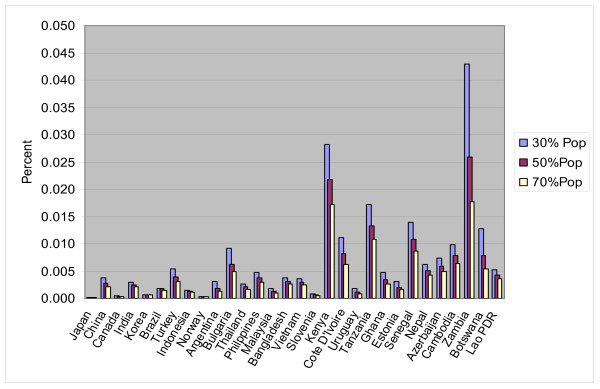
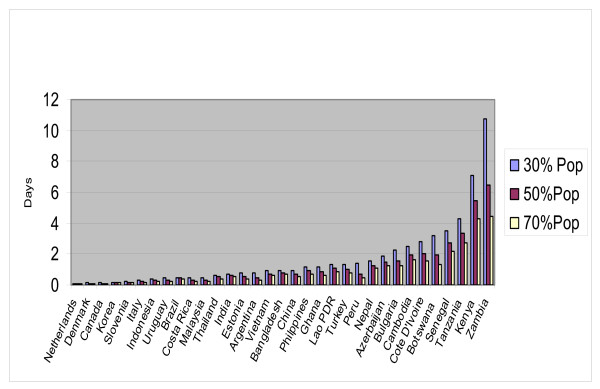
The general trend seems to be that the proportion of household expenditure required to purchase the annual dosage of toothpaste increases as the country's per capita household expenditure decreases. While in the UK for the poorest 30% of the population only 0.037 days of household expenditure is needed to purchase the annual average dosage (182.5 g) of the lowest cost toothpaste, 10.75 days are needed in Kenya. The proportion of annual household expenditure ranged from 0.02% in the UK to 4% in Zambia to buy the annual average amount of lowest cost toothpaste per head.
Significant inequalities in the affordability of this essential preventive care product indicate the necessity for action to make it more affordable. Various measures to improve affordability based on experiences from essential pharmaceuticals are proposed.
龋齿仍然是全球最常见的疾病,使用含氟牙膏是预防龋齿的最有效公共卫生措施。全球化导致饮食的改变是新兴经济体龋齿发病率上升的原因。本文旨在比较高、中、低收入国家含氟牙膏的成本和相对可负担性。假设高、中、低收入国家的含氟牙膏的可负担性并不相同。
从 48 个国家的自填问卷中获取含氟牙膏的消费者价格数据。比较高、中、低收入国家含氟牙膏的成本,并将其与家庭年支出以及购买人均年用量牙膏所需的工作天数相关联。
总体趋势似乎是,购买牙膏年剂量所需的家庭支出比例随着国家人均家庭支出的减少而增加。在英国,最贫困的 30%的人口购买最便宜的牙膏(182.5 克)的年平均剂量仅需家庭支出的 0.037 天,而在肯尼亚则需要 10.75 天。购买每人年平均用量最便宜的牙膏所需的家庭年支出比例从英国的 0.02%到赞比亚的 4%不等。
这种基本预防保健产品的可负担性存在显著差异,表明需要采取行动使其更具可负担性。根据基本药物的经验,提出了提高可负担性的各种措施。