Frishkoff Gwen A, Perfetti Charles A, Westbury Chris
Learning Research & Development Center, University of Pittsburgh, Pittsburgh, PA 15260, USA.
Biol Psychol. 2009 Jan;80(1):130-47. doi: 10.1016/j.biopsycho.2008.04.017. Epub 2008 May 13.
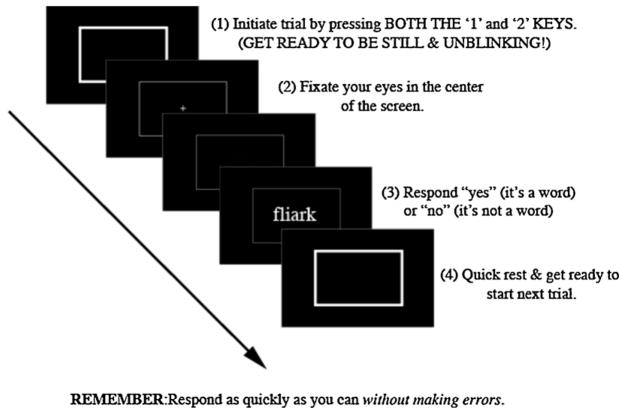
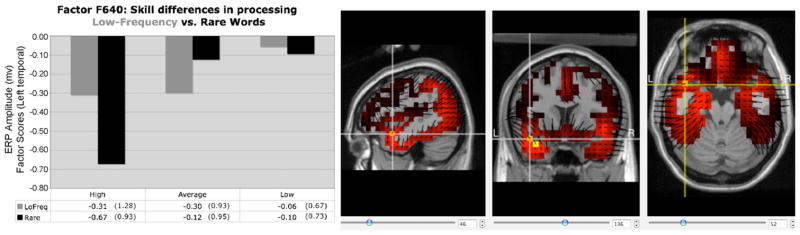
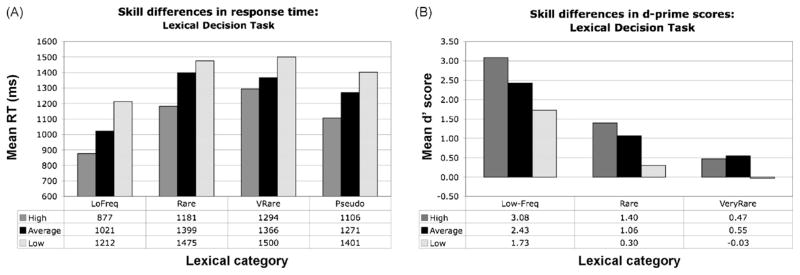
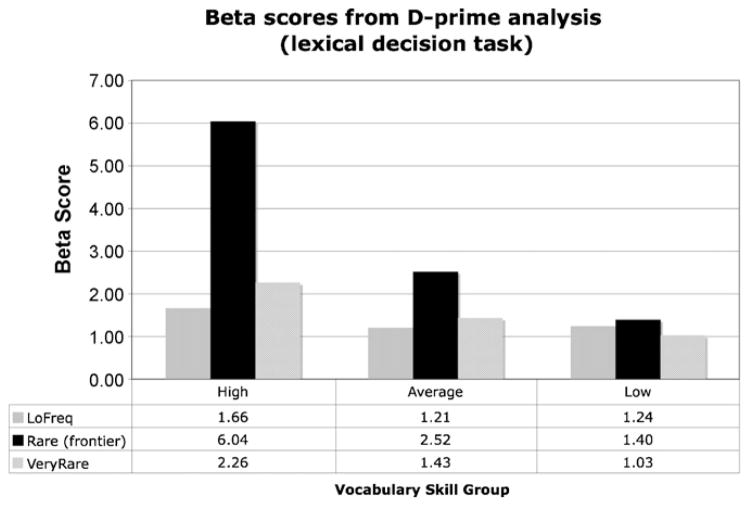
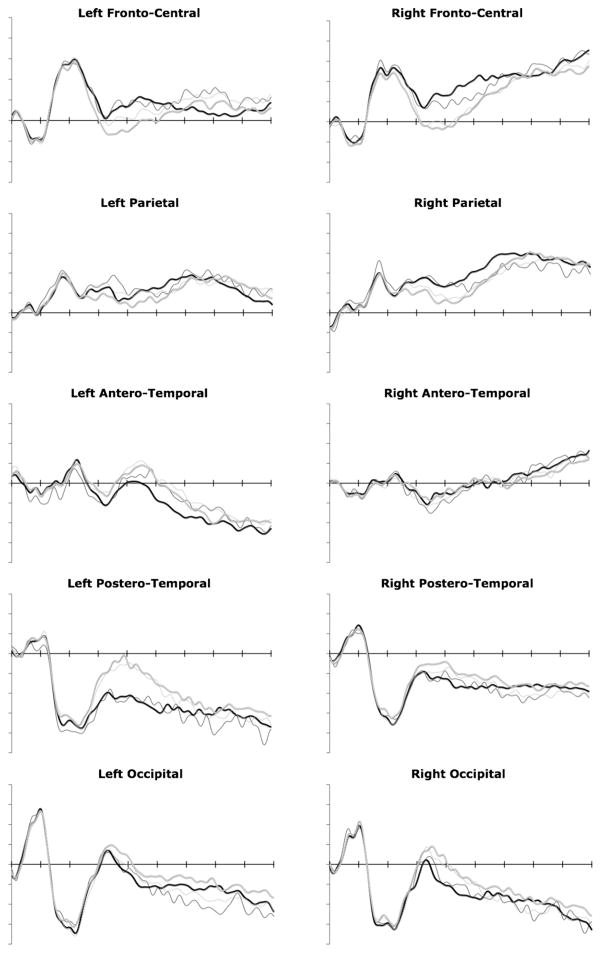
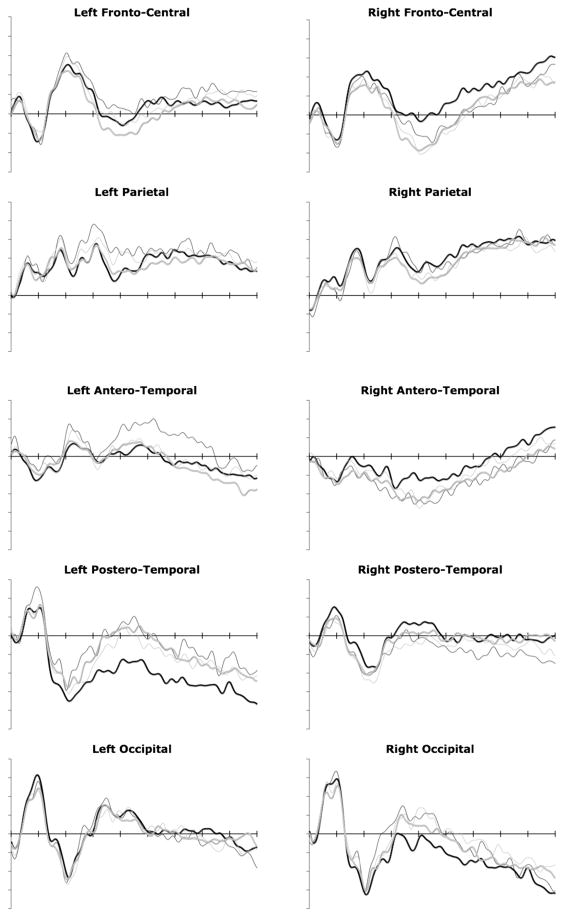
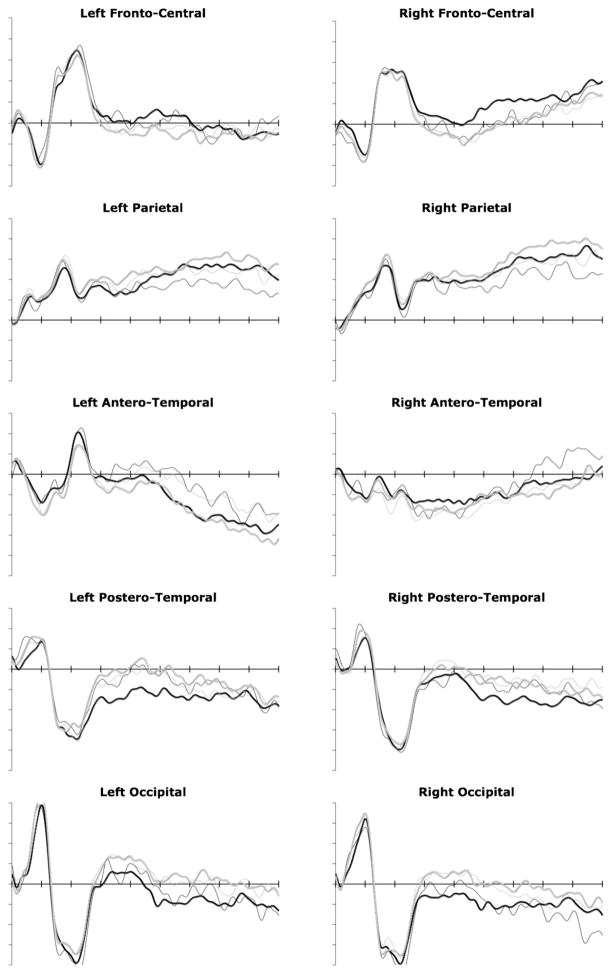
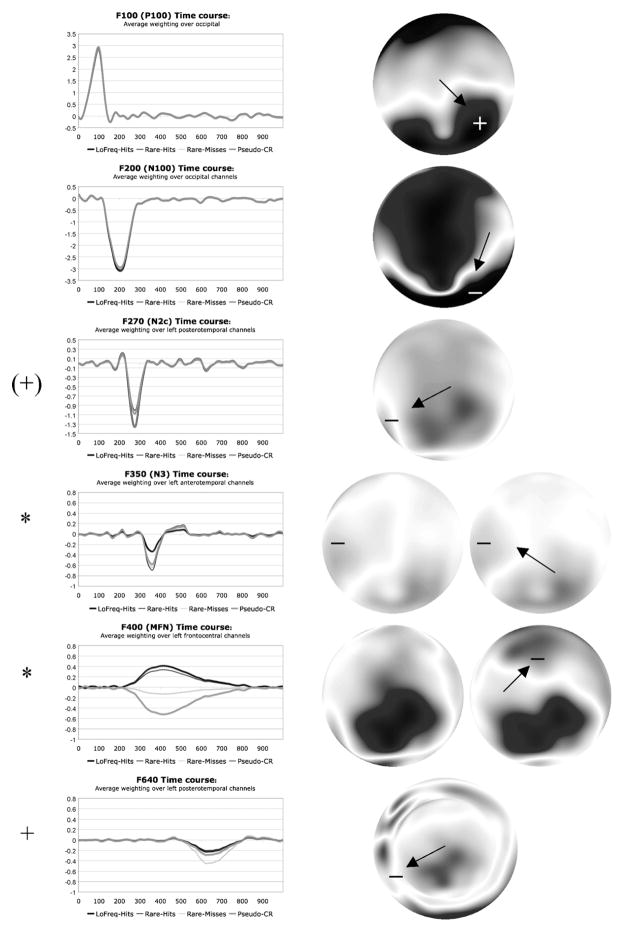
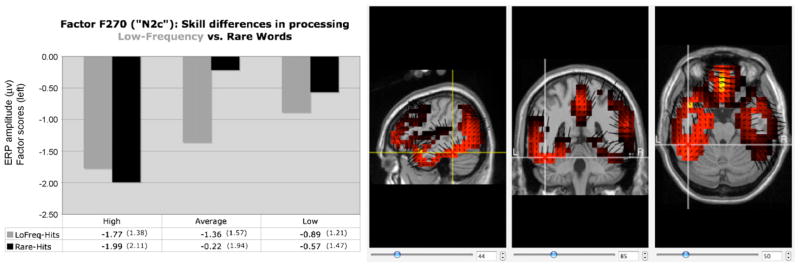
This study examines the sensitivity of early event-related potentials (ERPs) to degrees of word semantic knowledge. Participants with strong, average, or weak vocabulary skills made speeded lexical decisions to letter strings. To represent the full spectrum of word knowledge among adult native-English speakers, we used rare words that were orthographically matched with more familiar words and with pseudowords. Since the lexical decision could not reliably be made on the basis of word form, subjects were obliged to use semantic knowledge to perform the task. A d' analysis suggested that high-skilled subjects adopted a more conservative strategy in response to rare versus more familiar words. Moreover, the high-skilled participants showed a trend towards an enhanced "N2c" to rare words, and a similar posterior temporal effect reached significance approximately 650 ms. Generators for these effects were localized to left temporal cortex. We discuss implications of these results for word learning and for theories of lexical semantic access.
本研究考察了早期事件相关电位(ERP)对词汇语义知识程度的敏感性。词汇技能强、中等或弱的参与者对字母串进行快速词汇判断。为了代表成年英语母语者的全部词汇知识范围,我们使用了与更常见单词和伪词在拼写上匹配的罕见单词。由于无法基于单词形式可靠地做出词汇判断,受试者不得不使用语义知识来完成任务。d'分析表明,高技能受试者在对罕见词与更常见词的反应中采用了更保守的策略。此外,高技能参与者对罕见词表现出“N2c”增强的趋势,类似的后颞叶效应在大约650毫秒时达到显著水平。这些效应的发生器定位于左侧颞叶皮层。我们讨论了这些结果对词汇学习和词汇语义通达理论的意义。