Goñi Joaquín, Esteban Francisco J, de Mendizábal Nieves Vélez, Sepulcre Jorge, Ardanza-Trevijano Sergio, Agirrezabal Ion, Villoslada Pablo
Neuroimmunology laboratory, Department of Neuroscience, Center for Applied Medical Research, University of Navarra, Spain.
BMC Syst Biol. 2008 Jun 20;2:52. doi: 10.1186/1752-0509-2-52.
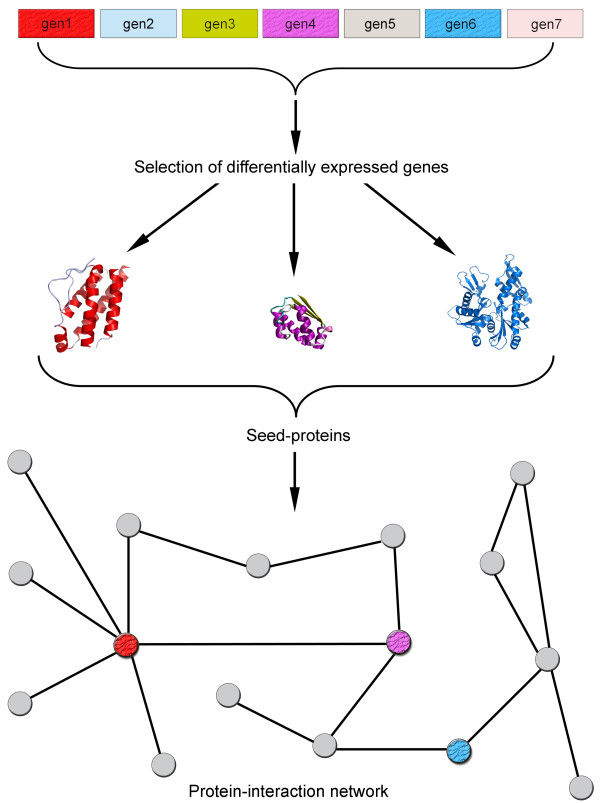
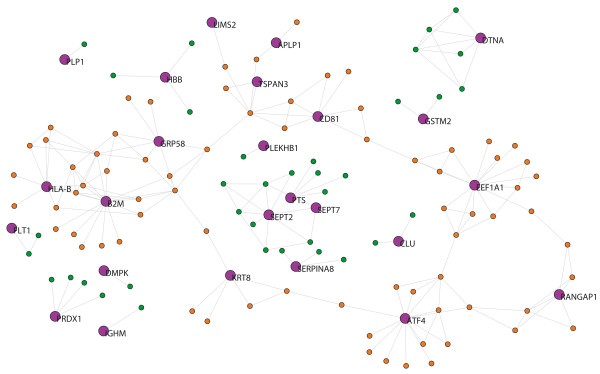
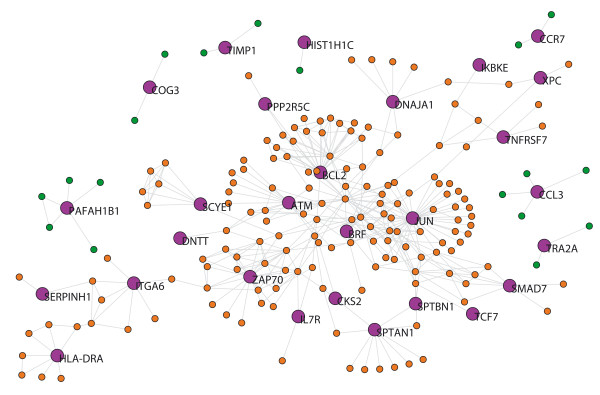
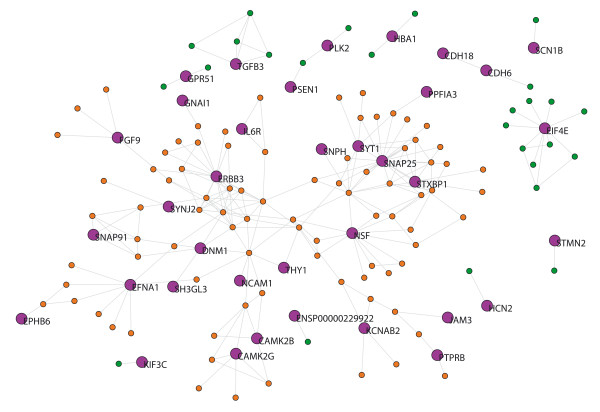
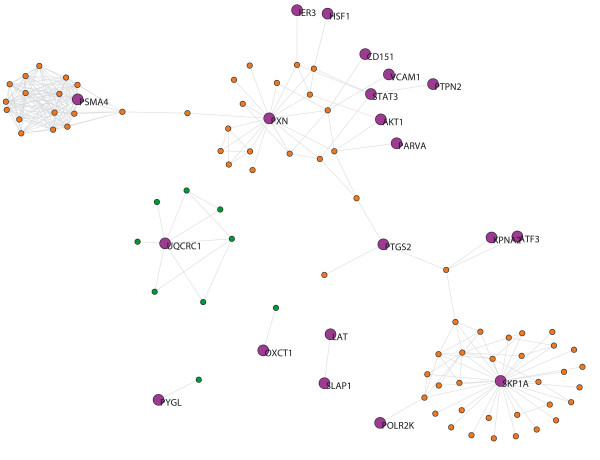
Recent developments have meant that network theory is making an important contribution to the topological study of biological networks, such as protein-protein interaction (PPI) networks. The identification of differentially expressed genes in DNA array experiments is a source of information regarding the molecular pathways involved in disease. Thus, considering PPI analysis and gene expression studies together may provide a better understanding of multifactorial neurodegenerative diseases such as Multiple Sclerosis (MS) and Alzheimer disease (AD). The aim of this study was to assess whether the parameters of degree and betweenness, two fundamental measures in network theory, are properties that differentiate between implicated (seed-proteins) and non-implicated nodes (neighbors) in MS and AD. We used experimentally validated PPI information to obtain the neighbors for each seed group and we studied these parameters in four networks: MS-blood network; MS-brain network; AD-blood network; and AD-brain network.
Specific features of seed-proteins were revealed, whereby they displayed a lower average degree in both diseases and tissues, and a higher betweenness in AD-brain and MS-blood networks. Additionally, the heterogeneity of the processes involved indicate that these findings are not pathway specific but rather that they are spread over different pathways.
Our findings show differential centrality properties of proteins whose gene expression is impaired in neurodegenerative diseases.
最近的进展表明,网络理论正在对生物网络的拓扑研究做出重要贡献,例如蛋白质-蛋白质相互作用(PPI)网络。在DNA阵列实验中鉴定差异表达基因是有关疾病相关分子途径的信息来源。因此,将PPI分析和基因表达研究结合起来可能会更好地理解多因素神经退行性疾病,如多发性硬化症(MS)和阿尔茨海默病(AD)。本研究的目的是评估网络理论中的两个基本度量——度和介数参数,是否是区分MS和AD中受累(种子蛋白)和未受累节点(邻居)的属性。我们使用经过实验验证的PPI信息来获取每个种子组的邻居,并在四个网络中研究这些参数:MS-血液网络;MS-脑网络;AD-血液网络;以及AD-脑网络。
揭示了种子蛋白的特定特征,即它们在两种疾病和组织中均表现出较低的平均度,而在AD-脑网络和MS-血液网络中具有较高的介数。此外,所涉及过程的异质性表明,这些发现并非特定于某些途径,而是分布在不同途径中。
我们的研究结果表明,在神经退行性疾病中基因表达受损的蛋白质具有不同的中心性属性。