Rosario Dorines, Boren Jan, Uhlen Mathias, Proctor Gordon, Aarsland Dag, Mardinoglu Adil, Shoaie Saeed
Centre for Host-Microbiome Interactions, Faculty of Dentistry, Oral & Craniofacial Sciences, King's College London, London, United Kingdom.
Department of Molecular and Clinical Medicine, Sahlgrenska University Hospital, University of Gothenburg, Gothenburg, Sweden.
Front Neurosci. 2020 Jul 8;14:716. doi: 10.3389/fnins.2020.00716. eCollection 2020.
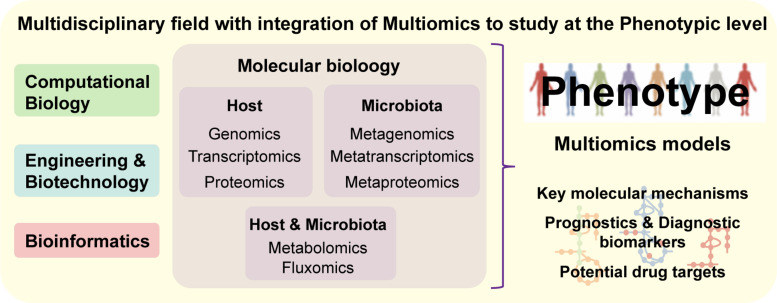
Neurodegenerative diseases (NDDs) comprise a broad range of progressive neurological disorders with multifactorial etiology contributing to disease pathophysiology. Evidence of the microbiome involvement in the gut-brain axis urges the interest in understanding metabolic interactions between the microbiota and host physiology in NDDs. Systems Biology offers a holistic integrative approach to study the interplay between the different biologic systems as part of a whole, and may elucidate the host-microbiome interactions in NDDs. We reviewed direct and indirect pathways through which the microbiota can modulate the bidirectional communication of the gut-brain axis, and explored the evidence of microbial dysbiosis in Alzheimer's and Parkinson's diseases. As the gut microbiota being strongly affected by diet, the potential approaches to targeting the human microbiota through diet for the stimulation of neuroprotective microbial-metabolites secretion were described. We explored the potential of Genome-scale metabolic models (GEMs) to infer microbe-microbe and host-microbe interactions and to identify the microbiome contribution to disease development or prevention. Finally, a systemic approach based on GEMs and 'omics integration, that would allow the design of sustainable personalized anti-inflammatory diets in NDDs prevention, through the modulation of gut microbiota was described.
神经退行性疾病(NDDs)包括一系列广泛的进行性神经障碍,其病因多因素,对疾病病理生理学有影响。微生物群参与肠-脑轴的证据促使人们对了解NDDs中微生物群与宿主生理学之间的代谢相互作用产生兴趣。系统生物学提供了一种整体综合方法,用于研究不同生物系统作为一个整体的相互作用,并可能阐明NDDs中的宿主-微生物群相互作用。我们回顾了微生物群调节肠-脑轴双向通信的直接和间接途径,并探讨了阿尔茨海默病和帕金森病中微生物群失调的证据。由于肠道微生物群受饮食的强烈影响,描述了通过饮食靶向人类微生物群以刺激神经保护性微生物代谢物分泌的潜在方法。我们探讨了基因组规模代谢模型(GEMs)推断微生物-微生物和宿主-微生物相互作用以及确定微生物群对疾病发展或预防贡献的潜力。最后,描述了一种基于GEMs和“组学”整合的系统方法,该方法可通过调节肠道微生物群来设计可持续的个性化抗炎饮食,用于预防NDDs。