Svirshchevskaya Elena V, Mariotti Jacopo, Wright Mollie H, Viskova Natalia Y, Telford William, Fowler Daniel H, Varticovski Lyuba
Shemyakin-Ovchinnikov Institute of Bioorganic Chemistry RAS, Miklukho-Maklaya Street 16/10, Moscow 117997, Moscow, Russia.
BMC Cancer. 2008 Jun 21;8:176. doi: 10.1186/1471-2407-8-176.
Rapamycin, an inhibitor of mammalian target of Rapamycin (mTOR), is an immunosuppressive agent that has anti-proliferative effects on some tumors. However, the role of Rapamycin-induced immune suppression on tumor progression has not been examined.
We developed a transplantation model for generation of mammary tumors in syngeneic recipients that can be used to address the role of the immune system on tumor progression. We examined the effect of Rapamycin on the immune system and growth of MMTV-driven Wnt-1 mammary tumors which were transplanted into irradiated and bone marrow-reconstituted, or naïve mice.
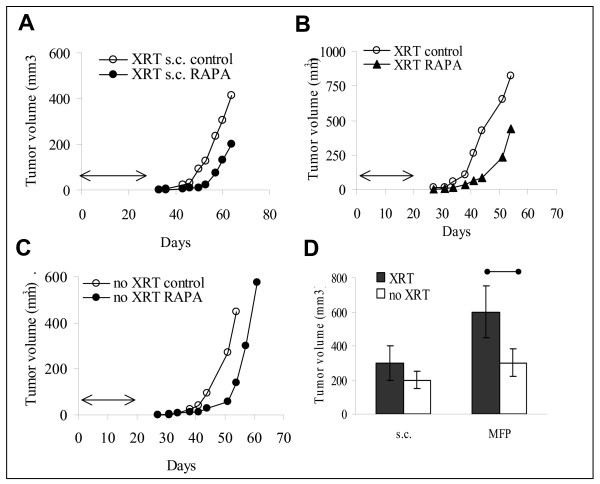
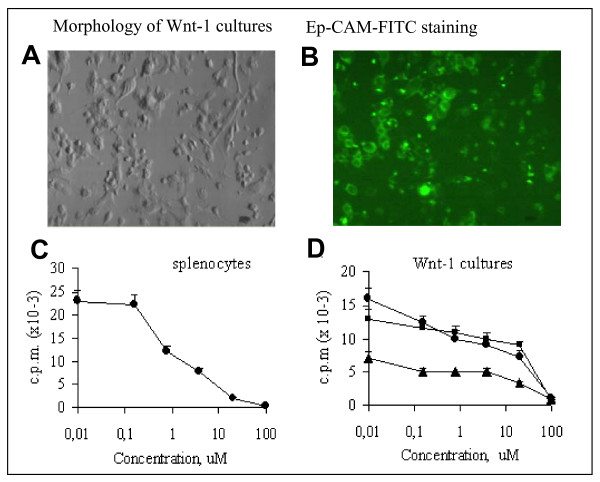
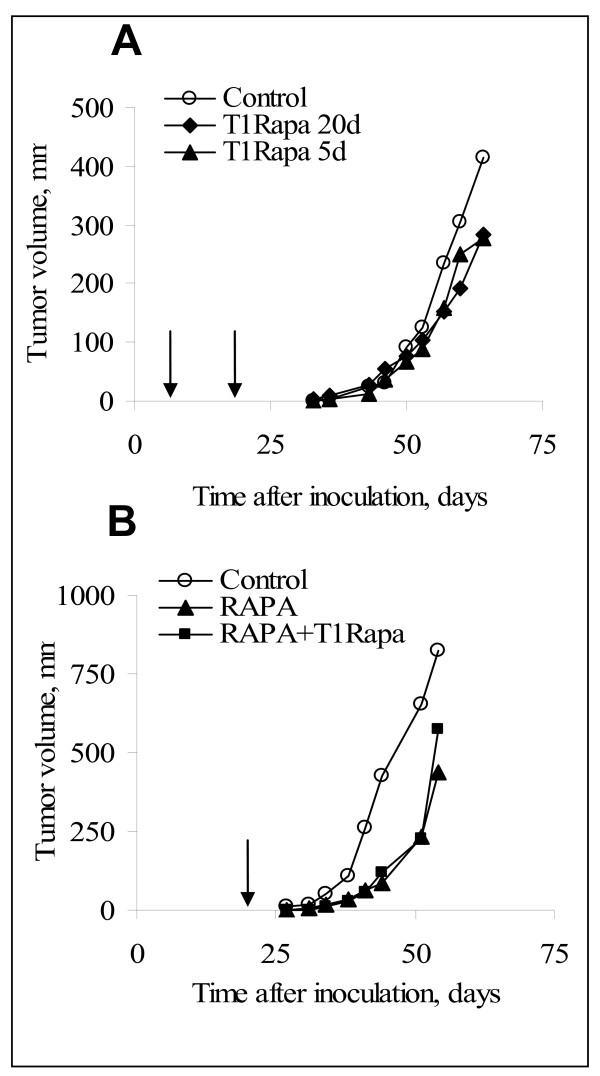
Rapamycin induced severe immunosuppression and significantly delayed the growth of Wnt-1 tumors. T cell depletion in spleen and thymus and reduction in T cell cytokine secretion were evident within 7 days of therapy. By day 20, splenic but not thymic T cell counts, and cytokine secretion recovered. We determined whether adoptive T cell therapy enhances the anti-cancer effect using ex vivo generated Rapamycin-resistant T cells. However, T cell transfer during Rapamycin therapy did not improve the outcome relative to drug therapy alone. Thus, we could not confirm that suppression of T cell immunity contributes to tumor growth in this model. Consistent with suppression of the mTOR pathway, decreased 4E-BP1, p70 S6-kinase, and S6 protein phosphorylation correlated with a decrease in Wnt-1 tumor cell proliferation.
Rapamycin has a direct anti-tumor effect on Wnt-1 breast cancer in vivo that involves inhibition of the mTOR pathway at doses that also suppress host immune responses.
雷帕霉素是哺乳动物雷帕霉素靶蛋白(mTOR)的抑制剂,是一种免疫抑制剂,对某些肿瘤具有抗增殖作用。然而,雷帕霉素诱导的免疫抑制对肿瘤进展的作用尚未得到研究。
我们建立了一种在同基因受体中生成乳腺肿瘤的移植模型,可用于研究免疫系统对肿瘤进展的作用。我们研究了雷帕霉素对移植到经辐照和骨髓重建的或未经处理的小鼠体内的MMTV驱动的Wnt-1乳腺肿瘤的免疫系统和生长的影响。
雷帕霉素诱导严重的免疫抑制,并显著延迟Wnt-1肿瘤的生长。治疗7天内,脾脏和胸腺中的T细胞耗竭以及T细胞细胞因子分泌减少明显。到第20天,脾脏而非胸腺中的T细胞计数和细胞因子分泌恢复。我们使用体外生成的对雷帕霉素耐药的T细胞来确定过继性T细胞疗法是否增强抗癌效果。然而,与单独使用药物治疗相比,雷帕霉素治疗期间的T细胞转移并未改善结果。因此,我们无法证实在该模型中T细胞免疫抑制促进肿瘤生长。与mTOR途径的抑制一致,4E-BP1、p70 S6激酶和S6蛋白磷酸化的降低与Wnt-1肿瘤细胞增殖的减少相关。
雷帕霉素在体内对Wnt-1乳腺癌具有直接抗肿瘤作用,该作用涉及在抑制宿主免疫反应的剂量下抑制mTOR途径。