Li Hong, Malhotra Shweta, Kumar Ashok
Department of Anatomical Sciences and Neurobiology, University of Louisville School of Medicine, Louisville, KY 40202, USA.
J Mol Med (Berl). 2008 Oct;86(10):1113-26. doi: 10.1007/s00109-008-0373-8. Epub 2008 Jun 24.
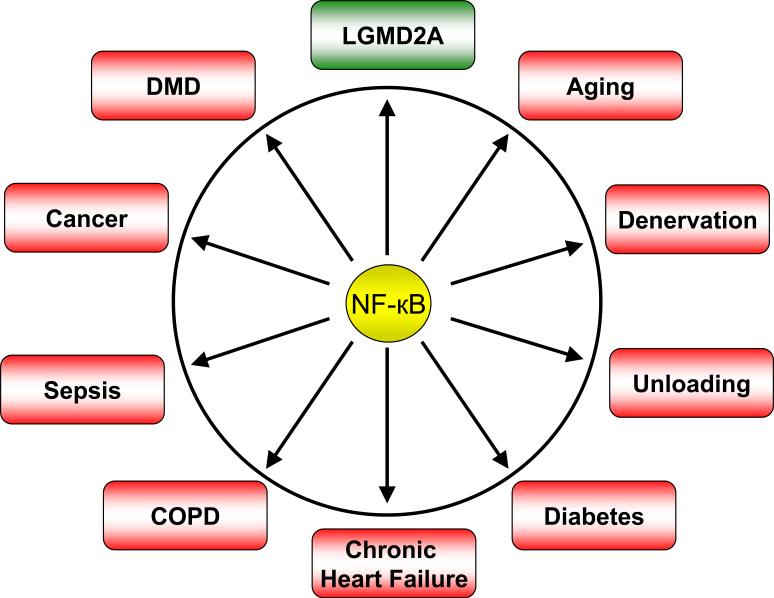
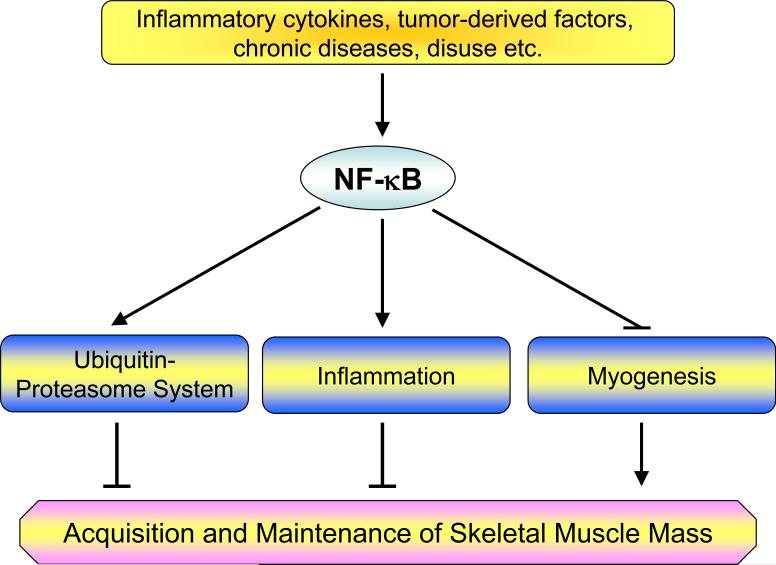
Skeletal muscle atrophy/wasting is a serious complication of a wide range of diseases and conditions such as aging, disuse, AIDS, chronic obstructive pulmonary disease, space travel, muscular dystrophy, chronic heart failure, sepsis, and cancer. Emerging evidence suggests that nuclear factor-kappa B (NF-kappaB) is one of the most important signaling pathways linked to the loss of skeletal muscle mass in various physiological and pathophysiological conditions. Activation of NF-kappaB in skeletal muscle leads to degradation of specific muscle proteins, induces inflammation and fibrosis, and blocks the regeneration of myofibers after injury/atrophy. Recent studies employing genetic mouse models have provided strong evidence that NF-kappaB can serve as an important molecular target for the prevention of skeletal muscle loss. In this article, we have outlined the current understanding regarding the role of NF-kappaB in skeletal muscle with particular reference to different models of muscle wasting and the development of novel therapy.
骨骼肌萎缩/消瘦是多种疾病和状况的严重并发症,如衰老、废用、艾滋病、慢性阻塞性肺疾病、太空旅行、肌肉萎缩症、慢性心力衰竭、败血症和癌症。新出现的证据表明,核因子-κB(NF-κB)是在各种生理和病理生理条件下与骨骼肌质量丧失相关的最重要信号通路之一。骨骼肌中NF-κB的激活导致特定肌肉蛋白的降解,引发炎症和纤维化,并在损伤/萎缩后阻断肌纤维的再生。最近利用基因小鼠模型进行的研究提供了强有力的证据,表明NF-κB可作为预防骨骼肌丧失的重要分子靶点。在本文中,我们概述了目前对NF-κB在骨骼肌中的作用的理解,特别提及了不同的肌肉消瘦模型以及新疗法的开发。