Minakawa Noboru, Sonye Gorge, Dida Gabriel O, Futami Kyoko, Kaneko Satoshi
Institute of Tropical Medicine, Nagasaki University, Nagasaki, Japan.
Malar J. 2008 Jul 3;7:119. doi: 10.1186/1475-2875-7-119.
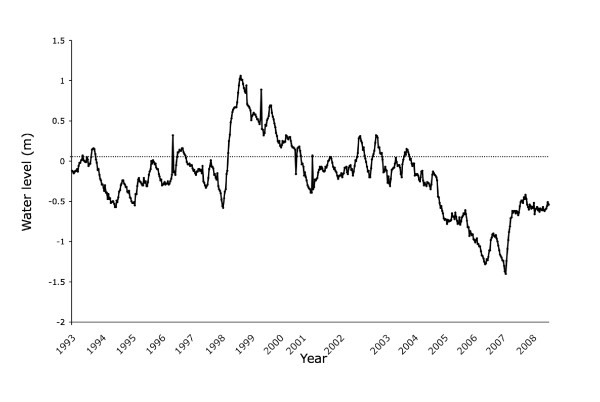
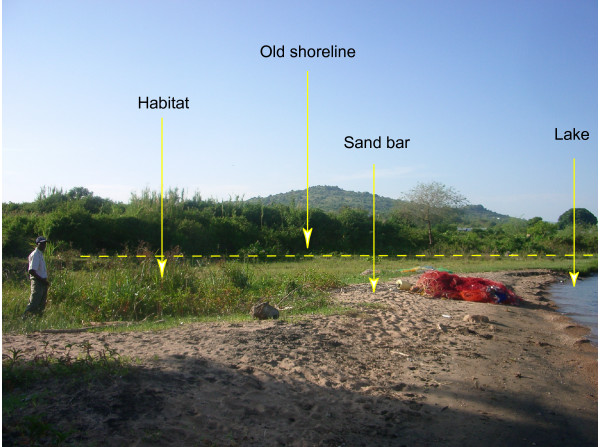
The water level of Lake Victoria has fallen more than 1.5 m since 1998, revealing a narrow strip of land along the shore. This study determined whether the recent drop in the water level has created additional breeding grounds for malaria vectors.
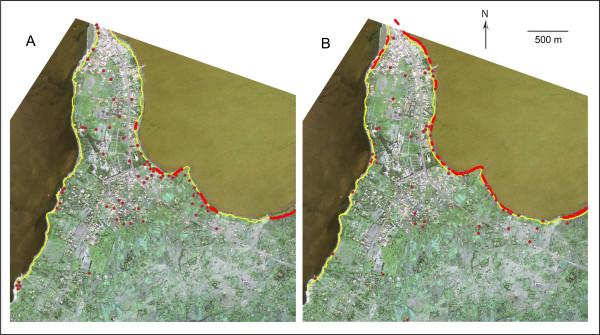
The recent and past shorelines were estimated using landmarks and a satellite image. The locations of breeding habitats were recorded using a GPS unit during the high and low lake water periods. GIS was used to determine whether the breeding habitats were located on newly emerged land between the new and old shorelines.
Over half of the breeding habitats existed on newly emerged land. Fewer habitats for the Anopheles gambiae complex were found during the low water level period compared to the high water period. However, more habitats for Anopheles funestus were found during the high water level period, and they were all located on the newly emerged land.
The recent reduction in water level of Lake Victoria has increased the amount of available habitat for A. funestus. The results suggest that the water drop has substantially affected the population of this malaria vector in the Lake Victoria basin, particularly because the lake has a long shoreline that may harbour many new breeding habitats.
自1998年以来,维多利亚湖的水位下降了超过1.5米,露出了一条狭长的沿岸陆地。本研究确定近期的水位下降是否为疟疾媒介创造了更多的繁殖地。
利用地标和卫星图像估算近期和过去的海岸线。在湖水水位高和低的时期,使用全球定位系统装置记录繁殖栖息地的位置。地理信息系统用于确定繁殖栖息地是否位于新旧海岸线之间新出现的陆地上。
超过一半的繁殖栖息地存在于新出现的陆地上。与高水位期相比,低水位期发现的冈比亚按蚊复合体的栖息地较少。然而,在高水位期发现了更多的嗜人按蚊栖息地,且它们都位于新出现的陆地上。
近期维多利亚湖水位的下降增加了嗜人按蚊的可用栖息地数量。结果表明,水位下降对维多利亚湖盆地这种疟疾媒介的种群产生了重大影响,特别是因为该湖有很长的海岸线,可能有许多新的繁殖栖息地。