Bernard Pascal, Sim Helena, Knower Kevin, Vilain Eric, Harley Vincent
Prince Henry's Institute of Medical Research, Human Molecular Genetics Laboratory, Monash Medical Centre, Clayton, Australia.
Int J Biochem Cell Biol. 2008;40(12):2889-900. doi: 10.1016/j.biocel.2008.06.006. Epub 2008 Jun 28.
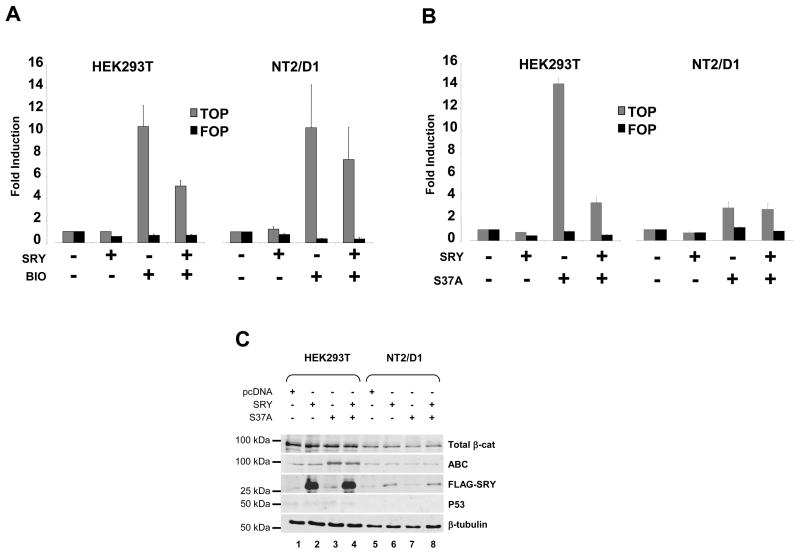
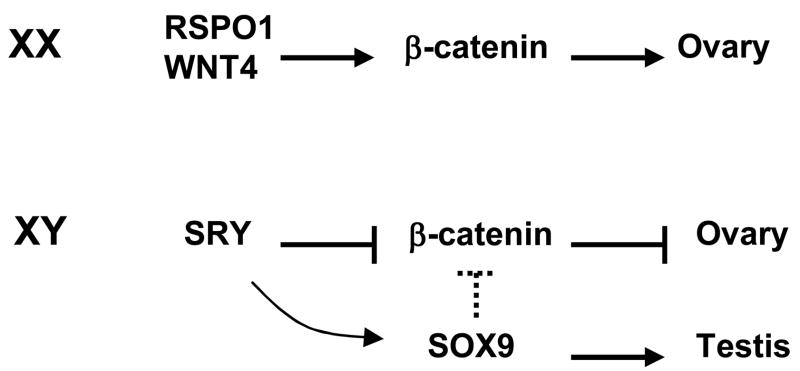
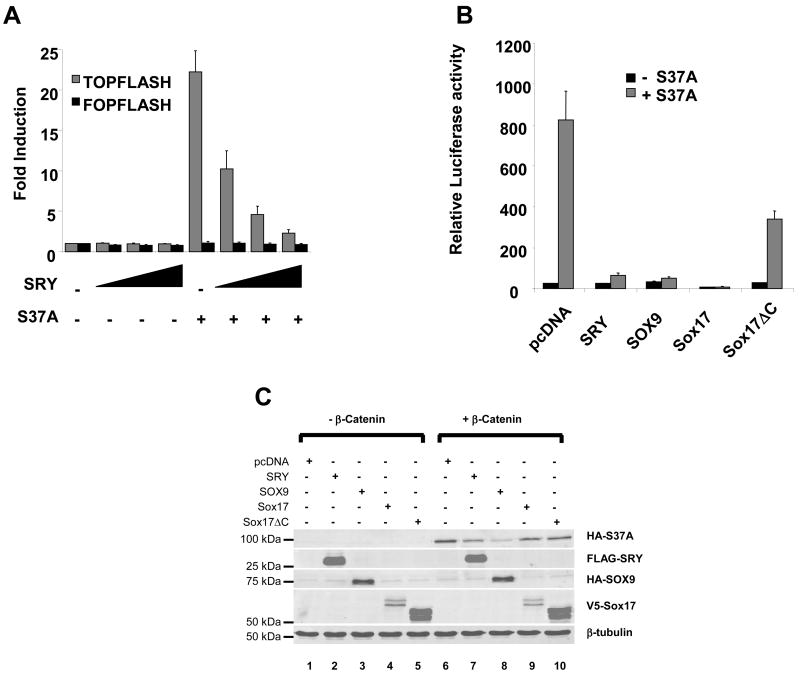
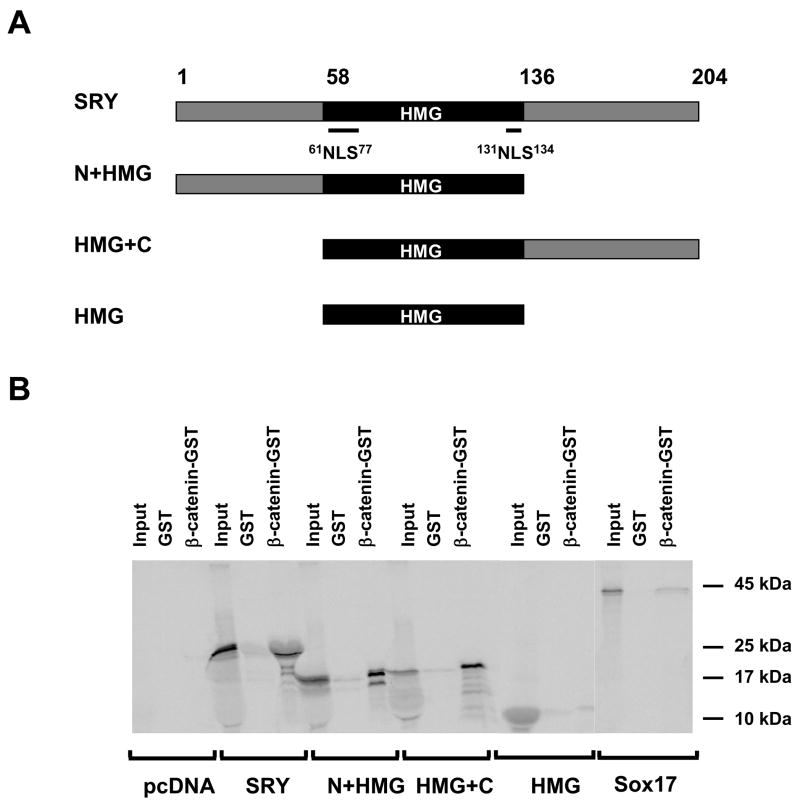
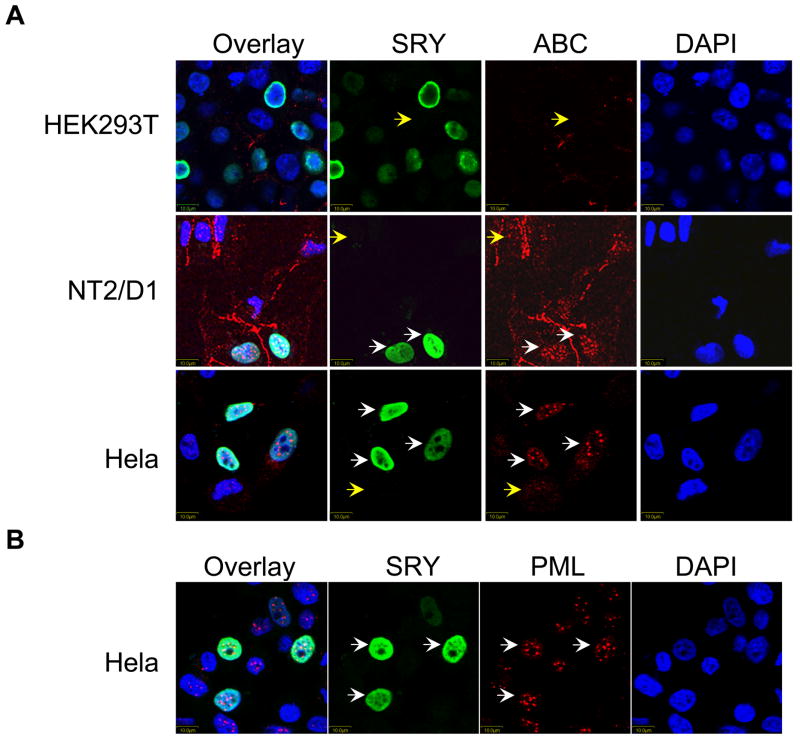
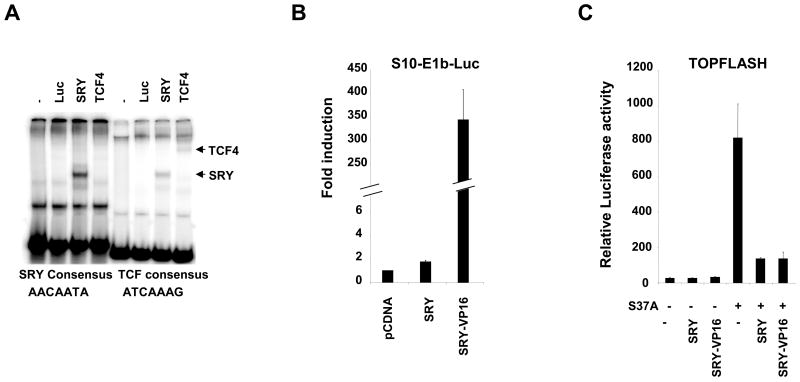
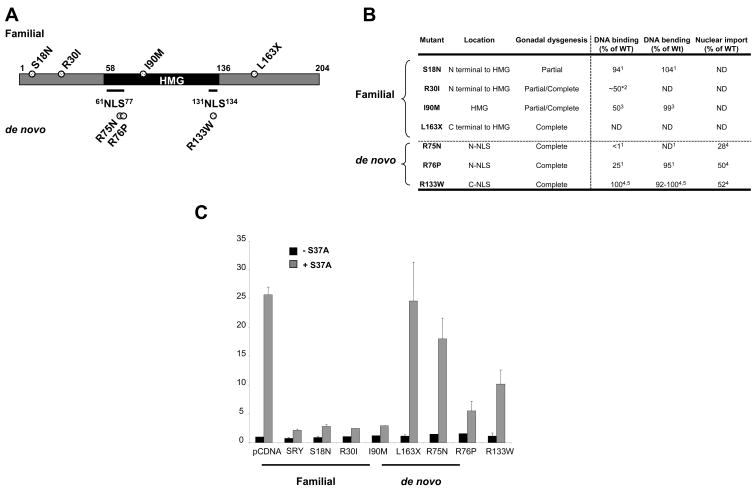
In most mammals, sex is determined by the presence or absence of the SRY gene. SRY encodes a DNA-binding HMG-box transcription factor which, during embryogenesis, is the initial trigger of testis differentiation from the bipotential gonad, yet its precise mode of function remains unclear. In ovarian development, R-spondin1 and Wnt4 act through the Wnt/beta-catenin-signaling pathway to regulate TCF-dependent expression of unknown target genes and repress testis development. Conversely, SRY may be necessary to prevent the development of ovaries by inhibiting the action of ovarian-determining genes. We hypothesize that SRY prevents Wnt/beta-catenin signaling, thereby inhibiting ovarian development. In HEK293T cells, SRY repressed beta-catenin-mediated TCF-dependent gene activation in the presence of a specific GSK3beta inhibitor or an activated beta-catenin mutant, suggesting that SRY inhibits Wnt signaling at the level of beta-catenin. Three SRY mutant proteins with nuclear localization defects, encoded by XY male-to-female patients, failed to inhibit beta-catenin; surprisingly four SRY sex reversed mutants with defective DNA-binding activity showed near wild-type SRY inhibitory activity. Moreover the potent transactivator SRY-VP16 fusion protein also showed wild-type SRY inhibitory activity. Thus SRY inhibition of beta-catenin involves neither DNA-binding nor transactivation functions of SRY. beta-Catenin and SRY interact in vitro and SRY expression triggered beta-catenin localization into specific nuclear bodies in NT2/D1 and Hela cells. We conclude that SRY inhibits beta-catenin-mediated Wnt signaling by a novel nuclear function of SRY that could be important in sex determination.
在大多数哺乳动物中,性别由SRY基因的存在与否决定。SRY编码一种DNA结合HMG盒转录因子,在胚胎发生过程中,它是双潜能性腺向睾丸分化的初始触发因素,但其精确的功能模式仍不清楚。在卵巢发育过程中,R-spondin1和Wnt4通过Wnt/β-连环蛋白信号通路发挥作用,调节未知靶基因的TCF依赖性表达并抑制睾丸发育。相反,SRY可能通过抑制卵巢决定基因的作用来阻止卵巢的发育。我们假设SRY可阻止Wnt/β-连环蛋白信号传导,从而抑制卵巢发育。在HEK293T细胞中,在存在特定的GSK3β抑制剂或活化的β-连环蛋白突变体的情况下,SRY可抑制β-连环蛋白介导的TCF依赖性基因激活,这表明SRY在β-连环蛋白水平上抑制Wnt信号传导。由XY男性向女性患者编码的三种具有核定位缺陷的SRY突变蛋白未能抑制β-连环蛋白;令人惊讶的是,四种具有缺陷DNA结合活性的SRY性反转突变体显示出接近野生型SRY的抑制活性。此外,强效反式激活因子SRY-VP16融合蛋白也显示出野生型SRY的抑制活性。因此,SRY对β-连环蛋白的抑制作用既不涉及SRY的DNA结合功能也不涉及反式激活功能。β-连环蛋白和SRY在体外相互作用,并且SRY的表达促使β-连环蛋白定位到NT2/D1和Hela细胞中的特定核体中。我们得出结论,SRY通过一种新的核功能抑制β-连环蛋白介导的Wnt信号传导,这在性别决定中可能很重要。