Kanjilal S, Rao V S, Mukherjee M, Natesha B K, Renuka K S, Sibi K, Iyengar S S, Kakkar Vijay V
Tata Proteomics and Coagulation Department, Thrombosis Research Institute, Bangalore, Narayana Hrudayalaya Hospital, Bangalore, Karnataka, India.
Vasc Health Risk Manag. 2008;4(1):199-211. doi: 10.2147/vhrm.2008.04.01.199.
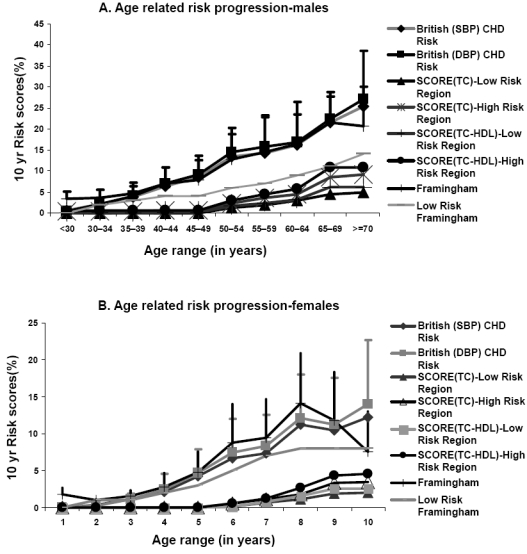
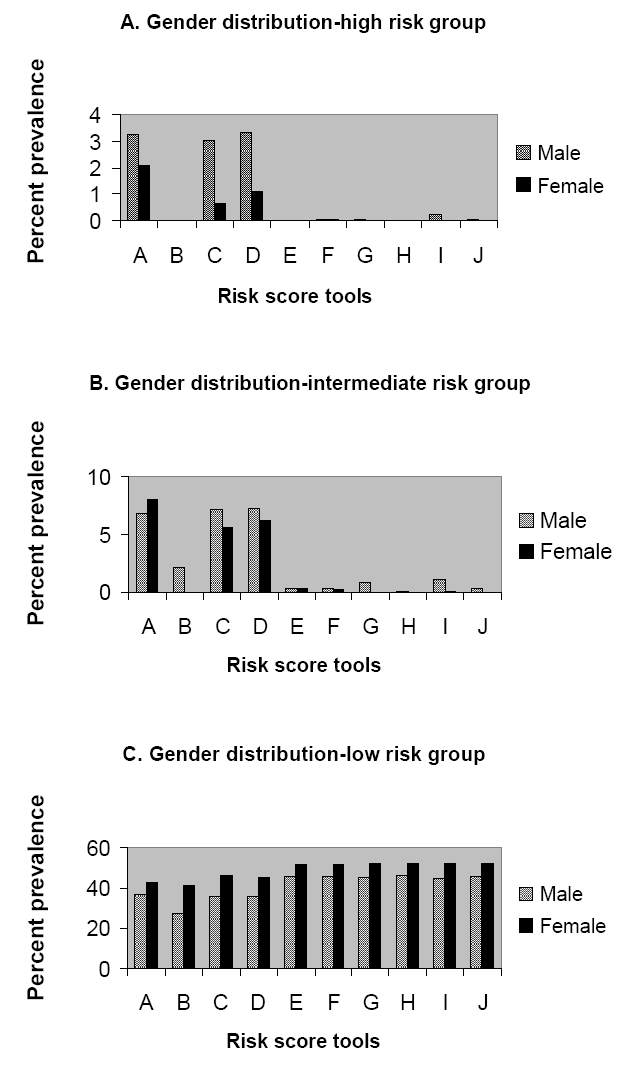
The increasing pressure on health resources has led to the emergence of risk assessment as an essential tool in the management of cardiovascular disease (CVD). Concern exists regarding the validity of their generalization to all populations. Existing risk scoring models do not incorporate emerging 'novel' risk factors. In this context, the aim of the study was to examine the relevance of British, European, and Framingham predictive CVD risk scores to the asymptomatic high risk Indian population. Blood samples drawn from the participants were analyzed for various 'traditional' and 'novel' biomarkers, and their CVD risk factor profiling was also done. The Framingham model defined only 5% of the study cohort to be at high risk, which appears to be an underestimation of CVD risk in this genetically predisposed population. These subjects at high risk had significantly elevated levels of lipid, pro-inflammatory, pro-thrombotic, and serological markers. It is more relevant to develop risk predictive scores for application to the Indian population. This study substantiates the argument that alternative approaches to risk stratification are required in order to make them more adaptable and applicable to different populations with varying risk factor and disease patterns.
卫生资源面临的压力日益增大,这使得风险评估成为心血管疾病(CVD)管理中的一项重要工具。人们担心这些评估方法推广至所有人群时的有效性。现有的风险评分模型未纳入新出现的“新型”风险因素。在此背景下,本研究旨在探讨英国、欧洲和弗明汉心血管疾病预测风险评分对于无症状高危印度人群的适用性。对参与者采集的血样进行了各种“传统”和“新型”生物标志物分析,并对其心血管疾病风险因素进行了剖析。弗明汉模型仅将5%的研究队列定义为高危人群,这似乎低估了这个具有遗传易感性人群的心血管疾病风险。这些高危受试者的血脂、促炎、促血栓形成和血清学标志物水平显著升高。开发适用于印度人群的风险预测评分更为重要。本研究证实了这样一种观点,即需要采用替代的风险分层方法,以使它们更具适应性,并适用于具有不同风险因素和疾病模式的不同人群。