Chang Catie, Thomason Moriah E, Glover Gary H
Department of Electrical Engineering, Stanford University, Stanford, CA 94305, USA.
Neuroimage. 2008 Oct 15;43(1):90-102. doi: 10.1016/j.neuroimage.2008.06.030. Epub 2008 Jul 4.
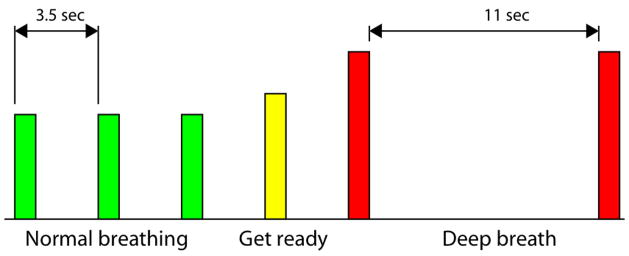
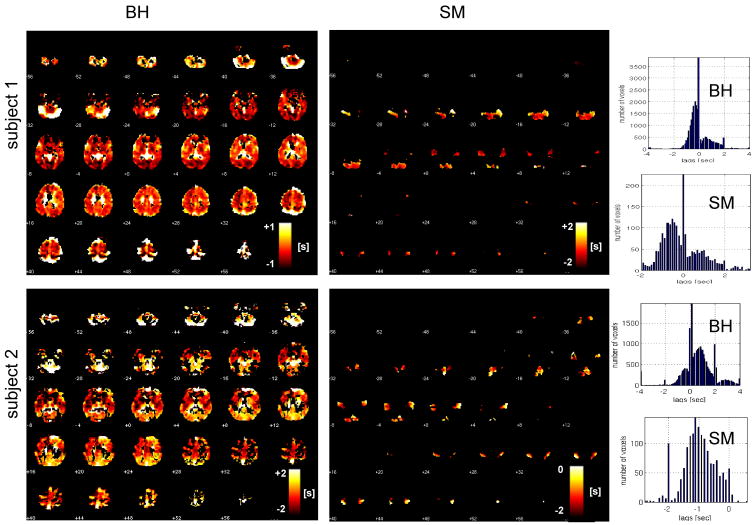
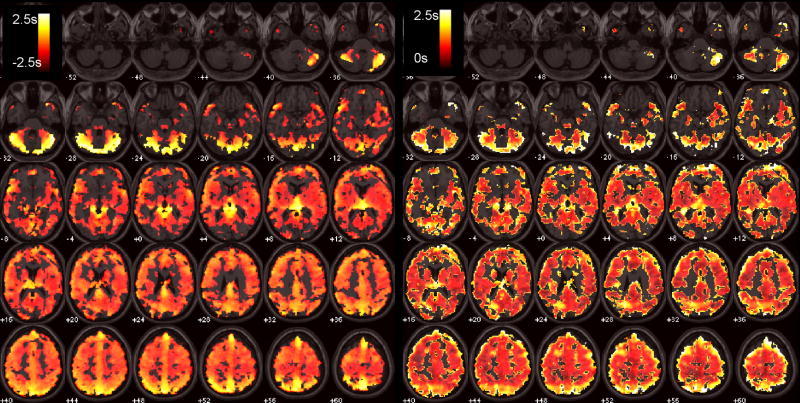
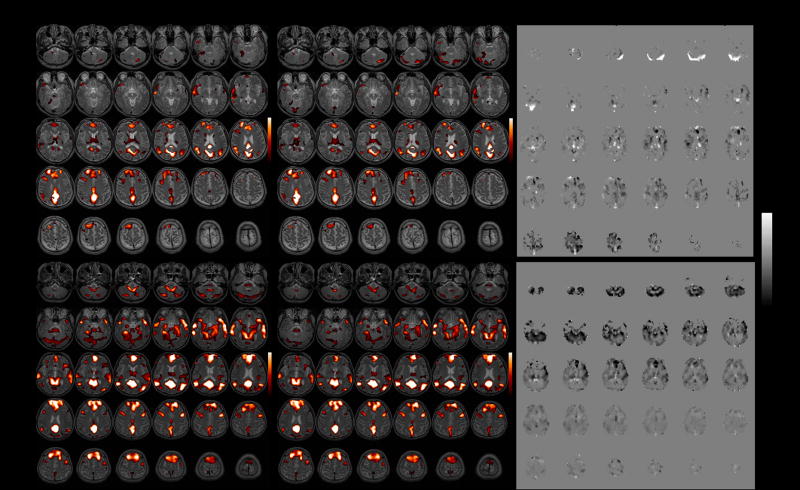
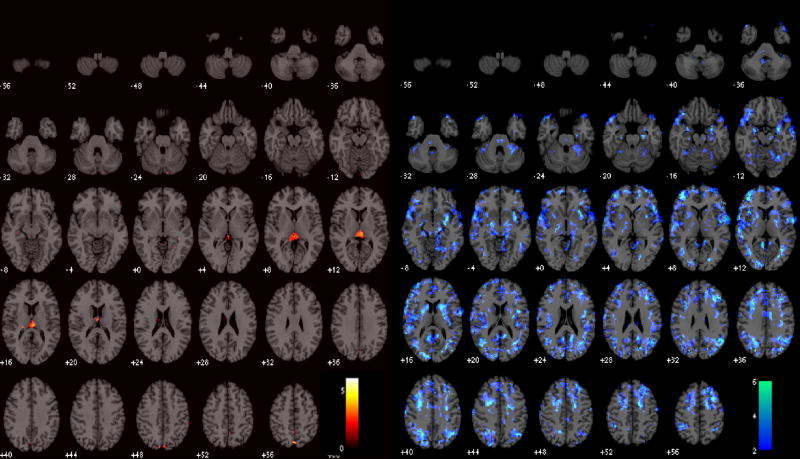
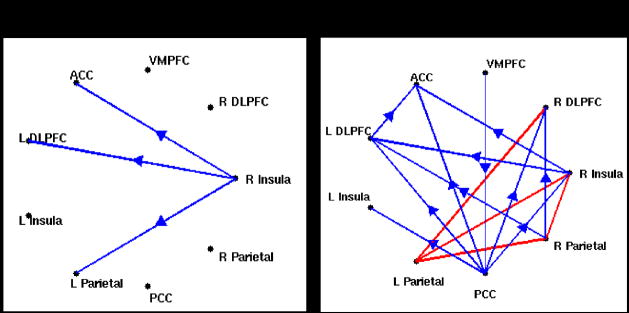
Correlation and causality metrics can be applied to blood-oxygen level-dependent (BOLD) signal time series in order to infer neural synchrony and directions of information flow from fMRI data. However, the BOLD signal reflects both the underlying neural activity and the vascular response, the latter of which is governed by local vasomotor physiology. The presence of potential vascular latency differences thus poses a confound in the detection of neural synchrony as well as inferences about the causality of neural processes. In the present study, we investigate the use of a breath holding (BH) task for characterizing and correcting for voxel-wise neurovascular latency differences across the whole brain. We demonstrate that BH yields reliable measurements of relative timing differences between voxels, and further show that a BH-derived latency correction can impact both functional connectivity maps of the resting-state default-mode network and activation maps of an event-related working memory (WM) task.
相关性和因果关系度量可应用于血氧水平依赖(BOLD)信号时间序列,以便从功能磁共振成像(fMRI)数据中推断神经同步性和信息流方向。然而,BOLD信号既反映了潜在的神经活动,也反映了血管反应,后者受局部血管舒缩生理学的支配。因此,潜在的血管潜伏期差异的存在给神经同步性的检测以及神经过程因果关系的推断带来了混淆。在本研究中,我们调查了使用屏气(BH)任务来表征和校正全脑体素水平的神经血管潜伏期差异。我们证明,屏气能够可靠地测量体素之间的相对时间差异,并进一步表明,基于屏气得出的潜伏期校正会影响静息态默认模式网络的功能连接图以及事件相关工作记忆(WM)任务的激活图。