Rousso David L, Gaber Zachary B, Wellik Deneen, Morrisey Edward E, Novitch Bennett G
Department of Neurobiology, Eli and Edythe Broad Center of Regenerative Medicine and Stem Cell Research, David Geffen School of Medicine at UCLA, Los Angeles, CA 90095, USA.
Neuron. 2008 Jul 31;59(2):226-40. doi: 10.1016/j.neuron.2008.06.025.
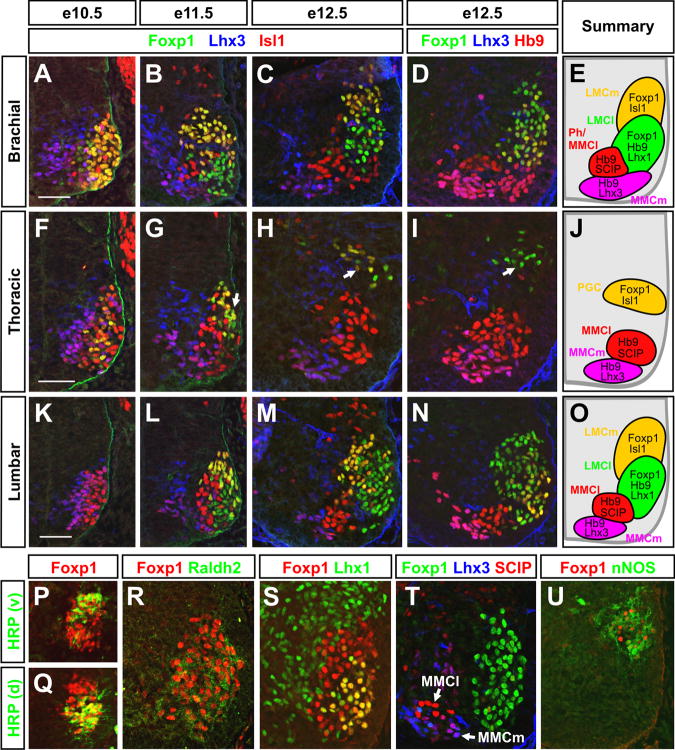
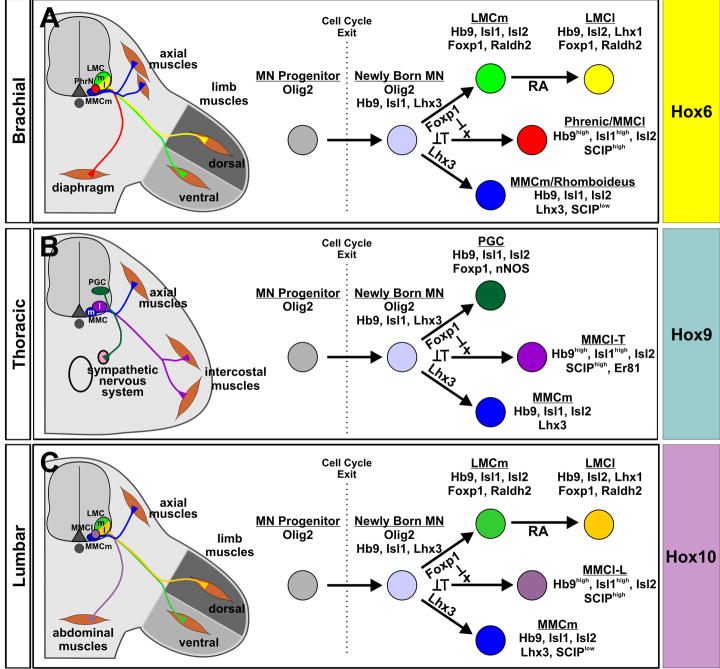
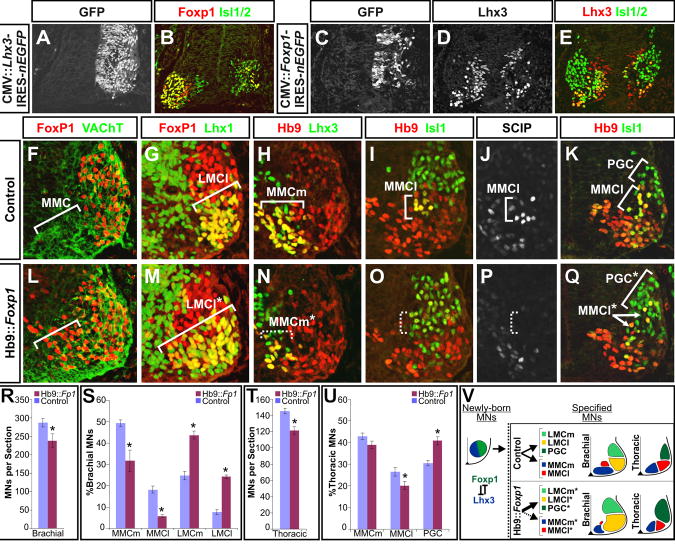
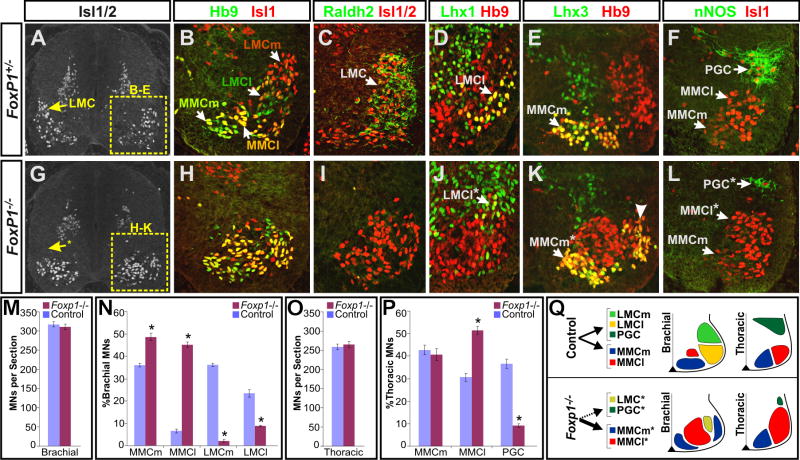
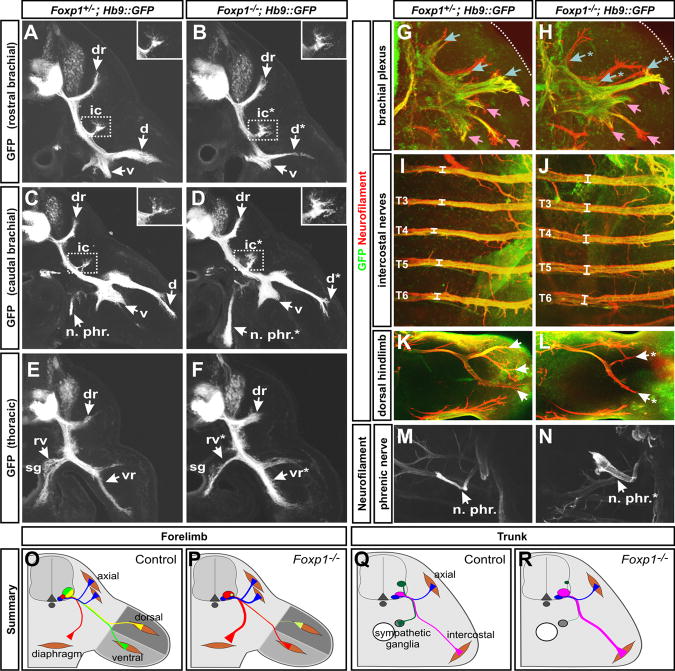
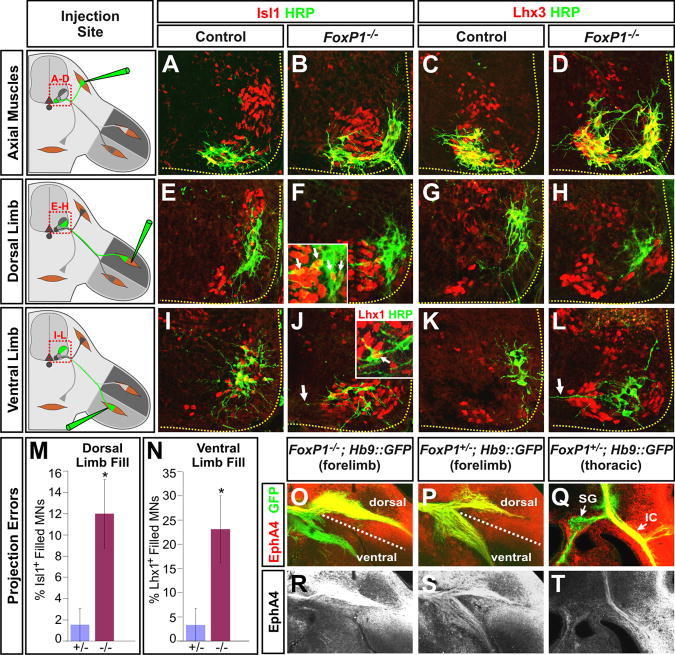
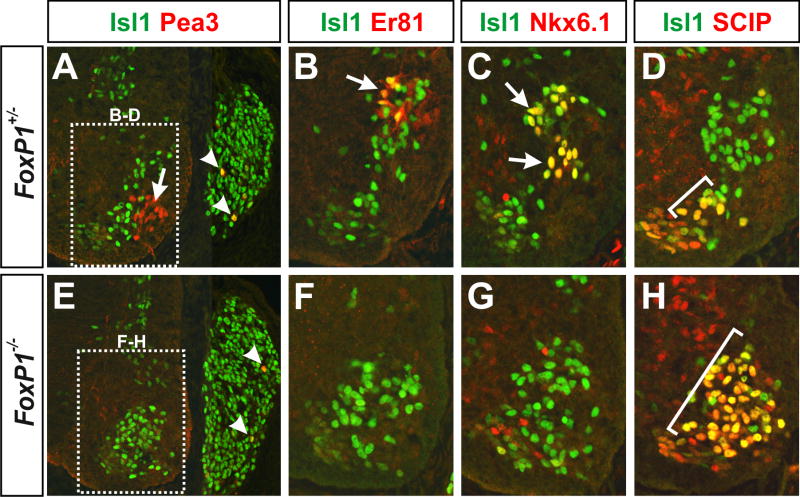
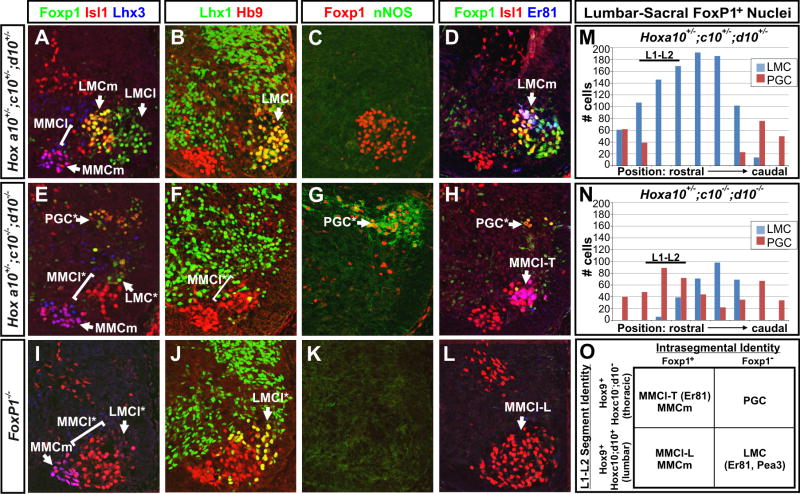
The formation of locomotor circuits depends on the spatially organized generation of motor columns that innervate distinct muscle and autonomic nervous system targets along the body axis. Within each spinal segment, multiple motor neuron classes arise from a common progenitor population; however, the mechanisms underlying their diversification remain poorly understood. Here, we show that the Forkhead domain transcription factor Foxp1 plays a critical role in defining the columnar identity of motor neurons at each axial position. Using genetic manipulations, we demonstrate that Foxp1 establishes the pattern of LIM-HD protein expression and accordingly organizes motor axon projections, their connectivity with peripheral targets, and the establishment of motor pools. These functions of Foxp1 act in accordance with the rostrocaudal pattern provided by Hox proteins along the length of the spinal cord, suggesting a model by which motor neuron diversity is achieved through the coordinated actions of Foxp1 and Hox proteins.
运动回路的形成取决于运动柱在空间上有组织的生成,这些运动柱支配着沿身体轴线的不同肌肉和自主神经系统靶点。在每个脊髓节段内,多种运动神经元类型源自共同的祖细胞群体;然而,它们多样化的潜在机制仍知之甚少。在这里,我们表明叉头结构域转录因子Foxp1在确定每个轴向位置的运动神经元柱状身份方面起着关键作用。通过基因操作,我们证明Foxp1建立了LIM-HD蛋白表达模式,并相应地组织运动轴突投射、它们与外周靶点的连接以及运动神经元池的建立。Foxp1的这些功能与沿脊髓长度由Hox蛋白提供的头尾模式一致,提示了一种通过Foxp1和Hox蛋白的协同作用实现运动神经元多样性的模型。