Cheng Tammy P, French Anthony R, Plougastel Beatrice F M, Pingel Jeanette T, Orihuela Michael M, Buller Mark L, Yokoyama Wayne M
Division of Rheumatology, Department of Medicine, Washington University School of Medicine, St Louis, MO, 63110, USA.
Immunogenetics. 2008 Oct;60(10):565-73. doi: 10.1007/s00251-008-0313-3. Epub 2008 Jul 31.
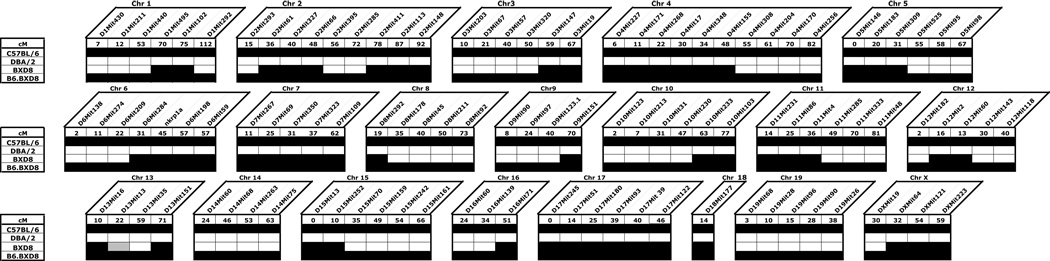
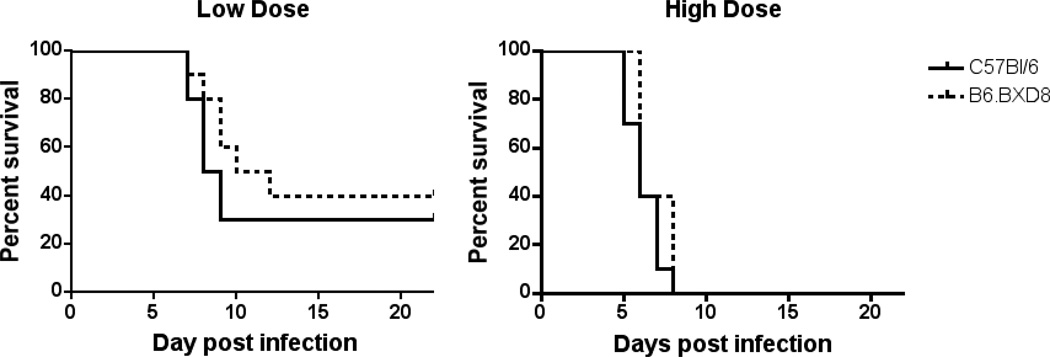
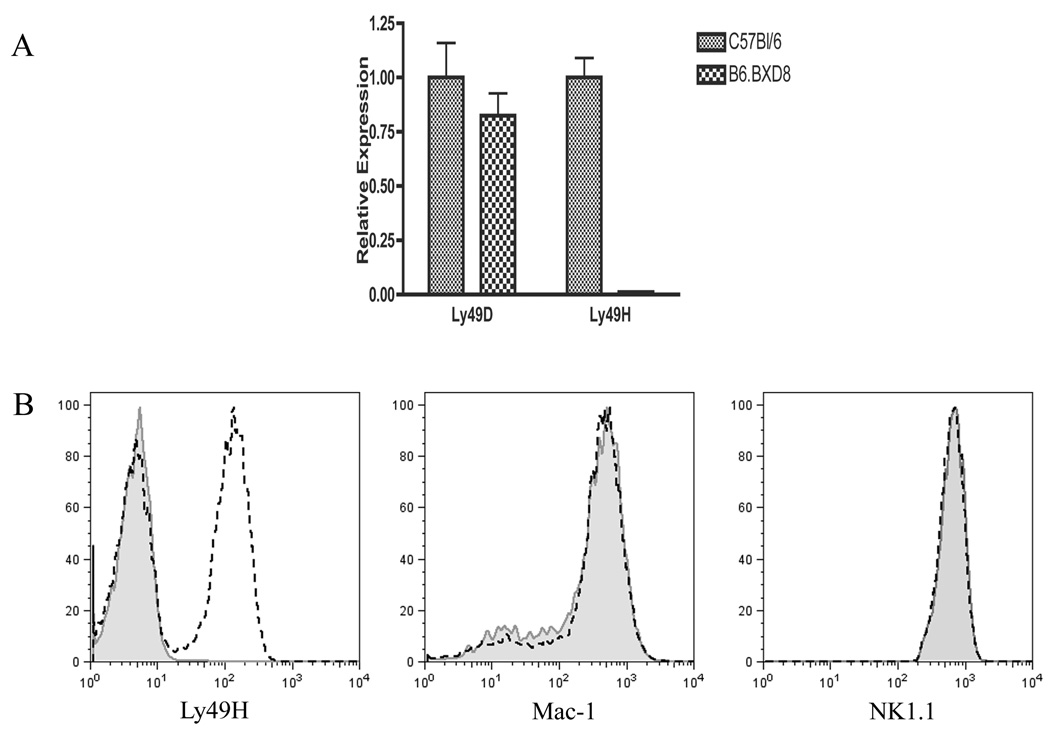
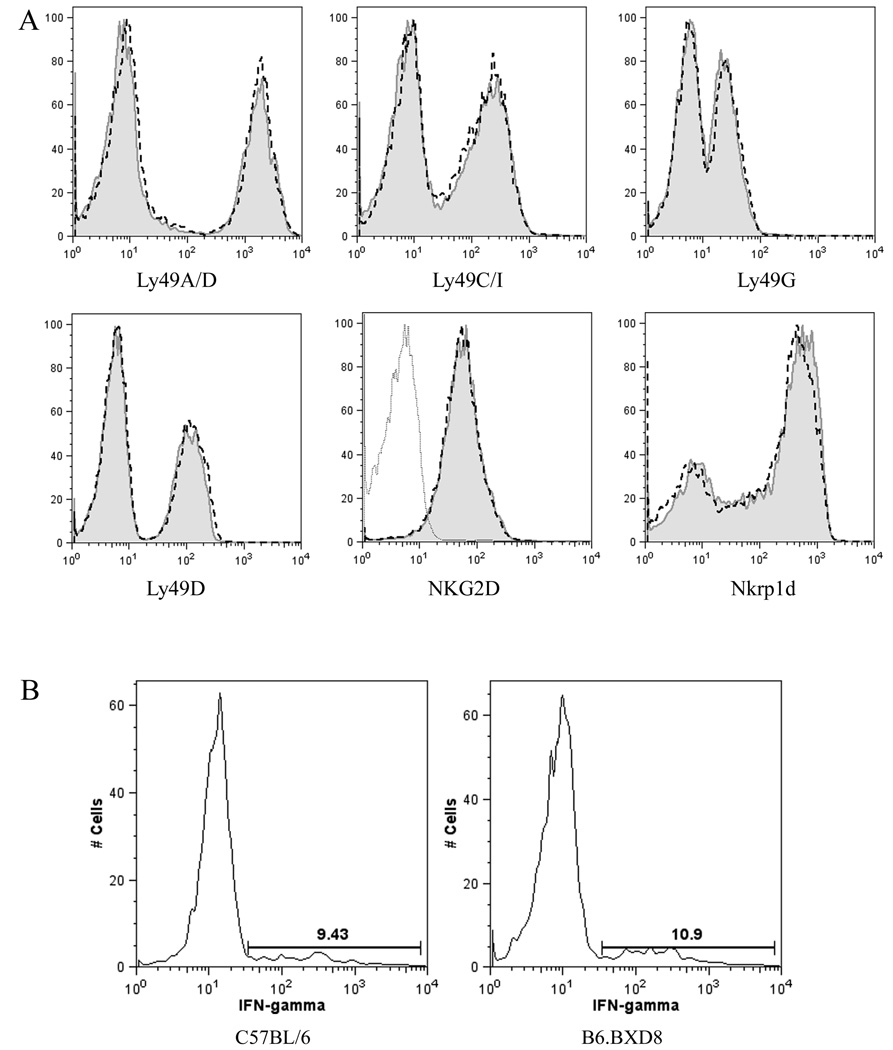
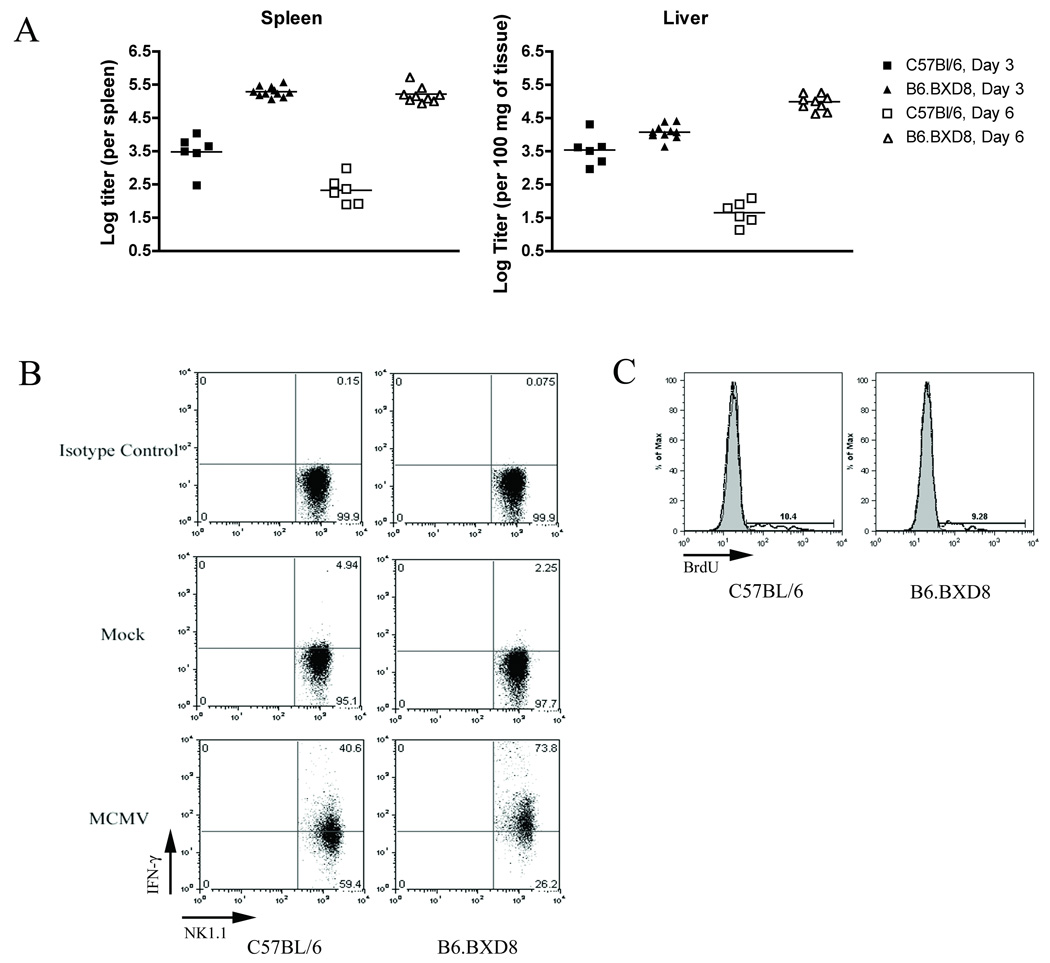
Natural killer (NK) cells play critical roles in antiviral immunity. While the importance of effector mechanisms such as interferons has been demonstrated through knockout mice, specific mechanisms of how viruses are recognized and controlled by NK cells are less well defined. Previous genetic studies have mapped the resistance genes for murine cytomegalovirus (MCMV), herpes simplex virus-1 (HSV-1), and ectromelia virus to the NK gene complex on murine chromosome 6, a region containing the polymorphic Ly49 and Nkrp1 families. Genetic resistance to MCMV in C57BL/6 has been attributed to Ly49H, an activation receptor, through susceptibility of the recombinant inbred strain BXD-8 that lacks Ly49h (also known as Klra8) but derived about half of its genome from its DBA/2 progenitor. However, it remained possible that epigenetic effects could account for the MCMV phenotype in BXD-8 mice. Herein, we report the generation of a novel congenic murine strain, B6.BXD8-Klra8 ( Cmv1-del )/Wum, on the C57BL/6 genetic background to evaluate the effect of deletion of a single NK activation receptor, Ly49H. Deletion of Ly49H rendered mice much more susceptible to MCMV infection. This increase in susceptibility did not appear to be a result of a difference in NK cell expansion or interferon-gamma (IFN-gamma) production between the C57BL/6 and the B6.BXD8 strains. On the other hand, the deletion of Ly49h did not otherwise affect NK cell maturation or Ly49D expression and had no effect on susceptibility to HSV-1 or ectromelia virus. In conclusion, Ly49h is necessary for genetic resistance to MCMV, but not HSV-1 or ectromelia virus.
自然杀伤(NK)细胞在抗病毒免疫中发挥着关键作用。虽然通过基因敲除小鼠已经证明了干扰素等效应机制的重要性,但NK细胞识别和控制病毒的具体机制尚不清楚。先前的遗传学研究已将小鼠巨细胞病毒(MCMV)、单纯疱疹病毒1型(HSV-1)和埃可病毒的抗性基因定位到小鼠6号染色体上的NK基因复合体,该区域包含多态性的Ly49和Nkrp1家族。C57BL/6小鼠对MCMV的遗传抗性归因于激活受体Ly49H,这是通过缺乏Ly49h(也称为Klra8)但其基因组约一半来自其DBA/2祖系的重组近交系BXD-8的易感性得出的。然而,表观遗传效应仍有可能解释BXD-8小鼠的MCMV表型。在此,我们报告了在C57BL/6遗传背景上产生的一种新型同源小鼠品系B6.BXD8-Klra8(Cmv1-del)/Wum,以评估单个NK激活受体Ly49H缺失的影响。Ly49H的缺失使小鼠对MCMV感染更加易感。这种易感性的增加似乎不是由于C57BL/6和B6.BXD8品系之间NK细胞扩增或γ干扰素(IFN-γ)产生的差异所致。另一方面,Ly49h的缺失在其他方面并未影响NK细胞的成熟或Ly49D的表达,并且对HSV-1或埃可病毒的易感性没有影响。总之,Ly49h对于对MCMV的遗传抗性是必需的,但对HSV-1或埃可病毒则不是。