Ahn Sejin, Lee Gwanghee, Yang Soo Jung, Lee Deokjae, Lee Seunghyuk, Shin Hyo Sun, Kim Min Cheol, Lee Kee Nyung, Palmer Douglas C, Theoret Marc R, Jenkinson Eric J, Anderson Graham, Restifo Nicholas P, Kim Moon Gyo
Laboratory of Cellular and Molecular Immunology, National Institute of Allergy and Infectious Diseases, Bethesda, Maryland, United States of America,
PLoS Biol. 2008 Aug 5;6(8):e191. doi: 10.1371/journal.pbio.0060191.
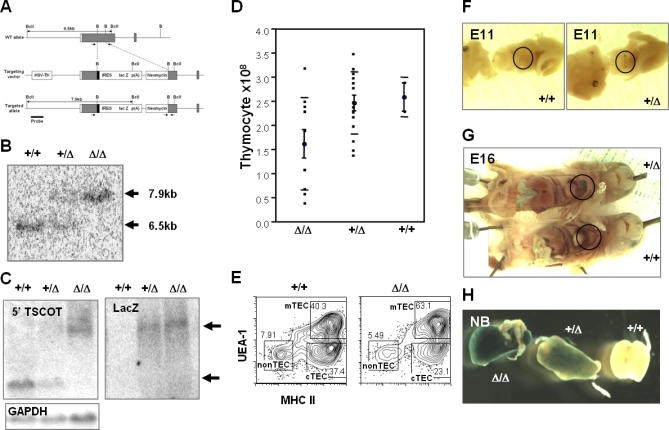
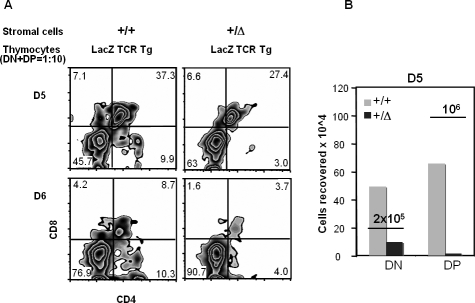
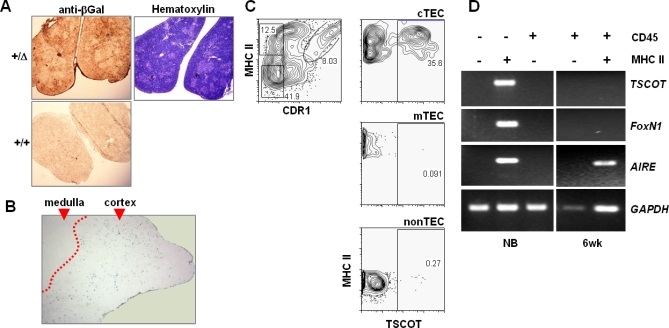
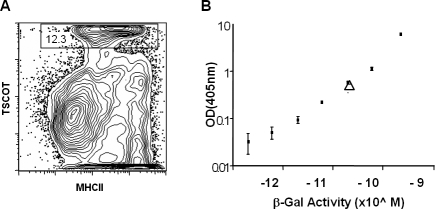
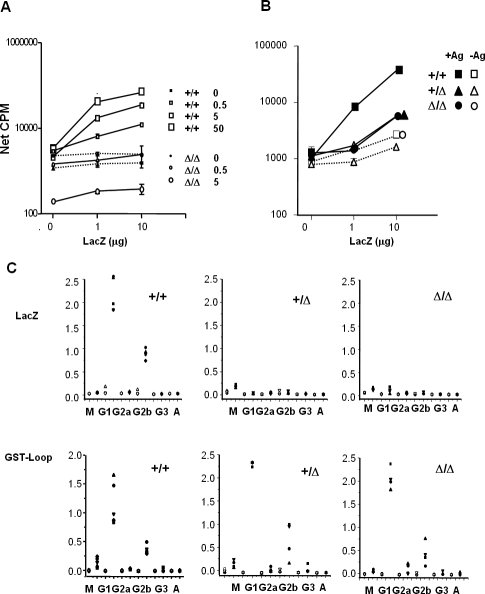
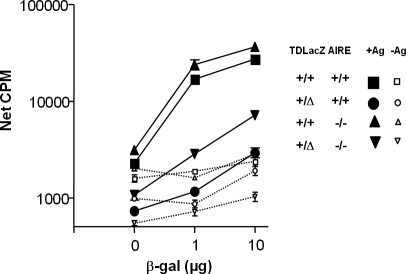
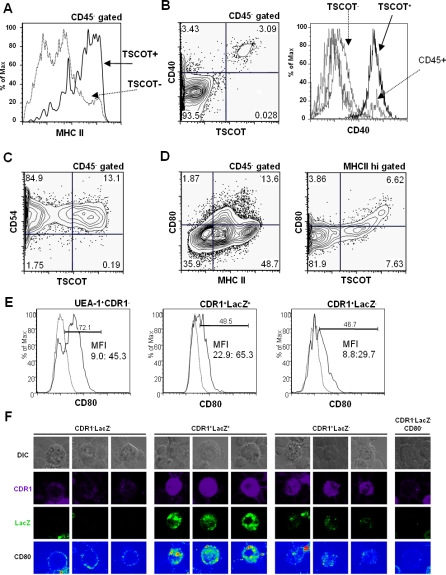
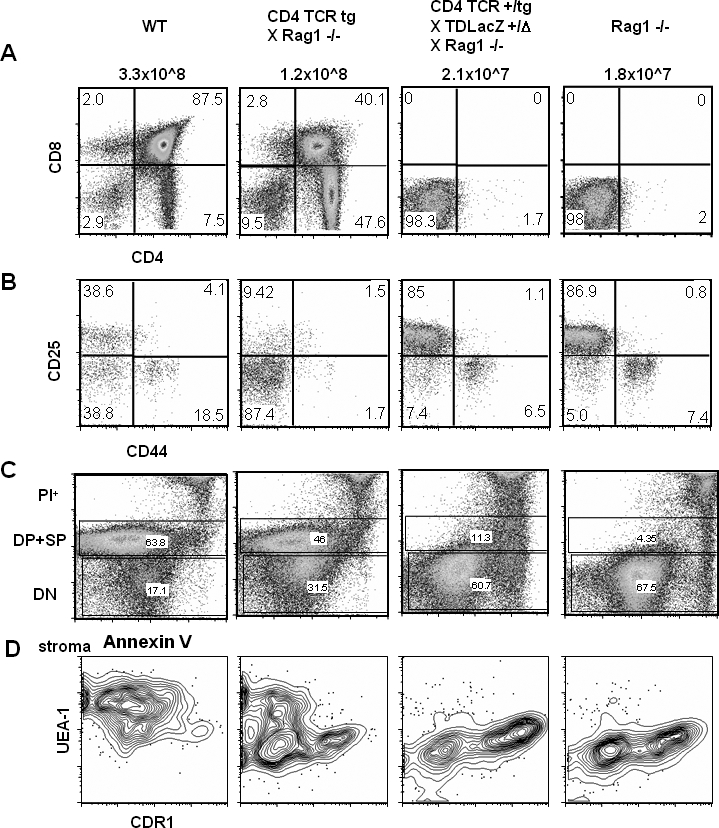
Although much effort has been directed at dissecting the mechanisms of central tolerance, the role of thymic stromal cells remains elusive. In order to further characterize this event, we developed a mouse model restricting LacZ to thymic stromal cotransporter (TSCOT)-expressing thymic stromal cells (TDLacZ). The thymus of this mouse contains approximately 4,300 TSCOT+ cells, each expressing several thousand molecules of the LacZ antigen. TSCOT+ cells express the cortical marker CDR1, CD40, CD80, CD54, and major histocompatibility complex class II (MHCII). When examining endogenous responses directed against LacZ, we observed significant tolerance. This was evidenced in a diverse T cell repertoire as measured by both a CD4 T cell proliferation assay and an antigen-specific antibody isotype analysis. This tolerance process was at least partially independent of Autoimmune Regulatory Element gene expression. When TDLacZ mice were crossed to a novel CD4 T cell receptor (TCR) transgenic reactive against LacZ (BgII), there was a complete deletion of double-positive thymocytes. Fetal thymic reaggregate culture of CD45- and UEA-depleted thymic stromal cells from TDLacZ and sorted TCR-bearing thymocytes excluded the possibility of cross presentation by thymic dendritic cells and medullary epithelial cells for the deletion. Overall, these results demonstrate that the introduction of a neoantigen into TSCOT-expressing cells can efficiently establish complete tolerance and suggest a possible application for the deletion of antigen-specific T cells by antigen introduction into TSCOT+ cells.
尽管在剖析中枢耐受机制方面已付出诸多努力,但胸腺基质细胞的作用仍不明确。为了进一步明确这一过程,我们构建了一种小鼠模型,将LacZ限制在表达胸腺基质共转运体(TSCOT)的胸腺基质细胞(TDLacZ)中。该小鼠的胸腺含有约4300个TSCOT +细胞,每个细胞表达数千个LacZ抗原分子。TSCOT +细胞表达皮质标志物CDR1、CD40、CD80、CD54和主要组织相容性复合体II类(MHCII)。在检测针对LacZ的内源性反应时,我们观察到显著的耐受性。这在通过CD4 T细胞增殖试验和抗原特异性抗体亚型分析所测得的多样化T细胞库中得到了证实。这种耐受过程至少部分独立于自身免疫调节元件基因表达。当将TDLacZ小鼠与一种针对LacZ的新型CD4 T细胞受体(TCR)转基因小鼠(BgII)杂交时,双阳性胸腺细胞完全缺失。来自TDLacZ的CD45和UEA耗尽的胸腺基质细胞与分选的携带TCR的胸腺细胞进行胎儿胸腺再聚集培养,排除了胸腺树突状细胞和髓质上皮细胞交叉呈递导致缺失的可能性。总体而言,这些结果表明,将新抗原引入表达TSCOT的细胞可有效建立完全耐受性,并提示通过将抗原引入TSCOT +细胞来删除抗原特异性T细胞的可能应用。