Kugathasan Kapilan, Roediger Elizabeth K, Small Cherrie-Lee, McCormick Sarah, Yang Pingchang, Xing Zhou
Department of Pathology and Molecular Medicine, Centre for Gene Therapeutics, McMaster University, Hamilton, Ontario, Canada.
BMC Immunol. 2008 Aug 13;9:48. doi: 10.1186/1471-2172-9-48.
The lung is divided into two major compartments: the alveolar space and the parenchyma. The alveolar macrophages are the first line of leukocytes in the lung taking up incoming microbes or microbial antigens whereas the parenchymal dendritic cells (DCs) are believed to be the sole potent antigen presenting cells (APCs) in the lung. Both resting alveolar macrophages and parenchymal DCs express CD11c. Several important questions remain to be elucidated: 1] to which extent the alveolar space and lung parenchymal CD11c+ APCs differ in their phenotype and ability to activate naïve T cells; 2] whether they differ in their ability to activate antigen-experienced or -primed T cells; and 3] whether these lung CD11c+ APC populations differ from the splenic CD11c+ APCs which have been commonly used for understanding APC biology.
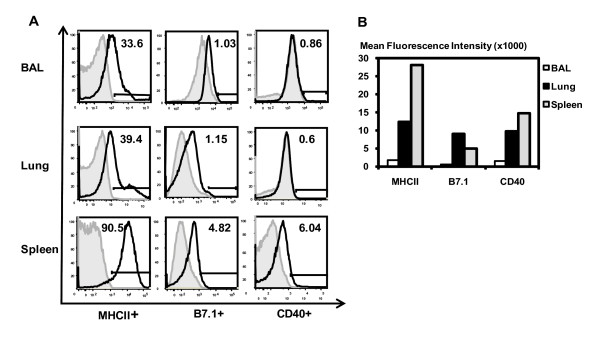
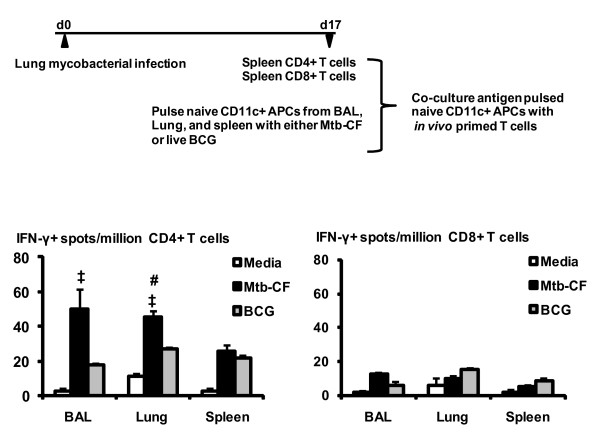
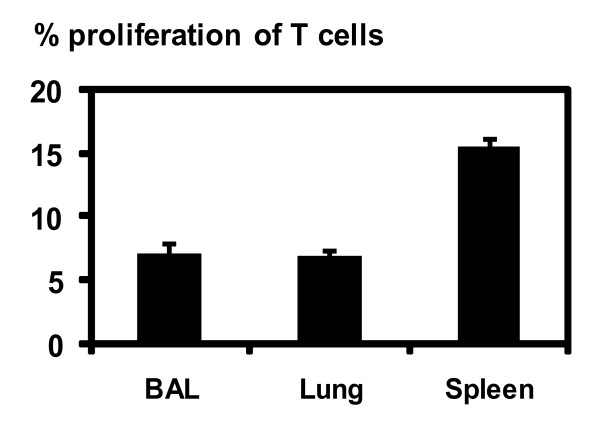
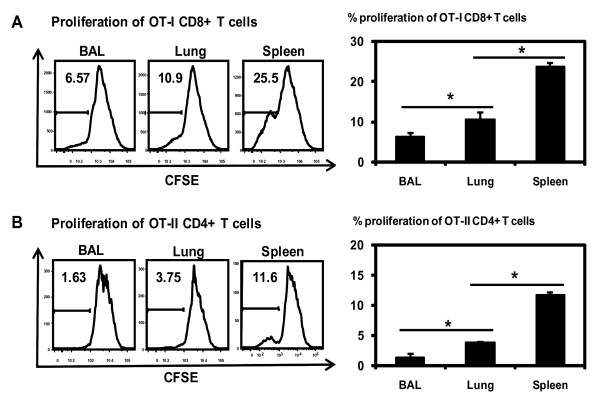
CD11c+ APCs from the alveolar space, lung parenchyma, and the spleen display differential co-stimulatory molecule expression and cytokine responsiveness upon stimulation. Alveolar space APCs are weak activators of naïve T cells compared to lung parenchymal and splenic CD11c+ APC populations. However, alveolar space APCs are able to potently activate the in vivo microbial antigen-primed T cells to a similar extent as lung parenchymal and splenic APCs.
Together our findings indicate that alveolar CD11c+ APCs have a specialized T cell-activating function, capable of activating antigen-primed, but not naïve, T cells whereas lung CD11c+ APCs are capable of activating both the naïve and antigen-primed T cell populations.
肺分为两个主要部分:肺泡腔和实质。肺泡巨噬细胞是肺中摄取进入的微生物或微生物抗原的第一线白细胞,而实质树突状细胞(DC)被认为是肺中唯一有效的抗原呈递细胞(APC)。静息的肺泡巨噬细胞和实质DC均表达CD11c。仍有几个重要问题有待阐明:1]肺泡腔和肺实质CD11c + APC在其表型和激活初始T细胞的能力上有多大程度的差异;2]它们在激活抗原经验丰富或已致敏的T细胞的能力上是否存在差异;3]这些肺CD11c + APC群体是否与常用于理解APC生物学的脾CD11c + APC不同。
来自肺泡腔、肺实质和脾脏的CD11c + APC在刺激后显示出不同的共刺激分子表达和细胞因子反应性。与肺实质和脾CD11c + APC群体相比,肺泡腔APC是初始T细胞的弱激活剂。然而,肺泡腔APC能够在与肺实质和脾APC相似的程度上有效地激活体内微生物抗原致敏的T细胞。
我们的研究结果共同表明,肺泡CD11c + APC具有专门的T细胞激活功能,能够激活抗原致敏但非初始的T细胞,而肺CD11c + APC能够激活初始和抗原致敏的T细胞群体。