DuBois Steven G, Matthay Katherine K
Department of Pediatrics, UCSF School of Medicine, Box 0106, San Francisco, CA 94143-0106, USA.
Nucl Med Biol. 2008 Aug;35 Suppl 1(Suppl 1):S35-48. doi: 10.1016/j.nucmedbio.2008.05.002.
Neuroblastoma is the most common pediatric extracranial solid cancer. This tumor is characterized by metaiodobenzylguanidine (MIBG) avidity in 90% of cases, prompting the use of radiolabeled MIBG for targeted radiotherapy in these tumors.
The available English language literature was reviewed for original research investigating in vitro, in vivo and clinical applications of radiolabeled MIBG for neuroblastoma.
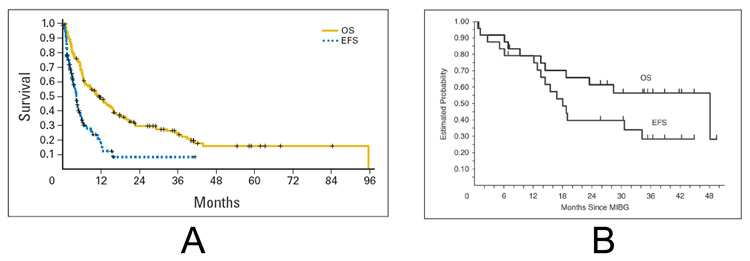
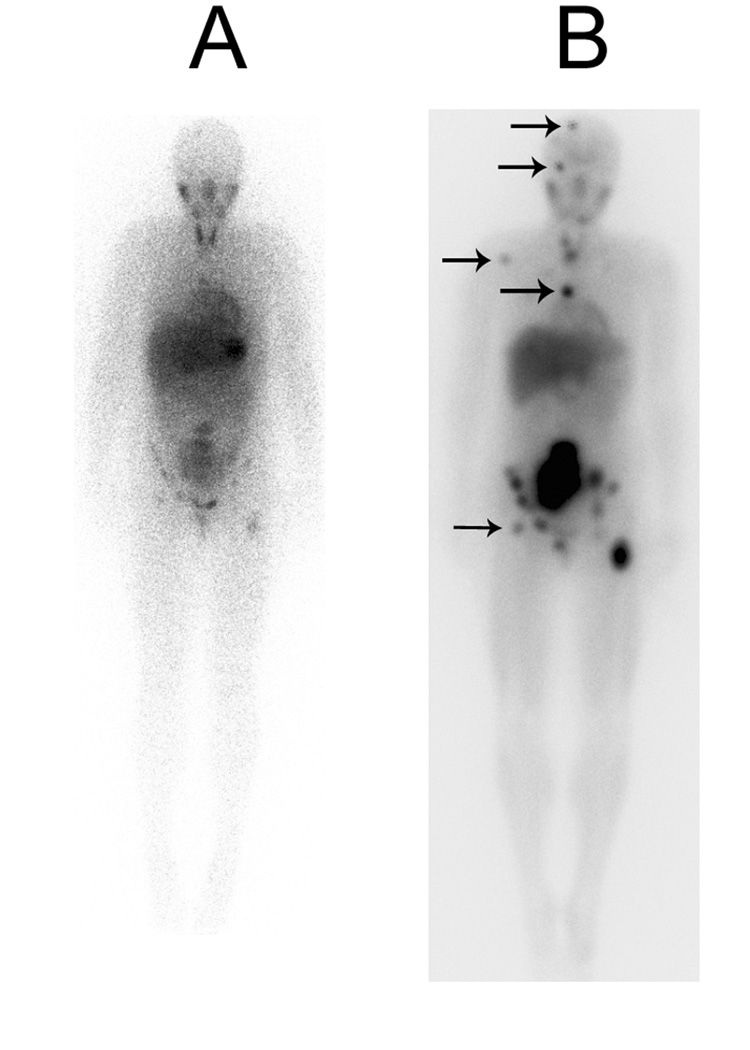
MIBG is actively transported into neuroblastoma cells by the norepinephrine transporter. Preclinical studies demonstrate substantial activity of radiolabeled MIBG in neuroblastoma models, with (131)I-MIBG showing enhanced activity in larger tumors compared to (125)I-MIBG. Clinical studies of (131)I-MIBG in patients with relapsed or refractory neuroblastoma have identified myelosuppression as the main dose-limiting toxicity, necessitating stem cell reinfusion at higher doses. Most studies report a response rate of 30-40% with (131)I-MIBG in this population. More recent studies have focused on the use of (131)I-MIBG in combination with chemotherapy or myeloablative regimens.
(131)I-MIBG is an active agent for the treatment of patients with neuroblastoma. Future studies will need to define the optimal role of this targeted radiopharmaceutical in the therapy of this disease.
神经母细胞瘤是最常见的小儿颅外实体癌。该肿瘤在90%的病例中表现为对间碘苄胍(MIBG)摄取,这促使在这些肿瘤中使用放射性标记的MIBG进行靶向放疗。
检索现有的英文文献,以查找关于放射性标记的MIBG在神经母细胞瘤中的体外、体内及临床应用的原始研究。
MIBG通过去甲肾上腺素转运体被主动转运至神经母细胞瘤细胞内。临床前研究表明,放射性标记的MIBG在神经母细胞瘤模型中具有显著活性,与¹²⁵I-MIBG相比,¹³¹I-MIBG在较大肿瘤中显示出更强的活性。¹³¹I-MIBG在复发或难治性神经母细胞瘤患者中的临床研究已确定骨髓抑制为主要的剂量限制性毒性,因此在较高剂量时需要进行干细胞回输。大多数研究报告该人群中¹³¹I-MIBG的缓解率为30%-40%。最近的研究集中在¹³¹I-MIBG与化疗或清髓方案联合使用。
¹³¹I-MIBG是治疗神经母细胞瘤患者的一种有效药物。未来的研究需要明确这种靶向放射性药物在该疾病治疗中的最佳作用。