Callahan Robert, Smith Gilbert H
Mammary Gland Biology and Tumorigenesis Laboratory, National Cancer Institute, Building 37/Room 1118A, MSC4254, Bethesda, MD 20892, USA.
J Mammary Gland Biol Neoplasia. 2008 Sep;13(3):309-21. doi: 10.1007/s10911-008-9092-6. Epub 2008 Aug 15.
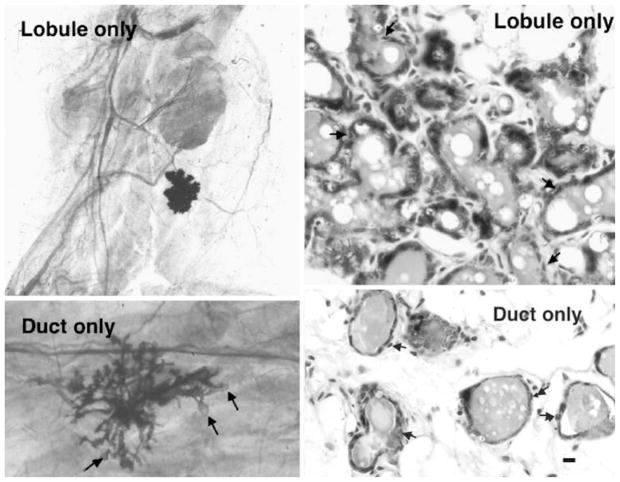
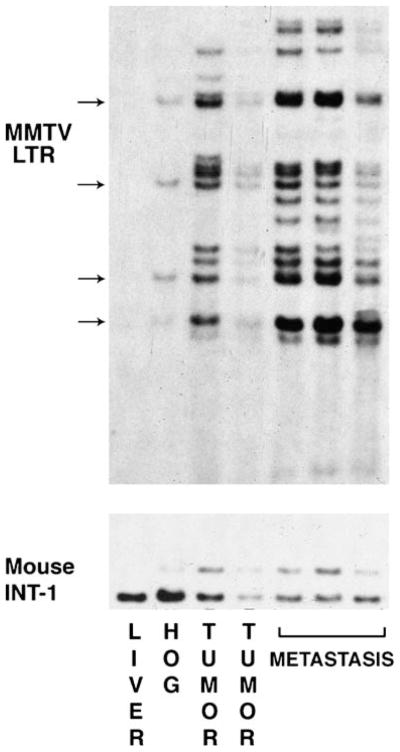
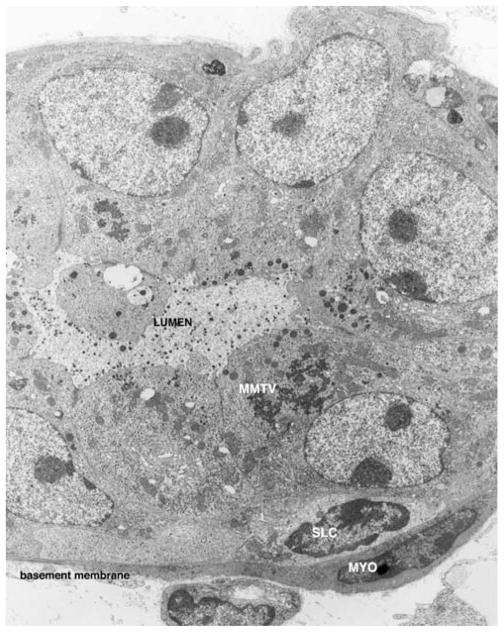
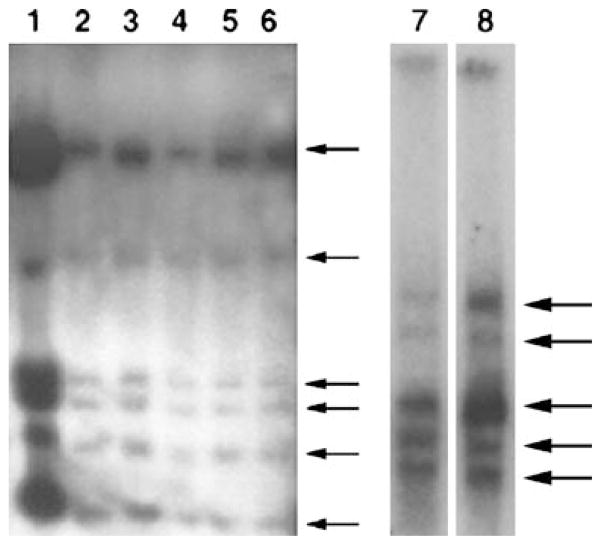
The paradigm of mammary cancer induction by the mouse mammary tumor virus (MMTV) is used to illustrate the body of evidence that supports the hypothesis that mammary epithelial stem/progenitor cells represent targets for oncogenic transformation. It is argued that this is not a special case applicable only to MMTV-induced mammary cancer, because MMTV acts as an environmental mutagen producing random interruptions in the somatic DNA of infected cells by insertion of proviral DNA copies. In addition to disrupting the host genome, the proviral DNA also influences gene expression through its associated enhancer sequences over significant inter-genomic distances. Genes commonly affected by MMTV insertion in multiple individual tumors include, the Wnt, FGF, RSpo gene families as well as eIF3e and Notch4. All of these gene families are known to play essential roles in stem cell maintenance and behavior in a variety of organs. The MMTV-induced mutations accumulate in cells that are long-lived and possess the properties of stem cells, namely, self-renewal and the capacity to produce divergent epithelial progeny through asymmetric division. The evidence shows that epithelial cells with these properties are present in normal mammary glands, may be infected with MMTV, become transformed to produce epithelial hyperplasia through MMTV-induced mutagenesis and progress to frank mammary malignancy. Retroviral marking via MMTV proviral insertion demonstrates that this process progresses from a single mammary epithelial cell that possesses all of the features ascribed to tissue-specific stem cells.
小鼠乳腺肿瘤病毒(MMTV)诱导乳腺癌的范例被用于阐述一系列证据,这些证据支持乳腺上皮干细胞/祖细胞是致癌转化靶点的假说。有人认为,这并非仅适用于MMTV诱导的乳腺癌的特殊情况,因为MMTV作为一种环境诱变剂,通过插入前病毒DNA拷贝在受感染细胞的体细胞DNA中产生随机中断。除了破坏宿主基因组外,前病毒DNA还通过其相关的增强子序列在显著的基因组间距离上影响基因表达。在多个个体肿瘤中通常受MMTV插入影响的基因包括Wnt、FGF、Rspo基因家族以及eIF3e和Notch4。所有这些基因家族在多种器官的干细胞维持和行为中都起着重要作用。MMTV诱导的突变在长寿且具有干细胞特性(即自我更新以及通过不对称分裂产生不同上皮后代的能力)的细胞中积累。证据表明,具有这些特性的上皮细胞存在于正常乳腺中,可能被MMTV感染,通过MMTV诱导的诱变转化为产生上皮增生,并发展为明显的乳腺恶性肿瘤。通过MMTV前病毒插入进行的逆转录病毒标记表明,这个过程从单个具有所有归属于组织特异性干细胞特征的乳腺上皮细胞开始。