Chanda Emmanuel, Masaninga Fred, Coleman Michael, Sikaala Chadwick, Katebe Cecilia, Macdonald Michael, Baboo Kumar S, Govere John, Manga Lucien
National Malaria Control Programme, Ministry of Health, Zambia.
Malar J. 2008 Aug 27;7:164. doi: 10.1186/1475-2875-7-164.
The Zambian Malaria Control Programme with the Roll Back Malaria (RBM) partners have developed the current National Malaria Strategic Plan (NMSP 2006-2011) which focuses on prevention based on the Integrated Vector Management (IVM) strategy. The introduction and implementation of an IVM strategy was planned in accordance with the World Health Organization (WHO) steps towards IVM implementation namely Introduction Phase, Consolidation Phase and Expansion Phase.
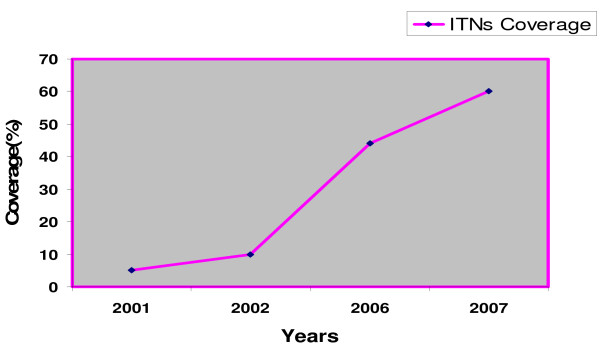
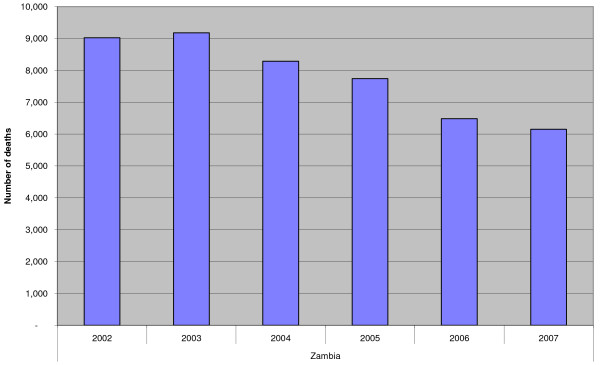
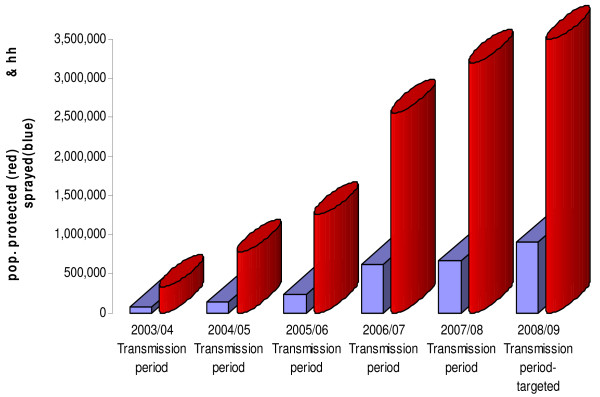
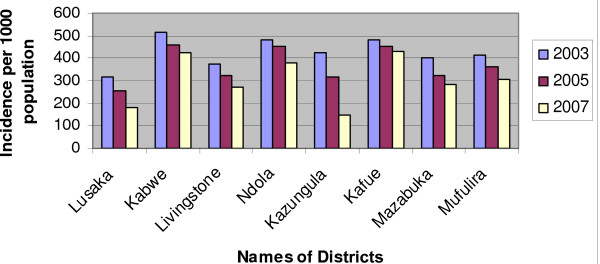
IVM has created commitment for Legal and Regulatory policy review, monitoring, Research and a strong stewardship by the chemical suppliers. It has also leveraged additional resources, improved inter-sectoral collaboration, capacity building and enhanced community participation which facilitated a steady scaling up in coverage and utilisation of key preventive interventions. Thus, markedly reducing malaria incidence and case fatalities in the country.
Zambia has successfully introduced, consolidated and expanded IVM activities. Resulting in increased coverage and utilization of interventions and markedly reducing malaria-related morbidity and mortality while ensuring a better protection of the environment.
赞比亚疟疾控制项目与抗击疟疾伙伴共同制定了当前的《国家疟疾战略计划(2006 - 2011年)》,该计划基于综合病媒管理(IVM)战略侧重于预防。IVM战略的引入和实施是根据世界卫生组织(WHO)实施IVM的步骤进行规划的,即引入阶段、巩固阶段和扩展阶段。
IVM促使各方致力于法律和监管政策审查、监测、研究以及化学品供应商的有力管理。它还利用了额外资源,改善了部门间协作、能力建设并增强了社区参与,这有助于稳步扩大关键预防干预措施的覆盖范围和利用率。从而显著降低了该国的疟疾发病率和病例死亡率。
赞比亚已成功引入、巩固并扩展了IVM活动。这使得干预措施的覆盖范围和利用率得以提高,显著降低了与疟疾相关的发病率和死亡率,同时确保了对环境的更好保护。