Tiao Jim Y, Bradaia Amyaouch, Biermann Barbara, Kaupmann Klemens, Metz Michaela, Haller Corinne, Rolink Antonius G, Pless Elin, Barlow Paul N, Gassmann Martin, Bettler Bernhard
Department of Biomedicine, Institute of Physiology, Pharmazentrum, University of Basel, CH-4056 Basel, Switzerland.
J Biol Chem. 2008 Nov 7;283(45):31005-11. doi: 10.1074/jbc.M804464200. Epub 2008 Sep 2.
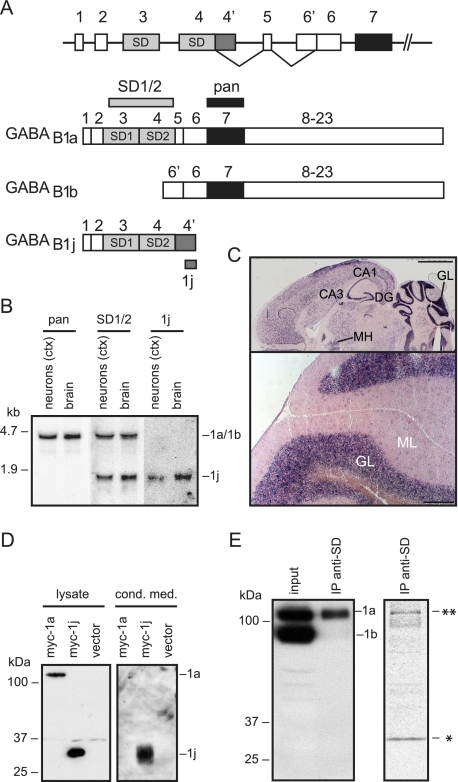
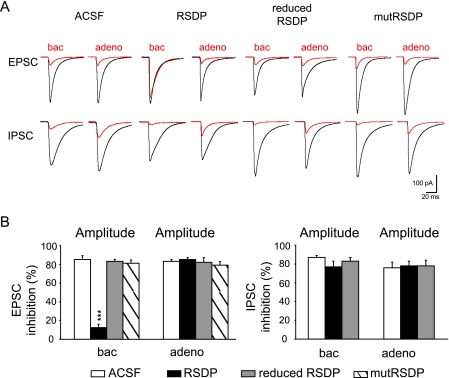
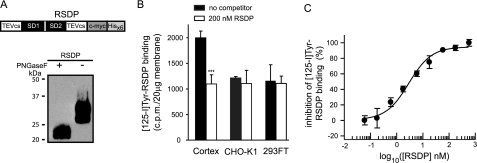
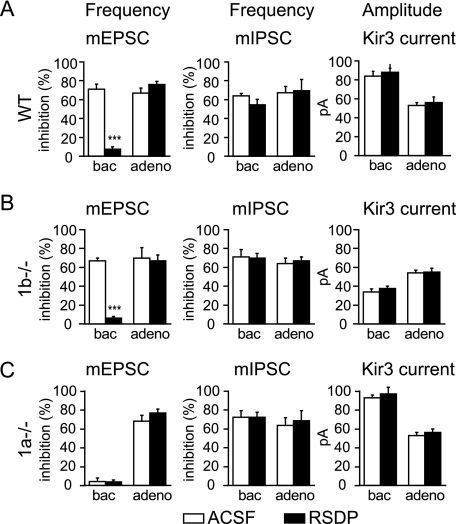
GABA(B) receptors are the G-protein-coupled receptors for gamma-aminobutyric acid (GABA), the main inhibitory neurotransmitter in the brain. GABA(B) receptors are promising drug targets for a wide spectrum of psychiatric and neurological disorders. Receptor subtypes exhibit no pharmacological differences and are based on the subunit isoforms GABA(B1a) and GABA(B1b). GABA(B1a) differs from GABA(B1b) in its ectodomain by the presence of a pair of conserved protein binding motifs, the sushi domains (SDs). Previous work showed that selectively GABA(B1a) contributes to heteroreceptors at glutamatergic terminals, whereas both GABA(B1a) and GABA(B1b) contribute to autoreceptors at GABAergic terminals or to postsynaptic receptors. Here, we describe GABA(B1j), a secreted GABA(B1) isoform comprising the two SDs. We show that the two SDs, when expressed as a soluble protein, bind to neuronal membranes with low nanomolar affinity. Soluble SD protein, when added at nanomolar concentrations to dissociated hippocampal neurons or to acute hippocampal slices, impairs the inhibitory effect of GABA(B) heteroreceptors on evoked and spontaneous glutamate release. In contrast, soluble SD protein neither impairs the activity of GABA(B) autoreceptors nor impairs the activity of postsynaptic GABA(B) receptors. We propose that soluble SD protein scavenges an extracellular binding partner that retains GABA(B1a)-containing heteroreceptors in proximity of the presynaptic release machinery. Soluble GABA(B1) isoforms like GABA(B1j) may therefore act as dominant-negative inhibitors of heteroreceptors and control the level of GABA(B)-mediated inhibition at glutamatergic terminals. Of importance for drug discovery, our data also demonstrate that it is possible to selectively impair GABA(B) heteroreceptors by targeting their SDs.
GABA(B)受体是γ-氨基丁酸(GABA)的G蛋白偶联受体,GABA是大脑中主要的抑制性神经递质。GABA(B)受体是治疗多种精神和神经疾病的有前景的药物靶点。受体亚型在药理学上没有差异,基于亚基异构体GABA(B1a)和GABA(B1b)。GABA(B1a)在其胞外结构域与GABA(B1b)的不同之处在于存在一对保守的蛋白质结合基序,即寿司结构域(SDs)。先前的研究表明,选择性的GABA(B1a)有助于谷氨酸能终末的异源受体,而GABA(B1a)和GABA(B1b)都有助于GABA能终末的自身受体或突触后受体。在这里,我们描述了GABA(B1j),一种包含两个SDs的分泌型GABA(B1)异构体。我们表明,当作为可溶性蛋白表达时,这两个SDs以低纳摩尔亲和力与神经元膜结合。当以纳摩尔浓度添加到解离的海马神经元或急性海马切片中时,可溶性SD蛋白会损害GABA(B)异源受体对诱发和自发性谷氨酸释放的抑制作用。相比之下,可溶性SD蛋白既不损害GABA(B)自身受体的活性,也不损害突触后GABA(B)受体的活性。我们提出,可溶性SD蛋白清除了一种细胞外结合伴侣,该伴侣将含GABA(B1a)的异源受体保留在突触前释放机制附近。因此,像GABA(B1j)这样的可溶性GABA(B1)异构体可能作为异源受体的显性负性抑制剂,并控制谷氨酸能终末GABA(B)介导的抑制水平。对药物发现很重要的是,我们的数据还表明,通过靶向其SDs可以选择性地损害GABA(B)异源受体。