Cohen Ehud, Dillin Andrew
Molecular and Cell Biology Laboratory, The Salk Institute for Biological Studies, 10010 North Torrey Pines Road, La Jolla, California 92037, USA.
Nat Rev Neurosci. 2008 Oct;9(10):759-67. doi: 10.1038/nrn2474. Epub 2008 Sep 4.
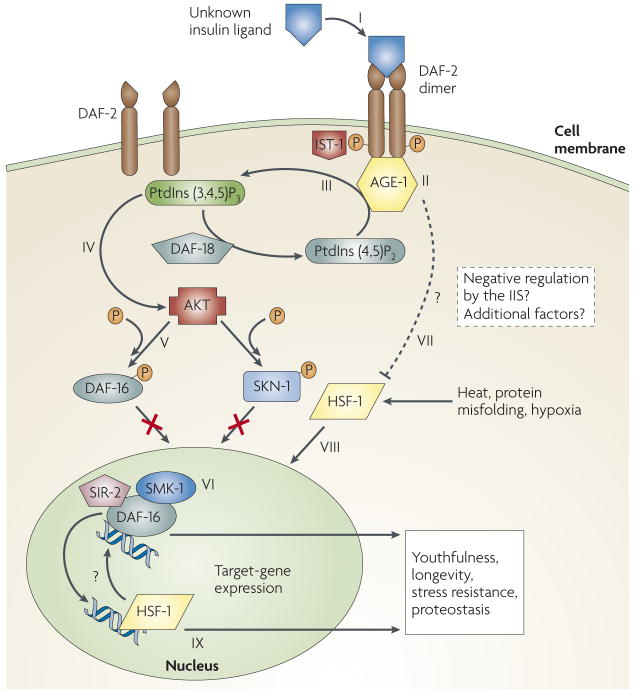
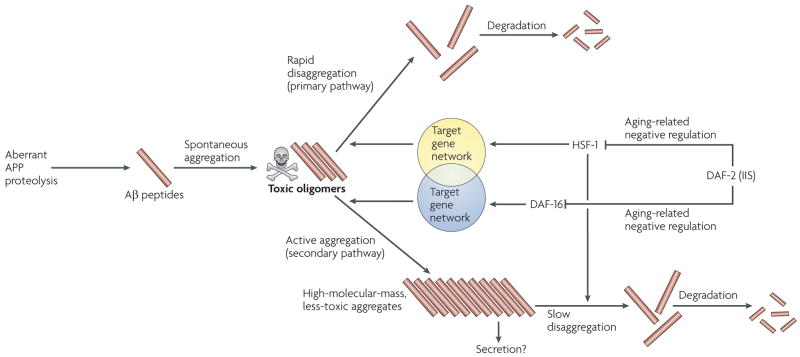
Distinct human neurodegenerative diseases share remarkably similar temporal emergence patterns, even though different toxic proteins are involved in their onset. Typically, familial neurodegenerative diseases emerge during the fifth decade of life, whereas sporadic cases do not exhibit symptoms earlier than the seventh decade. Recently, mechanistic links between the aging process and toxic protein aggregation, a common hallmark of neurodegenerative diseases, have been revealed. The insulin/insulin-like growth factor 1 (IGF1) signalling pathway - a lifespan, metabolism and stress-resistance regulator - links neurodegeneration to the aging process. Thus, although a reduction of insulin signalling can result in diabetes, its reduction can also increase longevity and delay the onset of protein-aggregation-mediated toxicity. Here we review this apparent paradox and delineate the therapeutic potential of manipulating the insulin/IGF1 signalling pathway for the treatment of neurodegenerative diseases.
尽管不同的毒性蛋白参与了人类神经退行性疾病的发病过程,但不同的人类神经退行性疾病却有着非常相似的发病时间模式。通常,家族性神经退行性疾病在生命的第五个十年出现,而散发性病例在第七个十年之前不会出现症状。最近,衰老过程与毒性蛋白聚集(神经退行性疾病的一个共同特征)之间的机制联系已经被揭示。胰岛素/胰岛素样生长因子1(IGF1)信号通路——一种寿命、代谢和抗应激调节因子——将神经退行性变与衰老过程联系起来。因此,虽然胰岛素信号的减少会导致糖尿病,但它的减少也可以延长寿命并延迟蛋白质聚集介导的毒性的发作。在这里,我们回顾这一明显的矛盾,并阐述操纵胰岛素/IGF1信号通路治疗神经退行性疾病的治疗潜力。