Gruntman Eyal, Qi Yijun, Slotkin R Keith, Roeder Ted, Martienssen Robert A, Sachidanandam Ravi
BMC Bioinformatics. 2008 Sep 11;9:371. doi: 10.1186/1471-2105-9-371.
There is great interest in probing the temporal and spatial patterns of cytosine methylation states in genomes of a variety of organisms. It is hoped that this will shed light on the biological roles of DNA methylation in the epigenetic control of gene expression. Bisulfite sequencing refers to the treatment of isolated DNA with sodium bisulfite to convert unmethylated cytosine to uracil, with PCR converting the uracil to thymidine followed by sequencing of the resultant DNA to detect DNA methylation. For the study of DNA methylation, plants provide an excellent model system, since they can tolerate major changes in their DNA methylation patterns and have long been studied for the effects of DNA methylation on transposons and epimutations. However, in contrast to the situation in animals, there aren't many tools that analyze bisulfite data in plants, which can exhibit methylation of cytosines in a variety of sequence contexts (CG, CHG, and CHH).
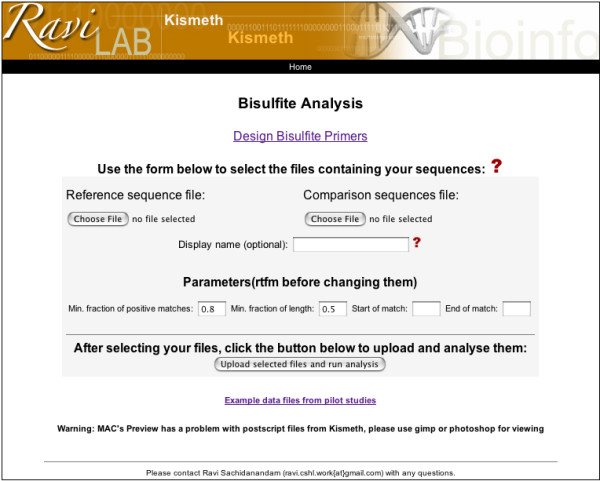
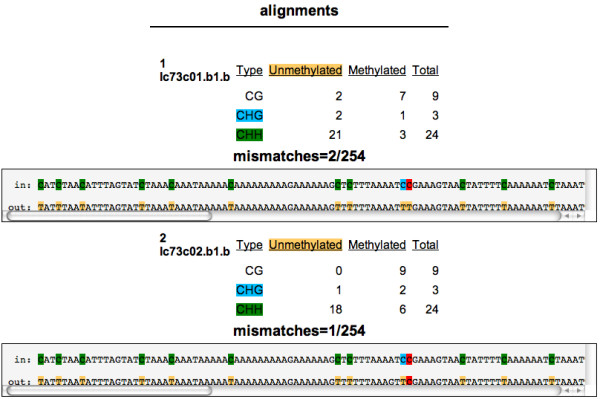
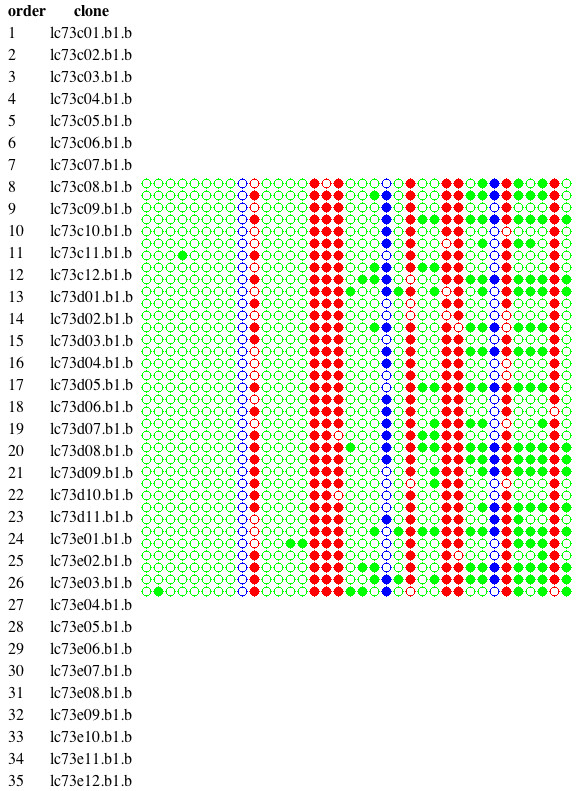
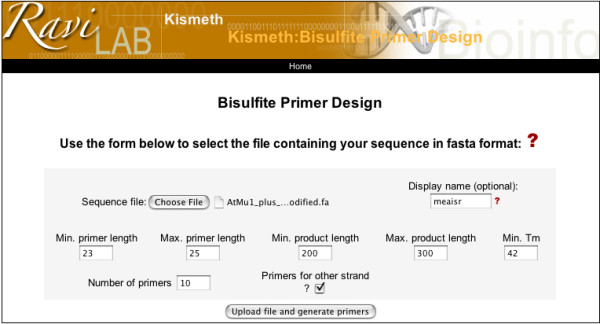
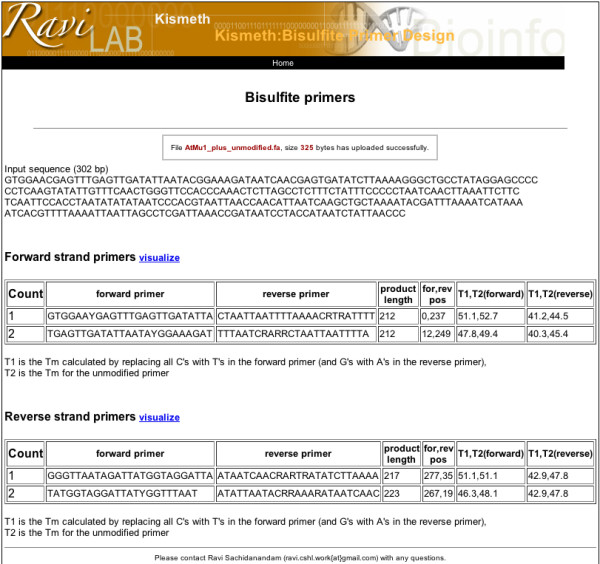
Kismeth http://katahdin.mssm.edu/kismeth is a web-based tool for bisulfite sequencing analysis. Kismeth was designed to be used with plants, since it considers potential cytosine methylation in any sequence context (CG, CHG, and CHH). It provides a tool for the design of bisulfite primers as well as several tools for the analysis of the bisulfite sequencing results. Kismeth is not limited to data from plants, as it can be used with data from any species.
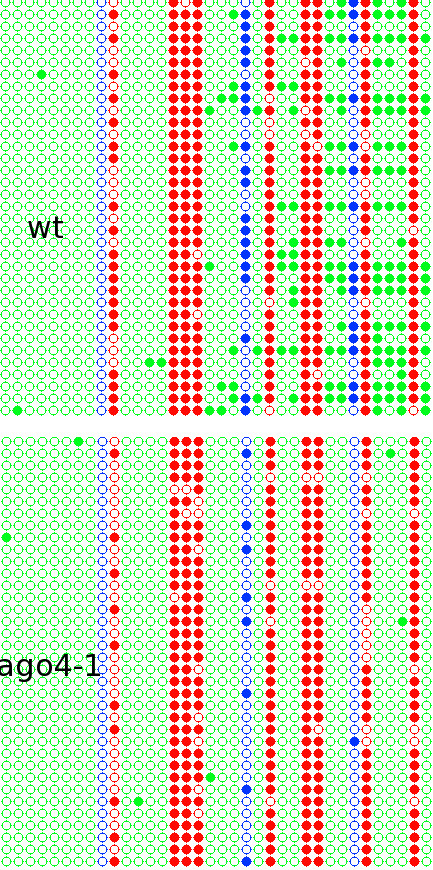
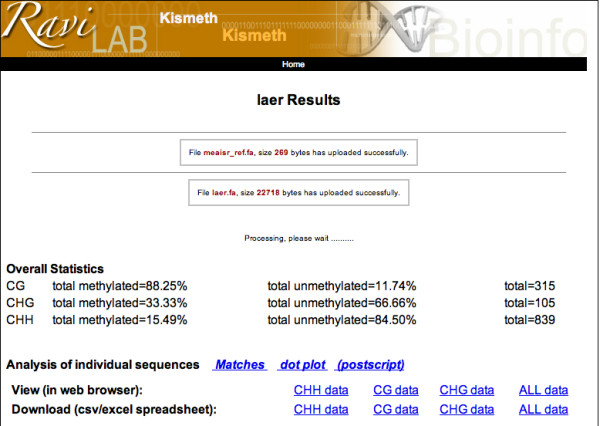
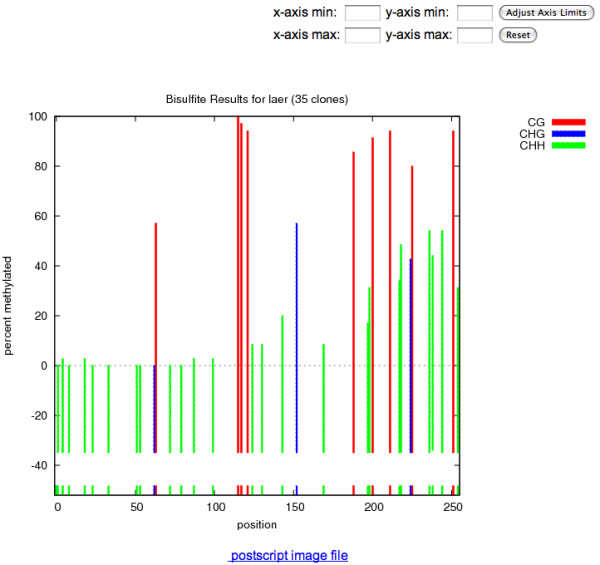
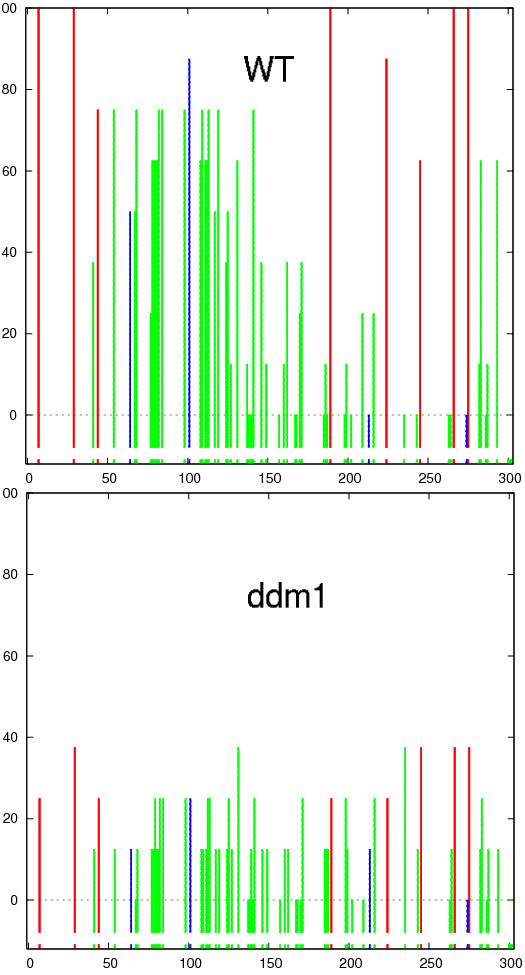
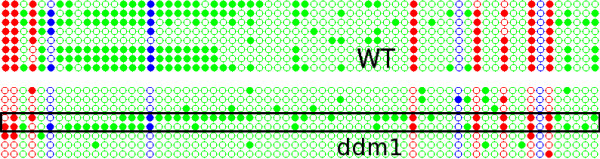
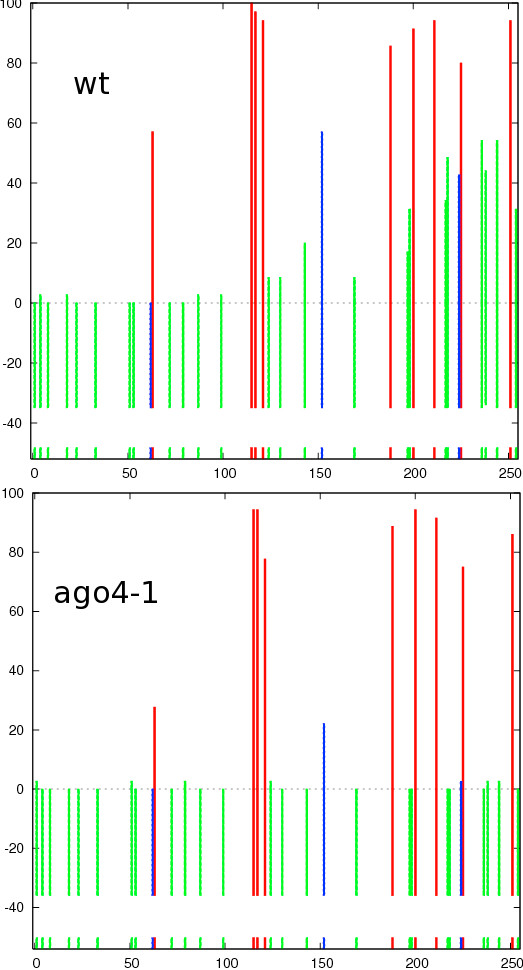
Kismeth simplifies bisulfite sequencing analysis. It is the only publicly available tool for the design of bisulfite primers for plants, and one of the few tools for the analysis of methylation patterns in plants. It facilitates analysis at both global and local scales, demonstrated in the examples cited in the text, allowing dissection of the genetic pathways involved in DNA methylation. Kismeth can also be used to study methylation states in different tissues and disease cells compared to a reference sequence.
人们对探究多种生物基因组中胞嘧啶甲基化状态的时空模式有着浓厚兴趣。希望这能揭示DNA甲基化在基因表达表观遗传控制中的生物学作用。亚硫酸氢盐测序是指用亚硫酸氢钠处理分离出的DNA,将未甲基化的胞嘧啶转化为尿嘧啶,通过PCR将尿嘧啶转化为胸腺嘧啶,然后对所得DNA进行测序以检测DNA甲基化。对于DNA甲基化研究而言,植物提供了一个出色的模型系统,因为它们能够耐受其DNA甲基化模式的重大变化,并且长期以来一直被研究DNA甲基化对转座子和表观突变的影响。然而,与动物的情况不同,用于分析植物亚硫酸氢盐数据的工具并不多,植物中的胞嘧啶可以在多种序列背景(CG、CHG和CHH)下发生甲基化。
Kismeth简化了亚硫酸氢盐测序分析。它是唯一公开可用的用于设计植物亚硫酸氢盐引物的工具,也是少数用于分析植物甲基化模式的工具之一。它有助于在全局和局部尺度上进行分析,如文中所举例子所示,能够剖析参与DNA甲基化的遗传途径。与参考序列相比,Kismeth还可用于研究不同组织和疾病细胞中的甲基化状态。