• 文献检索
  • 文档翻译
  • 深度研究
  • 学术资讯
  • Suppr Zotero 插件Zotero 插件
  • 邀请有礼
  • 套餐&价格
  • 历史记录
应用&插件
Suppr Zotero 插件Zotero 插件浏览器插件Mac 客户端Windows 客户端微信小程序
定价
高级版会员购买积分包购买API积分包
服务
文献检索文档翻译深度研究API 文档MCP 服务
关于我们
关于 Suppr公司介绍联系我们用户协议隐私条款
关注我们

Suppr 超能文献

核心技术专利:CN118964589B侵权必究
粤ICP备2023148730 号-1Suppr @ 2026

文献检索

告别复杂PubMed语法,用中文像聊天一样搜索,搜遍4000万医学文献。AI智能推荐,让科研检索更轻松。

立即免费搜索

文件翻译

保留排版,准确专业,支持PDF/Word/PPT等文件格式,支持 12+语言互译。

免费翻译文档

深度研究

AI帮你快速写综述,25分钟生成高质量综述,智能提取关键信息,辅助科研写作。

立即免费体验

发展性面孔失认症中感知情绪面孔和身体的神经关联:一项事件相关功能磁共振成像研究

Neural correlates of perceiving emotional faces and bodies in developmental prosopagnosia: an event-related fMRI-study.

作者信息

Van den Stock Jan, van de Riet Wim A C, Righart Ruthger, de Gelder Beatrice

机构信息

Laboratory of Cognitive and Affective Neuroscience, Tilburg University, Tilburg, The Netherlands.

出版信息

PLoS One. 2008 Sep 17;3(9):e3195. doi: 10.1371/journal.pone.0003195.

DOI:10.1371/journal.pone.0003195
PMID:18797499
原文链接:https://pmc.ncbi.nlm.nih.gov/articles/PMC2527524/
Abstract

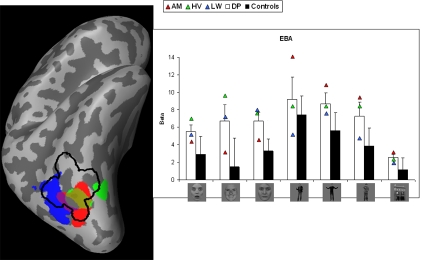
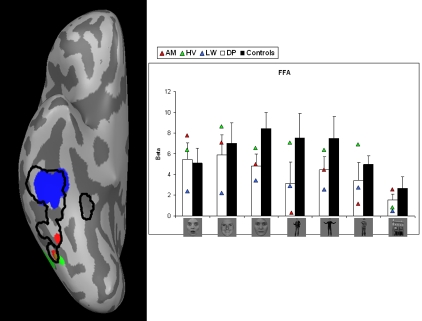
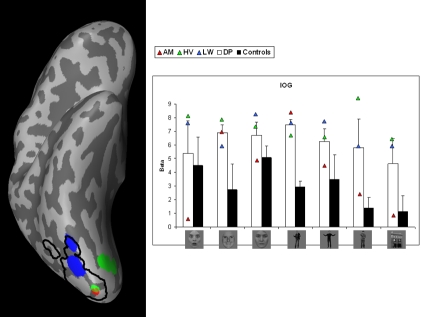
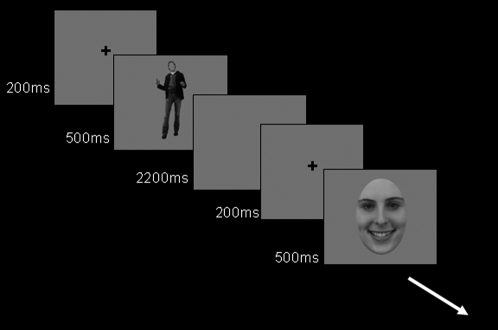
Many people experience transient difficulties in recognizing faces but only a small number of them cannot recognize their family members when meeting them unexpectedly. Such face blindness is associated with serious problems in everyday life. A better understanding of the neuro-functional basis of impaired face recognition may be achieved by a careful comparison with an equally unique object category and by a adding a more realistic setting involving neutral faces as well facial expressions. We used event-related functional magnetic resonance imaging (fMRI) to investigate the neuro-functional basis of perceiving faces and bodies in three developmental prosopagnosics (DP) and matched healthy controls. Our approach involved materials consisting of neutral faces and bodies as well as faces and bodies expressing fear or happiness. The first main result is that the presence of emotional information has a different effect in the patient vs. the control group in the fusiform face area (FFA). Neutral faces trigger lower activation in the DP group, compared to the control group, while activation for facial expressions is the same in both groups. The second main result is that compared to controls, DPs have increased activation for bodies in the inferior occipital gyrus (IOG) and for neutral faces in the extrastriate body area (EBA), indicating that body and face sensitive processes are less categorically segregated in DP. Taken together our study shows the importance of using naturalistic emotional stimuli for a better understanding of developmental face deficits.

摘要

许多人在人脸识别方面会经历短暂的困难,但只有少数人在意外见到家人时无法认出他们。这种脸盲在日常生活中会带来严重问题。通过与同样独特的物体类别进行仔细比较,并增加一个涉及中性面孔以及面部表情的更现实场景,可能会更好地理解人脸识别受损的神经功能基础。我们使用事件相关功能磁共振成像(fMRI)来研究三名发育性面孔失认症患者(DP)和匹配的健康对照者对面孔和身体的感知的神经功能基础。我们的方法涉及由中性面孔和身体以及表达恐惧或快乐的面孔和身体组成的材料。第一个主要结果是,在梭状面孔区(FFA),情绪信息的存在对患者组和对照组有不同的影响。与对照组相比,中性面孔在DP组中引发的激活较低,而两组中面部表情的激活是相同的。第二个主要结果是,与对照组相比,DP患者在枕下回(IOG)中对身体的激活以及在纹外体区(EBA)中对中性面孔的激活增加,这表明在DP患者中,对身体和面孔敏感的过程在分类上的分离程度较低。综合来看,我们的研究表明使用自然主义情绪刺激对于更好地理解发育性面孔缺陷的重要性。
https://cdn.ncbi.nlm.nih.gov/pmc/blobs/d5da/2527524/6f50fb72e566/pone.0003195.g005.jpg
https://cdn.ncbi.nlm.nih.gov/pmc/blobs/d5da/2527524/477cc85c87a6/pone.0003195.g001.jpg
https://cdn.ncbi.nlm.nih.gov/pmc/blobs/d5da/2527524/62edd0043e3e/pone.0003195.g002.jpg
https://cdn.ncbi.nlm.nih.gov/pmc/blobs/d5da/2527524/3e6f88a74a7e/pone.0003195.g003.jpg
https://cdn.ncbi.nlm.nih.gov/pmc/blobs/d5da/2527524/54f6ab29b404/pone.0003195.g004.jpg
https://cdn.ncbi.nlm.nih.gov/pmc/blobs/d5da/2527524/6f50fb72e566/pone.0003195.g005.jpg
https://cdn.ncbi.nlm.nih.gov/pmc/blobs/d5da/2527524/477cc85c87a6/pone.0003195.g001.jpg
https://cdn.ncbi.nlm.nih.gov/pmc/blobs/d5da/2527524/62edd0043e3e/pone.0003195.g002.jpg
https://cdn.ncbi.nlm.nih.gov/pmc/blobs/d5da/2527524/3e6f88a74a7e/pone.0003195.g003.jpg
https://cdn.ncbi.nlm.nih.gov/pmc/blobs/d5da/2527524/54f6ab29b404/pone.0003195.g004.jpg
https://cdn.ncbi.nlm.nih.gov/pmc/blobs/d5da/2527524/6f50fb72e566/pone.0003195.g005.jpg

相似文献

1
Neural correlates of perceiving emotional faces and bodies in developmental prosopagnosia: an event-related fMRI-study.发展性面孔失认症中感知情绪面孔和身体的神经关联:一项事件相关功能磁共振成像研究
PLoS One. 2008 Sep 17;3(9):e3195. doi: 10.1371/journal.pone.0003195.
2
Emotional attention in acquired prosopagnosia.后天性面孔失认症中的情感注意。
Soc Cogn Affect Neurosci. 2009 Sep;4(3):268-77. doi: 10.1093/scan/nsp014. Epub 2009 Apr 28.
3
Neural decoding reveals impaired face configural processing in the right fusiform face area of individuals with developmental prosopagnosia.神经解码揭示了发育性面孔失认症患者右侧梭状面孔区的面孔结构加工受损。
J Neurosci. 2015 Jan 28;35(4):1539-48. doi: 10.1523/JNEUROSCI.2646-14.2015.
4
Specific and common brain regions involved in the perception of faces and bodies and the representation of their emotional expressions.参与面部和身体感知及其情感表达表征的特定和共同脑区。
Soc Neurosci. 2009;4(2):101-20. doi: 10.1080/17470910701865367.
5
Multi-Item Discriminability Pattern to Faces in Developmental Prosopagnosia Reveals Distinct Mechanisms of Face Processing.发展性面孔失认症中面孔的多项鉴别模式揭示了不同的面孔加工机制。
Cereb Cortex. 2020 May 14;30(5):2986-2996. doi: 10.1093/cercor/bhz289.
6
Impaired perception of facial emotion in developmental prosopagnosia.发育性面孔失认症患者对面部表情的感知受损。
Cortex. 2016 Aug;81:126-36. doi: 10.1016/j.cortex.2016.04.008. Epub 2016 Apr 21.
7
Impaired processing of facial happiness, with or without awareness, in developmental prosopagnosia.发育性面孔失认症中对面部快乐表情的加工受损,无论是否有意识。
Neuropsychologia. 2017 Jul 28;102:217-228. doi: 10.1016/j.neuropsychologia.2017.06.020. Epub 2017 Jun 23.
8
The fusiform face area is not sufficient for face recognition: evidence from a patient with dense prosopagnosia and no occipital face area.梭状回面孔区不足以进行人脸识别:来自一名患有严重面孔失认症且无枕颞面孔区患者的证据。
Neuropsychologia. 2006;44(4):594-609. doi: 10.1016/j.neuropsychologia.2005.06.013. Epub 2005 Aug 25.
9
Abnormal face identity coding in the middle fusiform gyrus of two brain-damaged prosopagnosic patients.两名脑损伤面孔失认症患者梭状回中部的面孔身份编码异常。
Neuropsychologia. 2009 Oct;47(12):2584-92. doi: 10.1016/j.neuropsychologia.2009.05.005. Epub 2009 May 18.
10
The cortical face network of the prosopagnosic patient PS with fast periodic stimulation in fMRI.使用 fMRI 对面孔失认症患者 PS 进行快速周期性刺激后的大脑皮质面孔网络。
Cortex. 2019 Oct;119:528-542. doi: 10.1016/j.cortex.2018.11.008. Epub 2018 Nov 17.

引用本文的文献

1
Improving the DSM-5 approach to cognitive impairment: Developmental prosopagnosia reveals the need for tailored diagnoses.改善 DSM-5 认知障碍评估方法:发展性面孔失认症揭示了量身定制诊断的必要性。
Behav Res Methods. 2024 Oct;56(7):7872-7891. doi: 10.3758/s13428-024-02459-4. Epub 2024 Jul 8.
2
Exploring the evocative qualities of masks' visual imagery and their associations with adversity and trauma.探索面具视觉意象的唤起特质及其与逆境和创伤的关联。
Front Psychol. 2024 Jun 10;15:1337927. doi: 10.3389/fpsyg.2024.1337927. eCollection 2024.
3
The Neural Correlates of Developmental Prosopagnosia: Twenty-Five Years on.

本文引用的文献

1
Prosopagnosia as an impairment to face-specific mechanisms: Elimination of the alternative hypotheses in a developmental case.面容失认症是一种针对特定面容机制的损伤:在一个发展案例中排除了其他假说。
Cogn Neuropsychol. 2006 Jul 1;23(5):714-47. doi: 10.1080/02643290500441296.
2
Structural encoding precludes recognition of face parts in prosopagnosia.结构性编码妨碍了人面失认症患者对面部各部分的识别。
Cogn Neuropsychol. 2000 Feb 1;17(1):89-102. doi: 10.1080/026432900380508.
3
Specific and common brain regions involved in the perception of faces and bodies and the representation of their emotional expressions.
发育性面孔失认症的神经关联:二十五年回顾
Brain Sci. 2023 Sep 30;13(10):1399. doi: 10.3390/brainsci13101399.
4
Age Effects in Emotional Memory and Associated Eye Movements.年龄对情绪记忆及相关眼动的影响。
Brain Sci. 2022 Dec 15;12(12):1719. doi: 10.3390/brainsci12121719.
5
A new approach to diagnosing and researching developmental prosopagnosia: Excluded cases are impaired too.一种新的发展性面孔失认症诊断和研究方法:排除病例也受到损害。
Behav Res Methods. 2023 Dec;55(8):4291-4314. doi: 10.3758/s13428-022-02017-w. Epub 2022 Dec 2.
6
Left hemisphere abnormalities in developmental prosopagnosia when looking at faces but not words.发育性面孔失认症患者在观察面孔而非文字时左半球存在异常。
Brain Commun. 2019 Dec 20;1(1):fcz034. doi: 10.1093/braincomms/fcz034. eCollection 2019.
7
Self-face and self-body advantages in congenital prosopagnosia: evidence for a common mechanism.先天性面孔失认症中自我面孔和身体优势:共同机制的证据。
Exp Brain Res. 2019 Mar;237(3):673-686. doi: 10.1007/s00221-018-5452-7. Epub 2018 Dec 12.
8
Face shape and face identity processing in behavioral variant fronto-temporal dementia: A specific deficit for familiarity and name recognition of famous faces.行为变异额颞叶痴呆患者的面形和面容识别:对知名面孔的熟悉度和名字识别存在特定缺陷。
Neuroimage Clin. 2016 Mar 10;11:368-377. doi: 10.1016/j.nicl.2016.03.001. eCollection 2016.
9
Putting the face in context: Body expressions impact facial emotion processing in human infants.将面部置于情境中:身体表情影响人类婴儿的面部情绪处理。
Dev Cogn Neurosci. 2016 Jun;19:115-21. doi: 10.1016/j.dcn.2016.01.004. Epub 2016 Feb 17.
10
The Facial Expressive Action Stimulus Test. A test battery for the assessment of face memory, face and object perception, configuration processing, and facial expression recognition.面部表情动作刺激测试。用于评估面部记忆、面部与物体感知、构型处理以及面部表情识别的一组测试。
Front Psychol. 2015 Oct 29;6:1609. doi: 10.3389/fpsyg.2015.01609. eCollection 2015.
参与面部和身体感知及其情感表达表征的特定和共同脑区。
Soc Neurosci. 2009;4(2):101-20. doi: 10.1080/17470910701865367.
4
[Prosop's agnosia; the agnosia of cognition].[人面失认症;认知失认症]
Arch Psychiatr Nervenkr Z Gesamte Neurol Psychiatr. 1947;118(1-2):6-53. doi: 10.1007/BF00352849.
5
Developmental neuroimaging of the human ventral visual cortex.人类腹侧视觉皮层的发育神经影像学
Trends Cogn Sci. 2008 Apr;12(4):152-62. doi: 10.1016/j.tics.2008.01.009. Epub 2008 Mar 24.
6
A developmental examination of amygdala response to facial expressions.杏仁核对面部表情反应的发育性研究。
J Cogn Neurosci. 2008 Sep;20(9):1565-82. doi: 10.1162/jocn.2008.20114.
7
Functional plasticity in ventral temporal cortex following cognitive rehabilitation of a congenital prosopagnosic.先天性面孔失认症患者认知康复后腹侧颞叶皮质的功能可塑性
J Cogn Neurosci. 2007 Nov;19(11):1790-802. doi: 10.1162/jocn.2007.19.11.1790.
8
Impaired face and body perception in developmental prosopagnosia.发育性面孔失认症中面部和身体感知受损。
Proc Natl Acad Sci U S A. 2007 Oct 23;104(43):17234-8. doi: 10.1073/pnas.0707753104. Epub 2007 Oct 17.
9
Hereditary prosopagnosia: the first case series.遗传性面孔失认症:首个病例系列
Cortex. 2007 Aug;43(6):734-49. doi: 10.1016/s0010-9452(08)70502-1.
10
The neural basis of visual body perception.视觉身体感知的神经基础。
Nat Rev Neurosci. 2007 Aug;8(8):636-48. doi: 10.1038/nrn2195.