Guyer Amanda E, Monk Christopher S, McClure-Tone Erin B, Nelson Eric E, Roberson-Nay Roxann, Adler Abby D, Fromm Stephen J, Leibenluft Ellen, Pine Daniel S, Ernst Monique
National Institutes of Health (NIH), Bethesda, MD 20892-2670, USA.
J Cogn Neurosci. 2008 Sep;20(9):1565-82. doi: 10.1162/jocn.2008.20114.
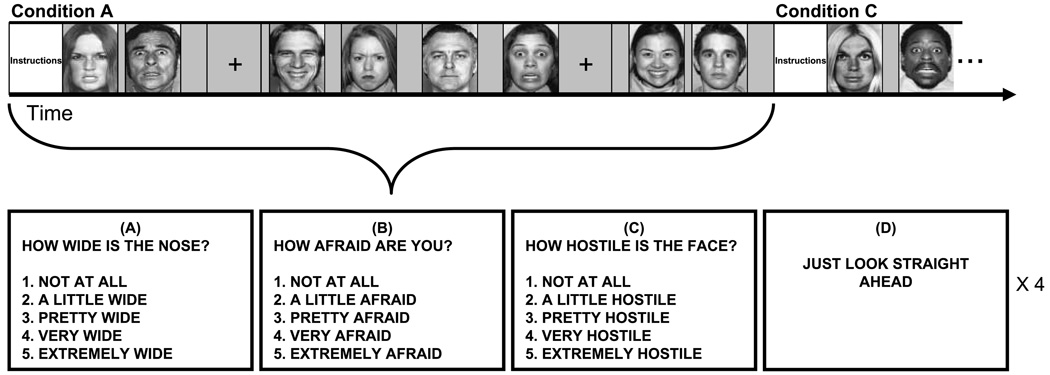
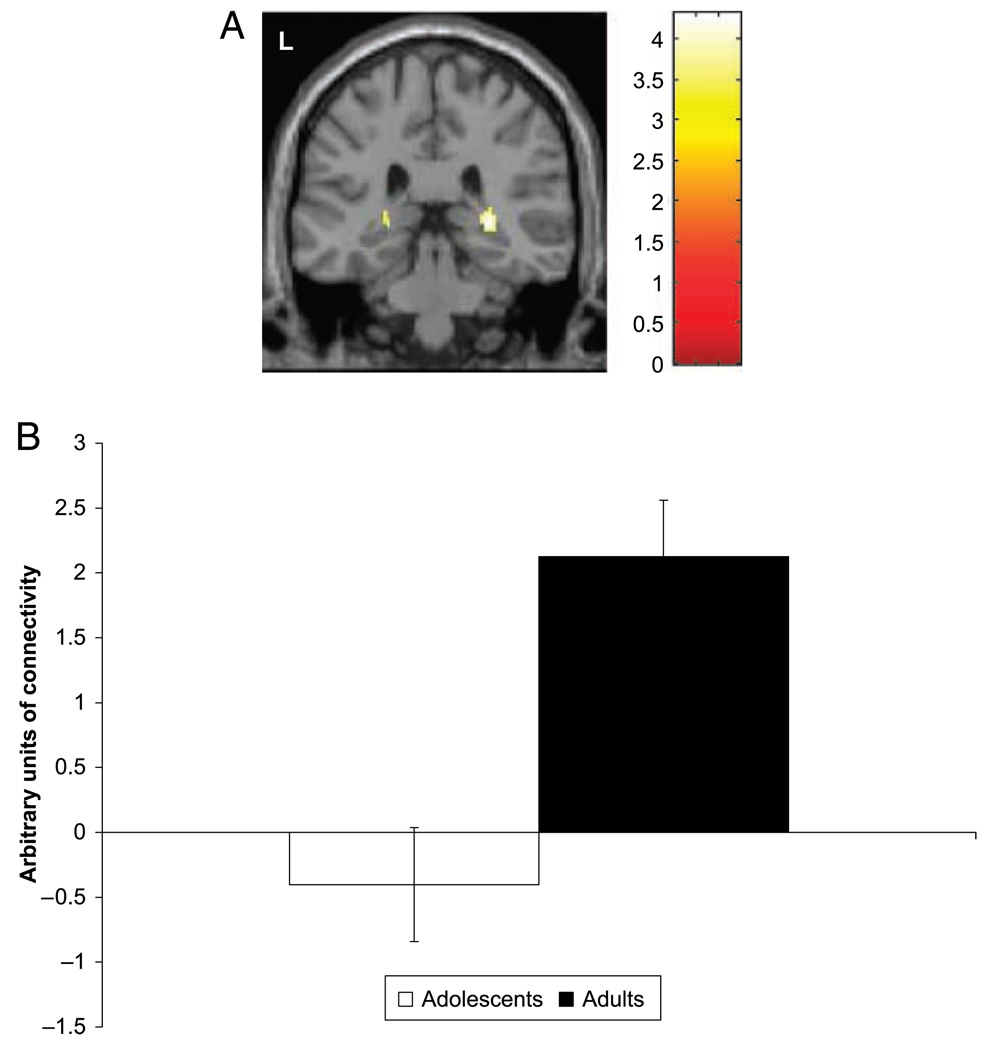
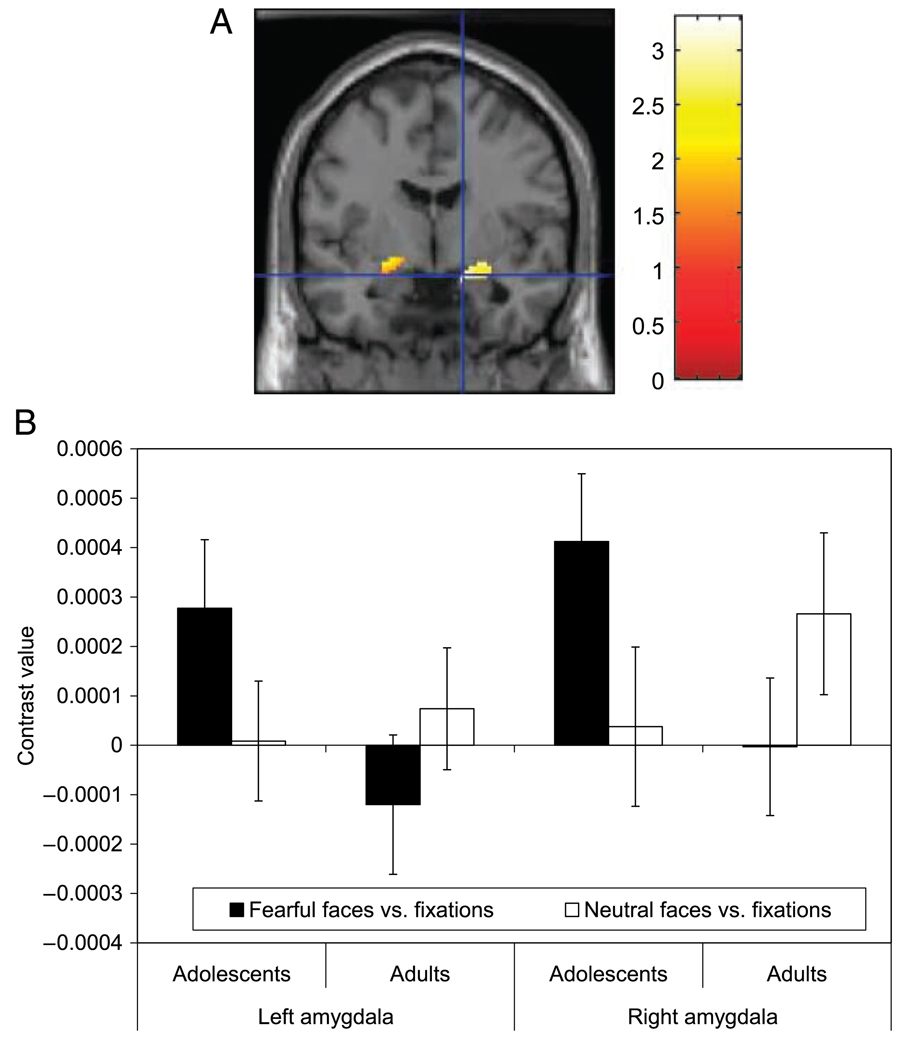
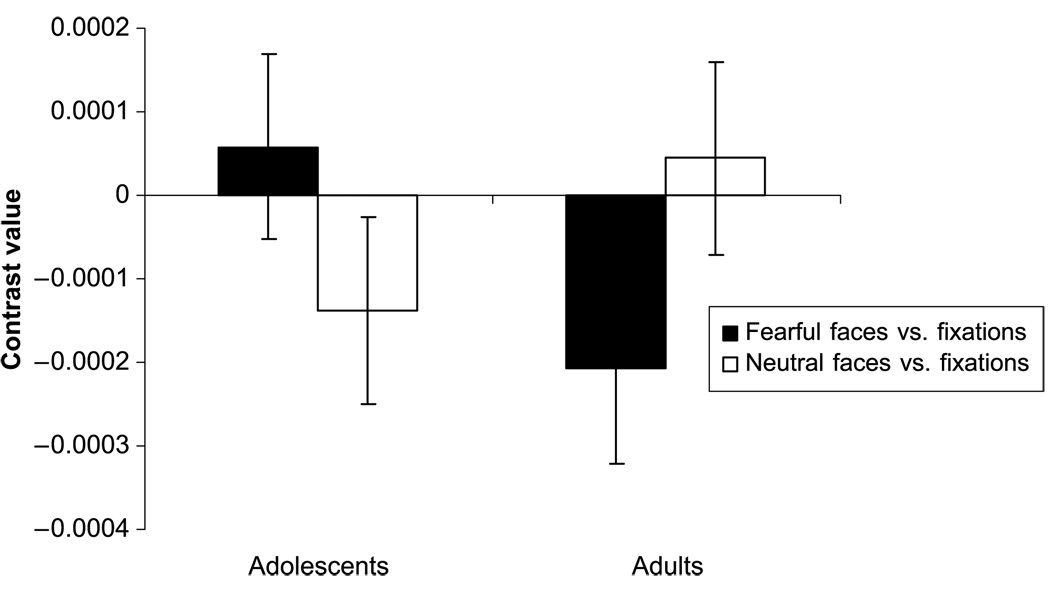
Several lines of evidence implicate the amygdala in face-emotion processing, particularly for fearful facial expressions. Related findings suggest that face-emotion processing engages the amygdala within an interconnected circuitry that can be studied using a functional-connectivity approach. Past work also underscores important functional changes in the amygdala during development. Taken together, prior research on amygdala function and development reveals a need for more work examining developmental changes in the amygdala's response to fearful faces and in amygdala functional connectivity during face processing. The present study used event-related functional magnetic resonance imaging to compare 31 adolescents (9-17 years old) and 30 adults (21-40 years old) on activation to fearful faces in the amygdala and other regions implicated in face processing. Moreover, these data were used to compare patterns of amygdala functional connectivity in adolescents and adults. During passive viewing, adolescents demonstrated greater amygdala and fusiform activation to fearful faces than did adults. Functional connectivity analysis revealed stronger connectivity between the amygdala and the hippocampus in adults than in adolescents. Within each group, variability in age did not correlate with amygdala response, and sex-related developmental differences in amygdala response were not found. Eye movement data collected outside of the magnetic resonance imaging scanner using the same task suggested that developmental differences in amygdala activation were not attributable to differences in eye-gaze patterns. Amygdala hyperactivation in response to fearful faces may explain increased vulnerability to affective disorders in adolescence; stronger amygdala-hippocampus connectivity in adults than adolescents may reflect maturation in learning or habituation to facial expressions.
多条证据表明杏仁核参与面部情绪处理,尤其是对恐惧的面部表情。相关研究结果表明,面部情绪处理在一个相互连接的神经回路中激活杏仁核,这一神经回路可用功能连接方法进行研究。过去的研究还强调了杏仁核在发育过程中的重要功能变化。综合来看,先前关于杏仁核功能和发育的研究表明,需要开展更多工作来研究杏仁核对恐惧面孔的反应以及在面部处理过程中杏仁核功能连接的发育变化。本研究使用事件相关功能磁共振成像,比较了31名青少年(9至17岁)和30名成年人(21至40岁)在杏仁核及其他与面部处理相关区域对恐惧面孔的激活情况。此外,这些数据还用于比较青少年和成年人杏仁核功能连接的模式。在被动观看过程中,青少年比成年人在杏仁核和梭状回对恐惧面孔表现出更强的激活。功能连接分析显示,成年人杏仁核与海马体之间的连接比青少年更强。在每组中,年龄差异与杏仁核反应不相关,且未发现杏仁核反应存在与性别相关的发育差异。在磁共振成像扫描仪外使用相同任务收集的眼动数据表明,杏仁核激活的发育差异并非归因于注视模式的差异。杏仁核对恐惧面孔的过度激活可能解释了青少年情感障碍易感性增加的原因;成年人比青少年更强的杏仁核 - 海马体连接可能反映了在学习或对面部表情习惯化方面的成熟。