Charles Michael A, Mortensen Amanda H, Potok Mary Anne, Camper Sally A
Department of Human Genetics, University of Michigan, Ann Arbor, Michigan 48109-0618, USA.
Genesis. 2008 Oct;46(10):507-14. doi: 10.1002/dvg.20398.
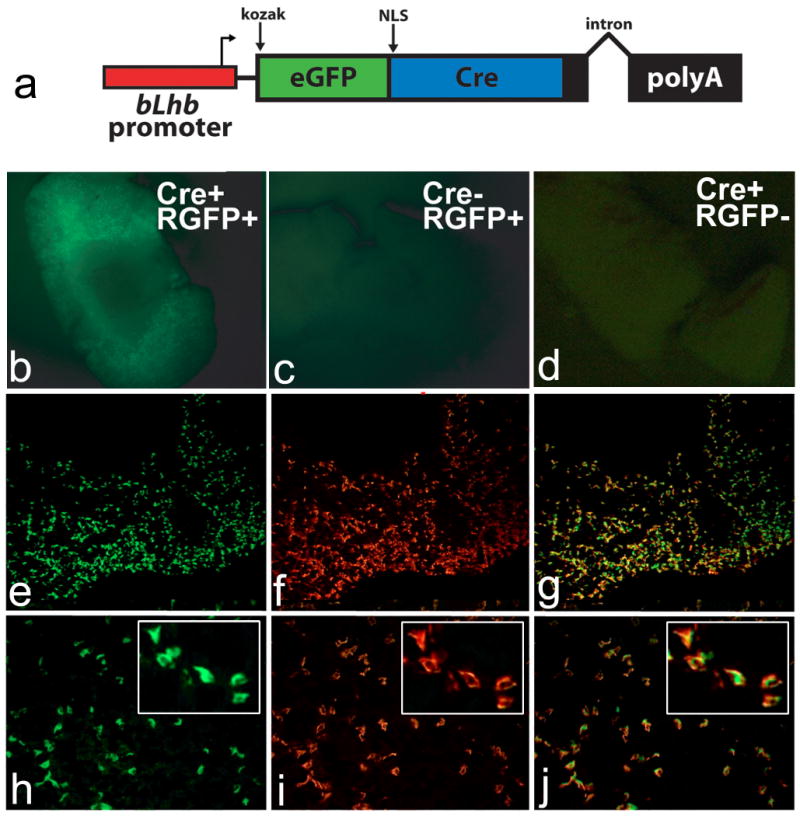
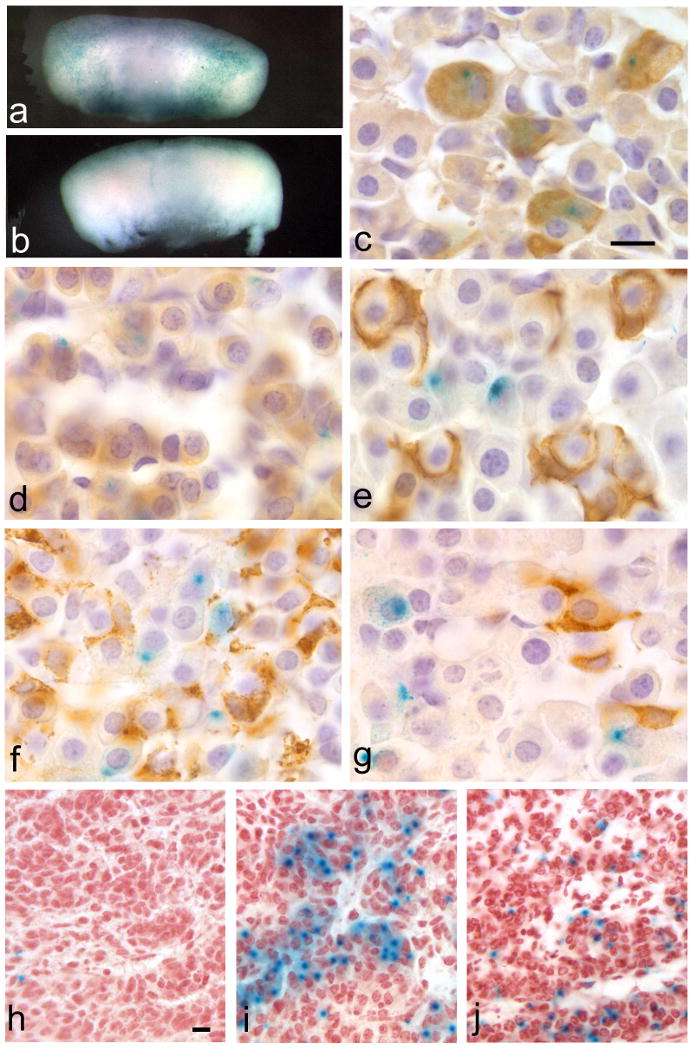
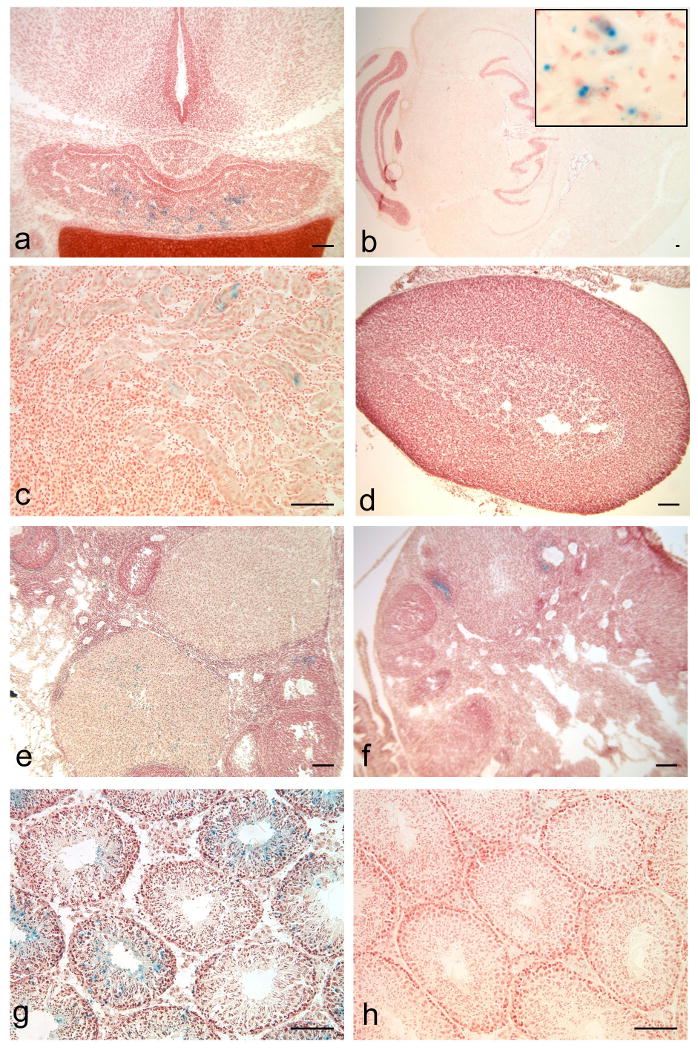
This report introduces a gonadotrope-specific cre transgenic mouse capable of ablating floxed genes in mature pituitary gonadotropes. Initial analysis of this transgenic line, Tg(Lhb-cre)1Sac, reveals that expression is limited to the pituitary cells that produce luteinizing hormone beta, beginning appropriately at e17.5. Cre activity is detectable by a reporter gene in nearly every LHbeta-producing cell, but the remaining hormone-producing cell types and other organs exhibit little to no activity. We used the Tg(Lhb-cre)1Sac strain to assess the role Pitx2 in gonadotrope function. The gonadotrope-specific Pitx2 knockout mice exhibit normal expression of LHbeta, sexual maturation, and fertility, suggesting that Pitx2 is not required for gonadotrope maintenance or for regulated production of gonadotropins.
本报告介绍了一种促性腺激素细胞特异性的cre转基因小鼠,它能够在成熟的垂体促性腺激素细胞中敲除loxP侧翼的基因。对该转基因品系Tg(Lhb-cre)1Sac的初步分析表明,其表达仅限于产生促黄体生成素β的垂体细胞,在胚胎第17.5天开始正常表达。通过报告基因在几乎每个产生LHβ的细胞中都可检测到Cre活性,但其余产生激素的细胞类型和其他器官几乎没有活性。我们使用Tg(Lhb-cre)1Sac品系来评估Pitx2在促性腺激素细胞功能中的作用。促性腺激素细胞特异性的Pitx2基因敲除小鼠表现出LHβ的正常表达、性成熟和生育能力,这表明Pitx2对于促性腺激素细胞的维持或促性腺激素的调节产生不是必需的。