Webster Gordon, Blazejak Anna, Cragg Barry A, Schippers Axel, Sass Henrik, Rinna Joachim, Tang Xiaohong, Mathes Falko, Ferdelman Timothy G, Fry John C, Weightman Andrew J, Parkes R John
Cardiff School of Biosciences, Cardiff University, Park Place, Cardiff, Wales, UK.
Environ Microbiol. 2009 Jan;11(1):239-57. doi: 10.1111/j.1462-2920.2008.01759.x. Epub 2008 Sep 23.
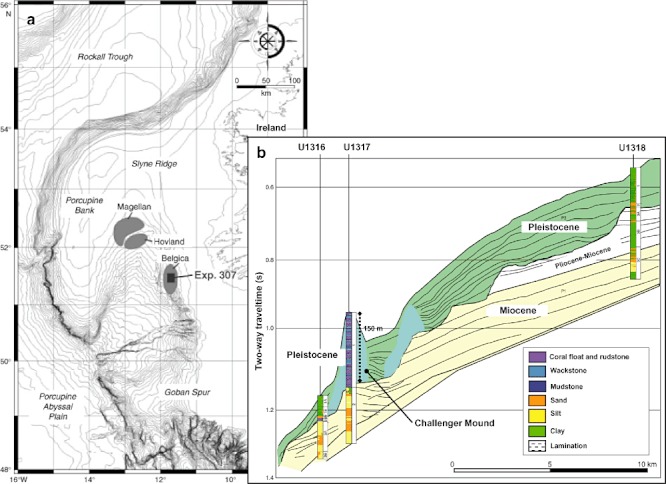
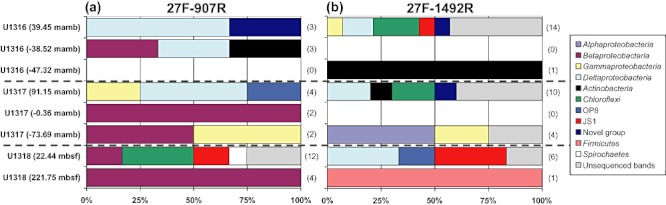
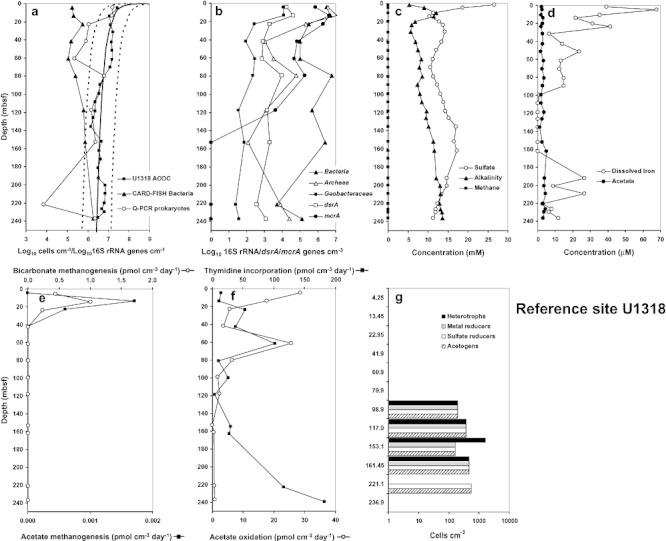
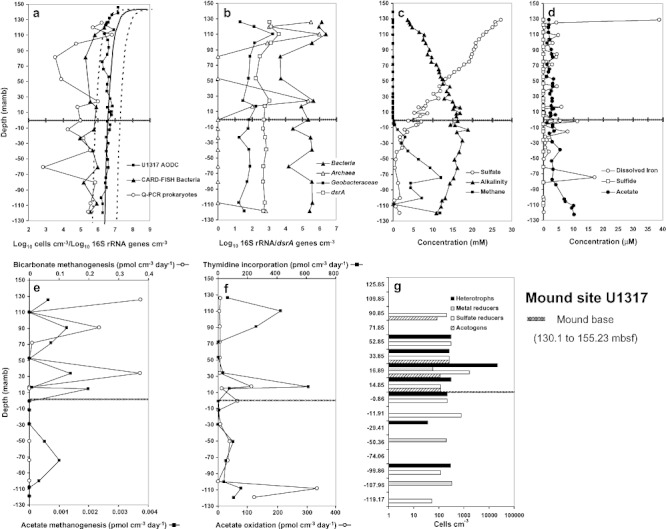
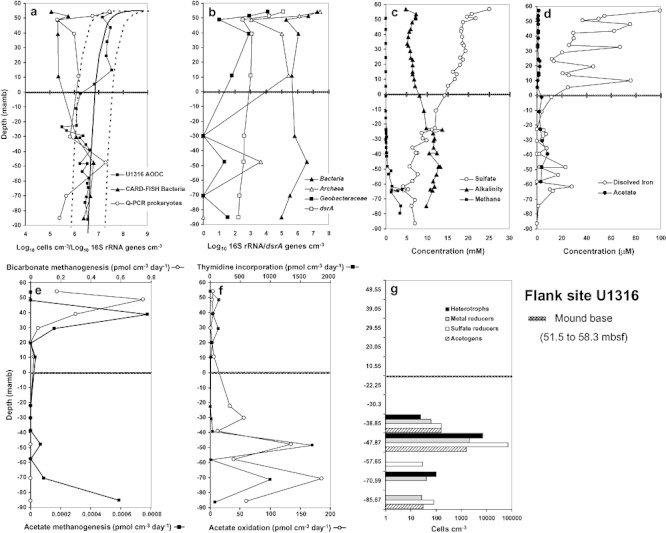
The Porcupine Seabight Challenger Mound is the first carbonate mound to be drilled (approximately 270 m) and analyzed in detail microbiologically and biogeochemically. Two mound sites and a non-mound Reference site were analyzed with a range of molecular techniques [catalyzed reporter deposition-fluorescence in situ hybridization (CARD-FISH), quantitative PCR (16S rRNA and functional genes, dsrA and mcrA), and 16S rRNA gene PCR-DGGE] to assess prokaryotic diversity, and this was compared with the distribution of total and culturable cell counts, radiotracer activity measurements and geochemistry. There was a significant and active prokaryotic community both within and beneath the carbonate mound. Although total cell numbers at certain depths were lower than the global average for other subseafloor sediments and prokaryotic activities were relatively low (iron and sulfate reduction, acetate oxidation, methanogenesis) they were significantly enhanced compared with the Reference site. In addition, there was some stimulation of prokaryotic activity in the deepest sediments (Miocene, > 10 Ma) including potential for anaerobic oxidation of methane activity below the mound base. Both Bacteria and Archaea were present, with neither dominant, and these were related to sequences commonly found in other subseafloor sediments. With an estimate of some 1600 mounds in the Porcupine Basin alone, carbonate mounds may represent a significant prokaryotic subseafloor habitat.
豪猪湾挑战者海丘是首个被钻探(约270米)并在微生物学和生物地球化学方面进行详细分析的碳酸盐丘。利用一系列分子技术[催化报告沉积-荧光原位杂交(CARD-FISH)、定量PCR(16S rRNA和功能基因dsrA和mcrA)以及16S rRNA基因PCR-DGGE]对两个海丘位点和一个非海丘参考位点进行了分析,以评估原核生物多样性,并将其与总细胞数和可培养细胞数的分布、放射性示踪剂活性测量结果以及地球化学进行了比较。在碳酸盐丘内部和下方均存在一个显著且活跃的原核生物群落。尽管在某些深度的总细胞数低于其他海底沉积物的全球平均水平,且原核生物活性相对较低(铁和硫酸盐还原、乙酸氧化、甲烷生成),但与参考位点相比仍有显著增强。此外,在最深层沉积物(中新世,>10 Ma)中,原核生物活性也有一定程度的刺激,包括海丘底部以下甲烷厌氧氧化活性的潜力。细菌和古菌均有存在,且均不占主导地位,它们与其他海底沉积物中常见的序列相关。仅在豪猪盆地就估计有大约1600个海丘,碳酸盐丘可能代表了一个重要的海底原核生物栖息地。