Chandrasekharan Bindu, Bala Vanitha, Kolachala Vasantha L, Vijay-Kumar Matam, Jones Dean, Gewirtz Andrew T, Sitaraman Shanthi V, Srinivasan Shanthi
Division of Digestive Diseases, Emory University, Atlanta, Georgia, United States of America.
PLoS One. 2008 Oct 1;3(10):e3304. doi: 10.1371/journal.pone.0003304.
Neurogenic inflammation plays a major role in the pathogenesis of inflammatory bowel disease (IBD). We examined the role of neuropeptide Y (NPY) and neuronal nitric oxide synthase (nNOS) in modulating colitis.
Colitis was induced by administration of dextran sodium sulphate (3% DSS) or streptomycin pre-treated Salmonella typhimurium (S.T.) in wild type (WT) and NPY (NPY(-/-)) knockout mice. Colitis was assessed by clinical score, histological score and myeloperoxidase activity. NPY and nNOS expression was assessed by immunostaining. Oxidative stress was assessed by measuring catalase activity, glutathione and nitrite levels. Colonic motility was assessed by isometric muscle recording in WT and DSS-treated mice.
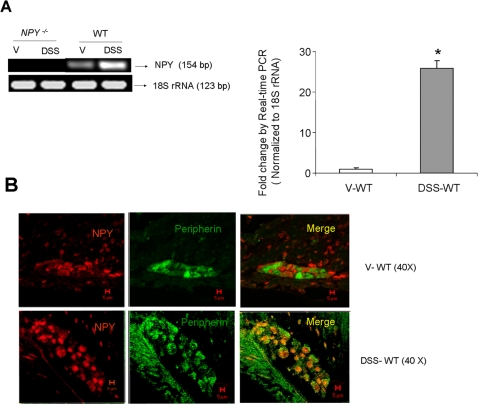
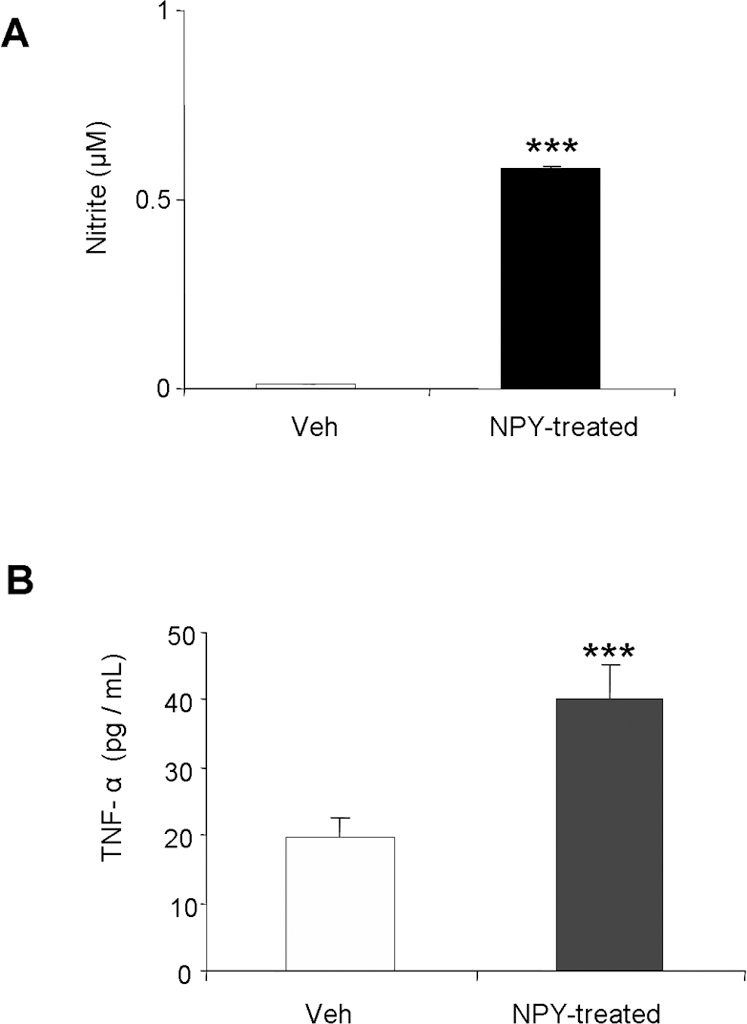
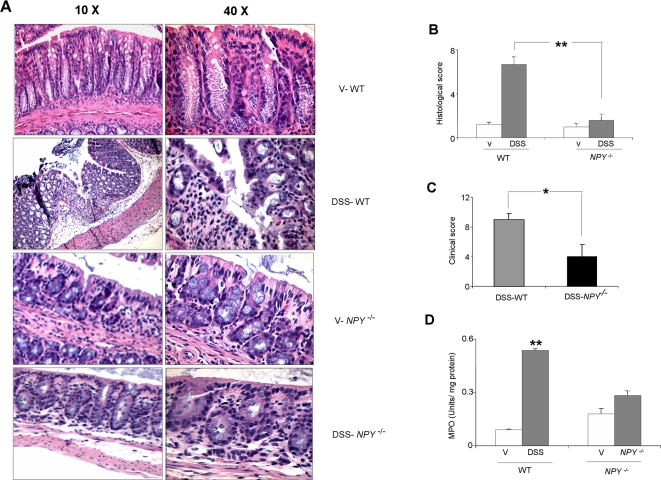
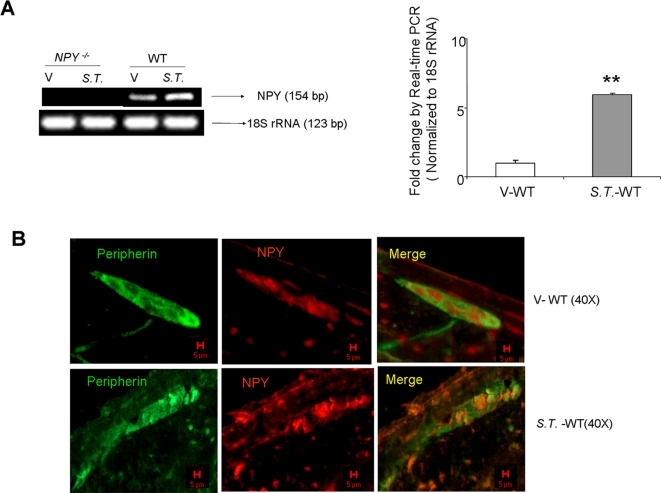
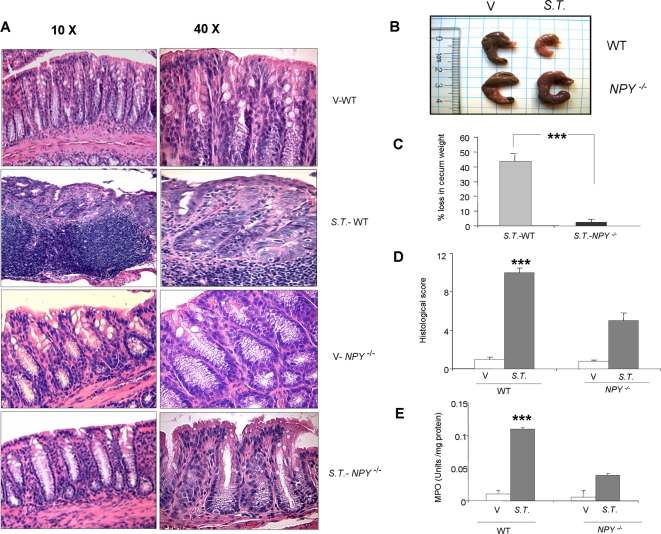
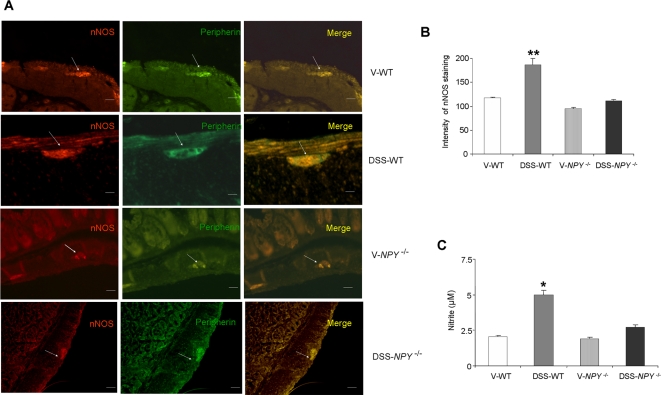
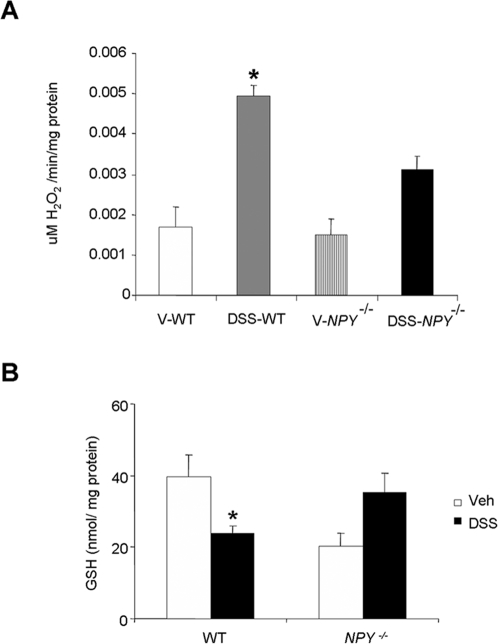
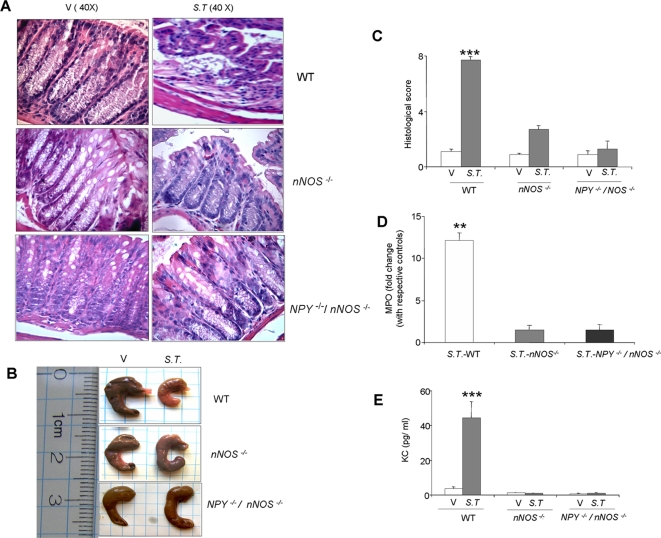
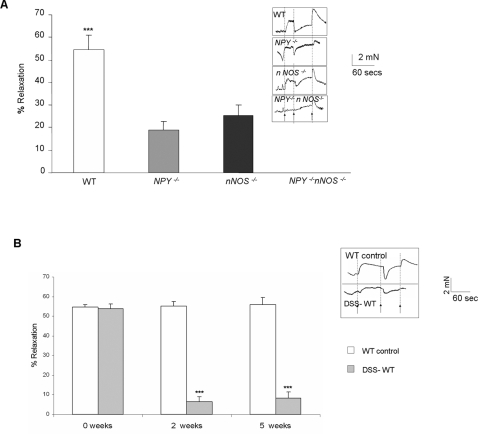
DSS/S.T. induced an increase in enteric neuronal NPY and nNOS expression in WT mice. WT mice were more susceptible to inflammation compared to NPY(-/-) as indicated by higher clinical & histological scores, and myeloperoxidase (MPO) activity (p<0.01). DSS-WT mice had increased nitrite, decreased glutathione (GSH) levels and increased catalase activity indicating more oxidative stress. The lower histological scores, MPO and chemokine KC in S.T.-treated nNOS(-/-) and NPY(-/-)/nNOS(-/-) mice supported the finding that loss of NPY-induced nNOS attenuated inflammation. The inflammation resulted in chronic impairment of colonic motility in DSS-WT mice. NPY -treated rat enteric neurons in vitro exhibited increased nitrite and TNF-alpha production.
NPY mediated increase in nNOS is a determinant of oxidative stress and subsequent inflammation. Our study highlights the role of neuronal NPY and nNOS as mediators of inflammatory processes in IBD.
神经源性炎症在炎症性肠病(IBD)的发病机制中起主要作用。我们研究了神经肽Y(NPY)和神经元型一氧化氮合酶(nNOS)在调节结肠炎中的作用。
通过给野生型(WT)和NPY(NPY(-/-))基因敲除小鼠给予葡聚糖硫酸钠(3% DSS)或经链霉素预处理的鼠伤寒沙门氏菌(S.T.)来诱导结肠炎。通过临床评分、组织学评分和髓过氧化物酶活性评估结肠炎。通过免疫染色评估NPY和nNOS的表达。通过测量过氧化氢酶活性、谷胱甘肽和亚硝酸盐水平评估氧化应激。通过对WT和DSS处理小鼠进行等长肌肉记录评估结肠运动性。
DSS/S.T.诱导WT小鼠肠神经元NPY和nNOS表达增加。与NPY(-/-)小鼠相比,WT小鼠对炎症更敏感,表现为更高的临床和组织学评分以及髓过氧化物酶(MPO)活性(p<0.01)。DSS-WT小鼠亚硝酸盐增加、谷胱甘肽(GSH)水平降低且过氧化氢酶活性增加,表明氧化应激增强。在经S.T.处理的nNOS(-/-)和NPY(-/-)/nNOS(-/-)小鼠中较低的组织学评分、MPO和趋化因子KC支持了NPY诱导的nNOS缺失减轻炎症这一发现。炎症导致DSS-WT小鼠结肠运动性长期受损。体外给予NPY处理的大鼠肠神经元亚硝酸盐和TNF-α产生增加。
NPY介导的nNOS增加是氧化应激及随后炎症的一个决定因素。我们的研究突出了神经元NPY和nNOS作为IBD炎症过程介质的作用。