Obbard Darren J, Callister Deborah M, Jiggins Francis M, Soares Dinesh C, Yan Guiyun, Little Tom J
Institute of Evolutionary Biology, School of Biological Sciences, University of Edinburgh, West Mains Rd, Edinburgh EH9 3JT, UK.
BMC Evol Biol. 2008 Oct 7;8:274. doi: 10.1186/1471-2148-8-274.
Host-parasite coevolution can result in balancing selection, which maintains genetic variation in the susceptibility of hosts to parasites. It has been suggested that variation in a thioester-containing protein called TEP1 (AGAP010815) may alter the ability of Anopheles mosquitoes to transmit Plasmodium parasites, and high divergence between alleles of this gene suggests the possible action of long-term balancing selection. We studied whether TEP1 is a case of an ancient balanced polymorphism in an animal immune system.
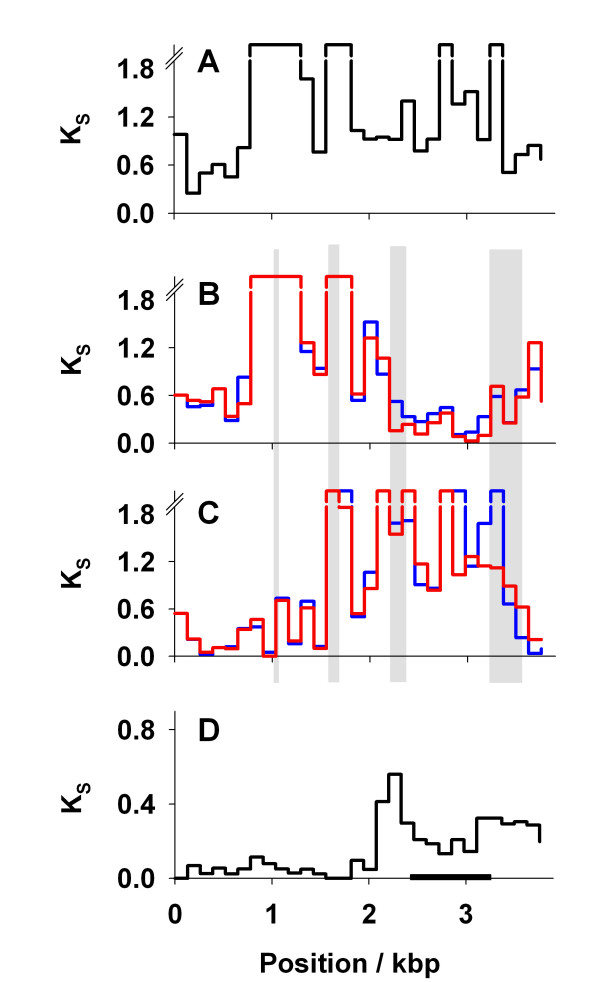
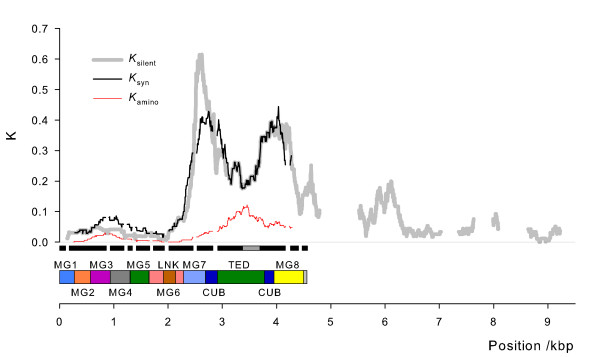
We found evidence that the high divergence between TEP1 alleles is the product of genetic exchange between TEP1 and other TEP loci, i.e. gene conversion. Additionally, some TEP1 alleles showed unexpectedly low variability.
The TEP1 gene appears to be a chimera produced from at least two other TEP loci, and the divergence between TEP1 alleles is probably not caused by long-term balancing selection, but is instead due to two independent gene conversion events from one of these other genes. Nevertheless, TEP1 still shows evidence of natural selection, in particular there appears to have been recent changes in the frequency of alleles that has diminished polymorphism within each allelic class. Although the selective force driving this dynamic was not identified, given that susceptibility to Plasmodium parasites is known to be associated with allelic variation in TEP1, these changes in allele frequencies could alter the vectoring capacity of populations.
宿主 - 寄生虫的协同进化可导致平衡选择,从而维持宿主对寄生虫易感性的遗传变异。有人提出,一种名为TEP1(AGAP010815)的含硫酯蛋白的变异可能会改变按蚊传播疟原虫的能力,并且该基因等位基因之间的高度差异表明可能存在长期平衡选择的作用。我们研究了TEP1是否是动物免疫系统中一个古老的平衡多态性的例子。
我们发现有证据表明,TEP1等位基因之间的高度差异是TEP1与其他TEP基因座之间基因交换的产物,即基因转换。此外,一些TEP1等位基因显示出出乎意料的低变异性。
TEP1基因似乎是由至少两个其他TEP基因座产生的嵌合体,并且TEP1等位基因之间的差异可能不是由长期平衡选择引起的,而是由于来自这些其他基因之一的两个独立基因转换事件。然而,TEP1仍然显示出自然选择的证据,特别是最近等位基因频率似乎发生了变化,这减少了每个等位基因类别的多态性。虽然驱动这种动态变化的选择力尚未确定,但鉴于已知对疟原虫的易感性与TEP1中的等位基因变异有关,这些等位基因频率的变化可能会改变种群的传病能力。