Shea Kerry F, Wells Claire M, Garner Andrew P, Jones Gareth E
Randall Division of Cell & Molecular Biophysics, King's College London, London, United Kingdom.
PLoS One. 2008;3(10):e3398. doi: 10.1371/journal.pone.0003398. Epub 2008 Oct 14.
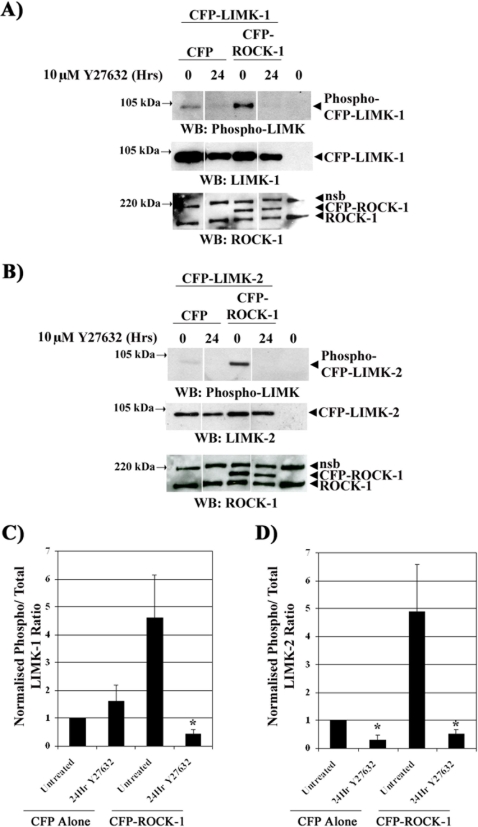
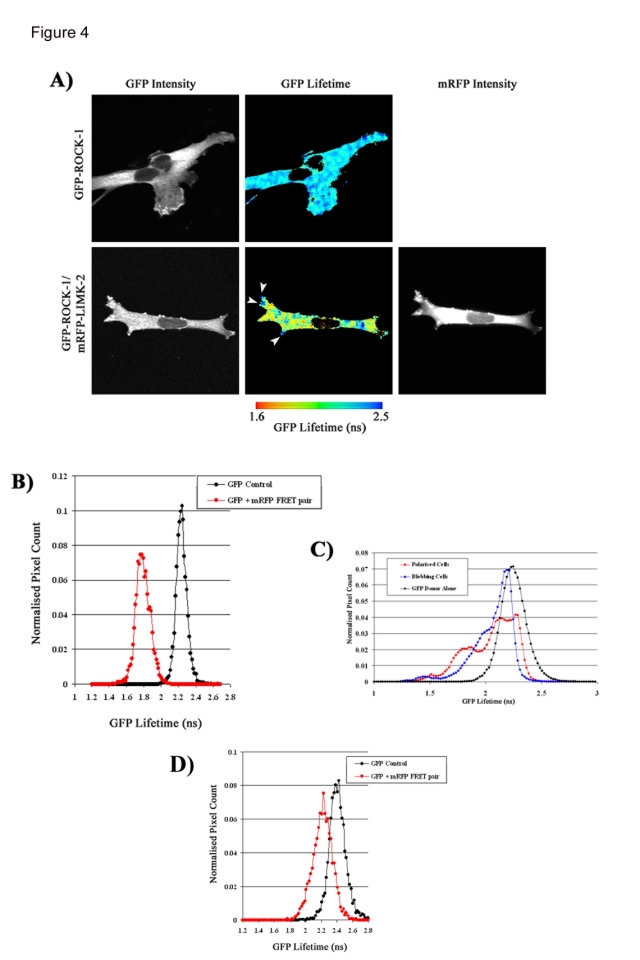
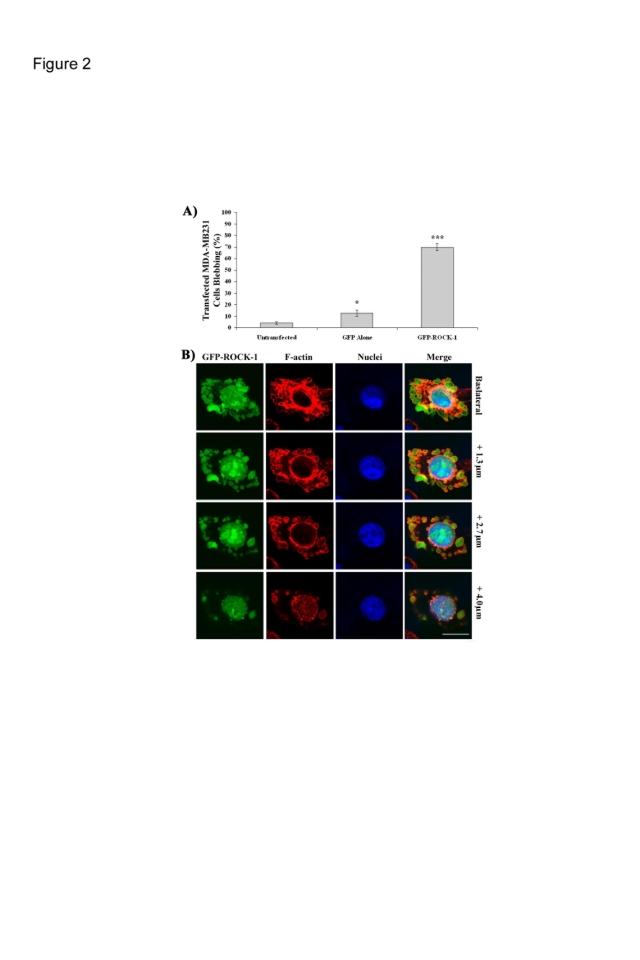
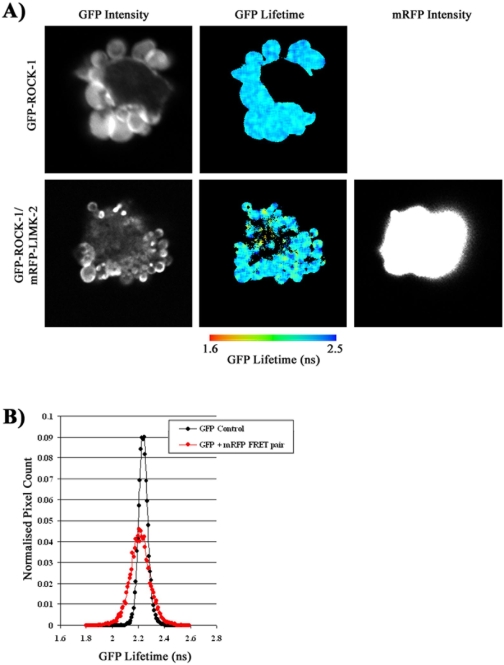
Cancer cells migrating within a 3D microenvironment are able to adopt either a mesenchymal or amoeboid mode of migration. Amoeboid migration is characterised by membrane blebbing that is dependent on the Rho effectors, ROCK1/2. We identify LIMK2 as the preferred substrate for ROCK1 but find that LIMK2 did not induce membrane blebbing, suggesting that a LIMK2 pathway is not involved in amoeboid-mode migration. In support of this hypothesis, novel FRET data demonstrate a direct interaction between ROCK1 and LIMK2 in polarised but not blebbing cells. Our results point to a specific role for the ROCK1:LIMK2 pathway in mesenchymal-mode migration.
在三维微环境中迁移的癌细胞能够采用间充质或阿米巴样迁移模式。阿米巴样迁移的特征是膜泡化,这依赖于Rho效应器ROCK1/2。我们确定LIMK2是ROCK1的首选底物,但发现LIMK2不会诱导膜泡化,这表明LIMK2途径不参与阿米巴样迁移模式。为支持这一假设,新的荧光共振能量转移数据表明,ROCK1和LIMK2在极化而非膜泡化的细胞中存在直接相互作用。我们的结果表明ROCK1:LIMK2途径在间充质迁移模式中具有特定作用。