Lin Hong Ting, Bavro Vassiliy N, Barrera Nelson P, Frankish Helen M, Velamakanni Saroj, van Veen Hendrik W, Robinson Carol V, Borges-Walmsley M Inês, Walmsley Adrian R
School of Biological and Biomedical Sciences, Durham University, South Road, Durham DH1 3LE, UK.
J Biol Chem. 2009 Jan 9;284(2):1145-54. doi: 10.1074/jbc.M806964200. Epub 2008 Oct 27.
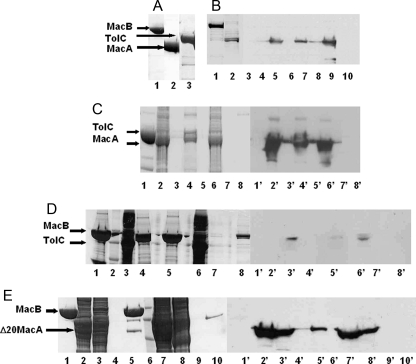
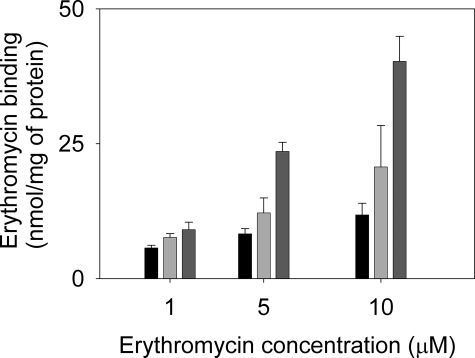
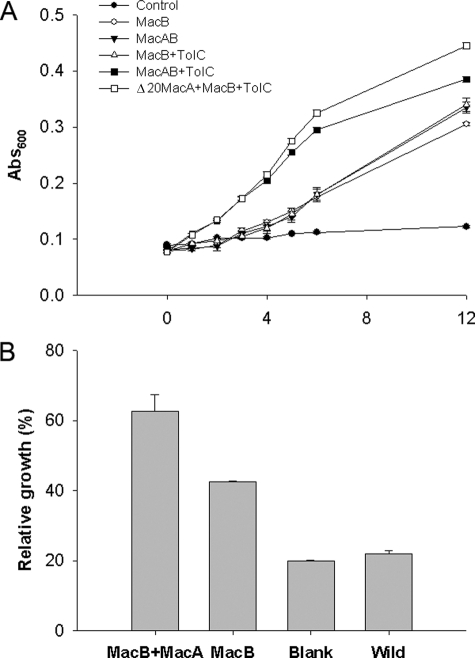
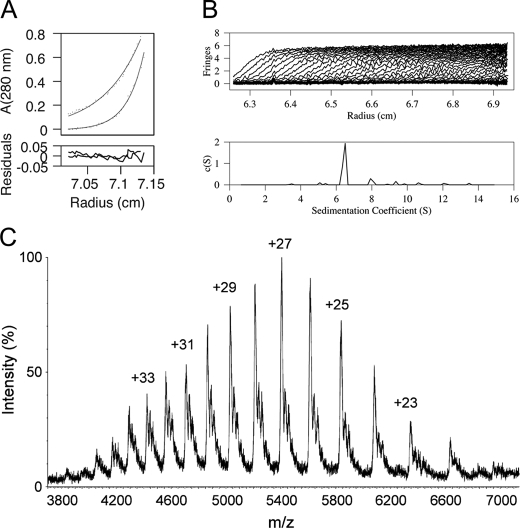
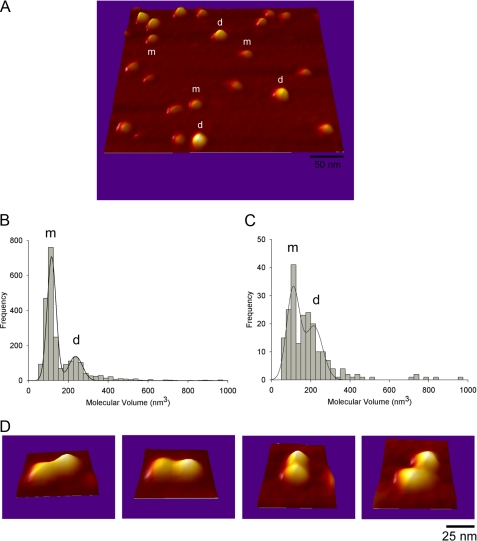
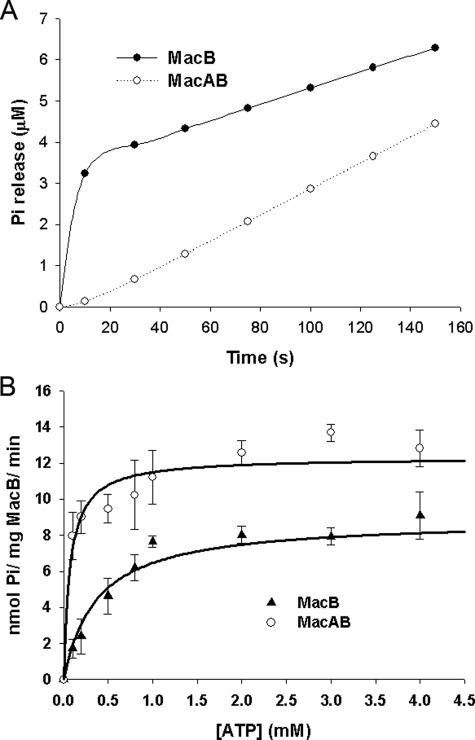
Gram-negative bacteria utilize specialized machinery to translocate drugs and protein toxins across the inner and outer membranes, consisting of a tripartite complex composed of an inner membrane secondary or primary active transporter (IMP), a periplasmic membrane fusion protein, and an outer membrane channel. We have investigated the assembly and function of the MacAB/TolC system that confers resistance to macrolides in Escherichia coli. The membrane fusion protein MacA not only stabilizes the tripartite assembly by interacting with both the inner membrane protein MacB and the outer membrane protein TolC, but also has a role in regulating the function of MacB, apparently increasing its affinity for both erythromycin and ATP. Analysis of the kinetic behavior of ATP hydrolysis indicated that MacA promotes and stabilizes the ATP-binding form of the MacB transporter. For the first time, we have established unambiguously the dimeric nature of a noncanonic ABC transporter, MacB that has an N-terminal nucleotide binding domain, by means of nondissociating mass spectrometry, analytical ultracentrifugation, and atomic force microscopy. Structural studies of ABC transporters indicate that ATP is bound between a pair of nucleotide binding domains to stabilize a conformation in which the substrate-binding site is outward-facing. Consequently, our data suggest that in the presence of ATP the same conformation of MacB is promoted and stabilized by MacA. Thus, MacA would facilitate the delivery of drugs by MacB to TolC by enhancing the binding of drugs to it and inducing a conformation of MacB that is primed and competent for binding TolC. Our structural studies are an important first step in understanding how the tripartite complex is assembled.
革兰氏阴性菌利用专门的机制将药物和蛋白质毒素转运穿过内膜和外膜,该机制由一个三方复合物组成,包括内膜二级或一级主动转运蛋白(IMP)、周质膜融合蛋白和外膜通道。我们研究了大肠杆菌中赋予对大环内酯类耐药性的MacAB/TolC系统的组装和功能。膜融合蛋白MacA不仅通过与内膜蛋白MacB和外膜蛋白TolC相互作用来稳定三方组装,还在调节MacB的功能中发挥作用,显然增加了其对红霉素和ATP的亲和力。对ATP水解动力学行为的分析表明,MacA促进并稳定了MacB转运蛋白的ATP结合形式。我们首次通过非解离质谱、分析超速离心和原子力显微镜明确确定了具有N端核苷酸结合结构域的非典型ABC转运蛋白MacB的二聚体性质。ABC转运蛋白的结构研究表明,ATP结合在一对核苷酸结合结构域之间,以稳定底物结合位点向外的构象。因此,我们的数据表明,在ATP存在的情况下,MacA促进并稳定了MacB的相同构象。因此,MacA将通过增强药物与MacB的结合并诱导MacB形成一种准备好并能够结合TolC的构象,来促进MacB将药物递送至TolC。我们的结构研究是理解三方复合物如何组装的重要第一步。