Olson H M, Capen C C
Am J Pathol. 1977 Feb;86(2):437-58.
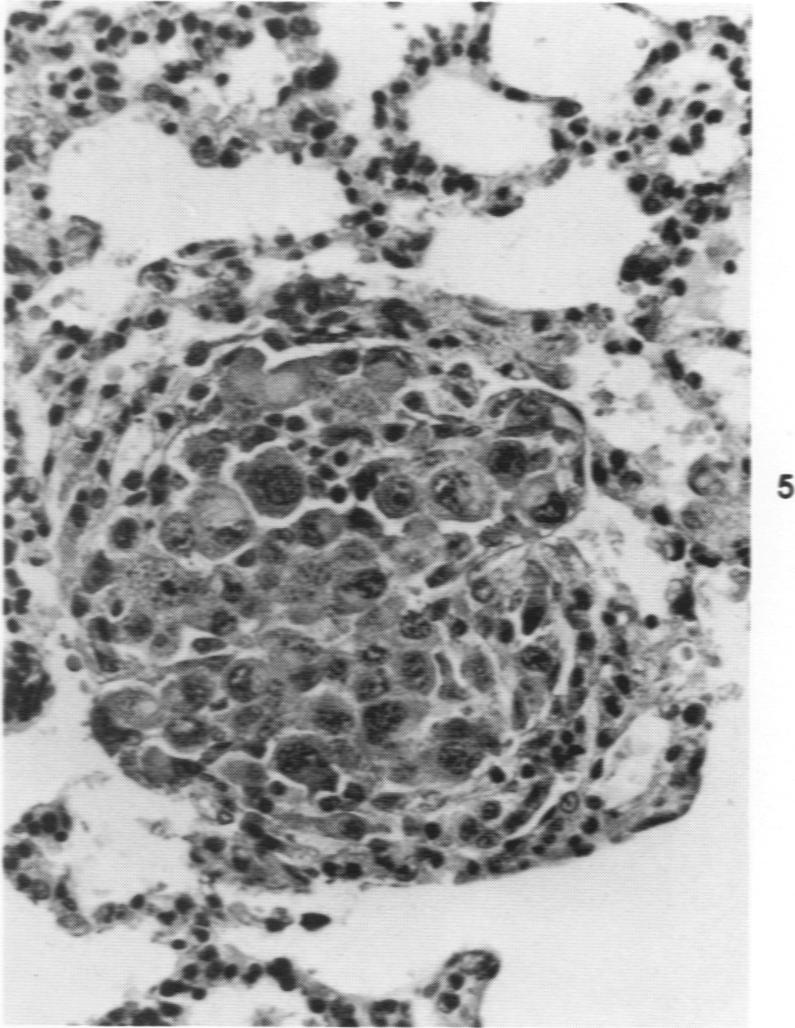
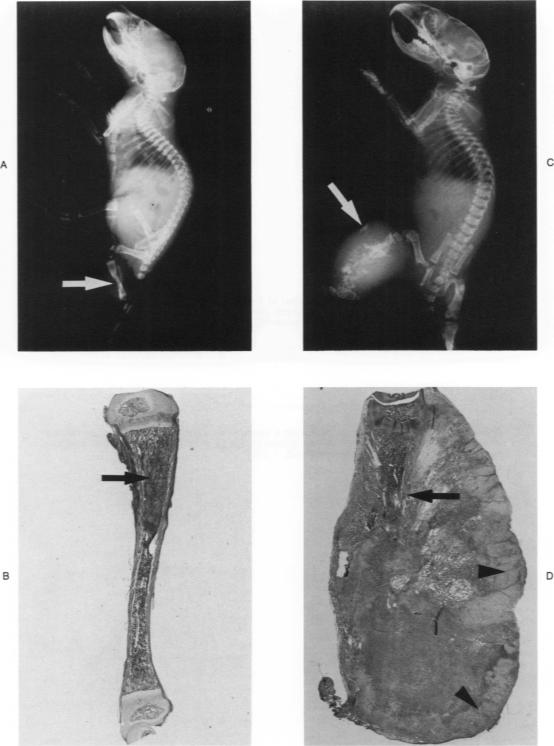
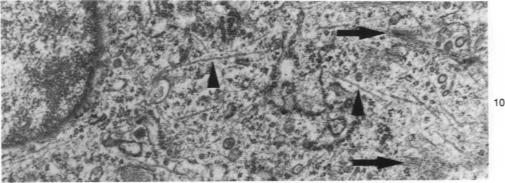
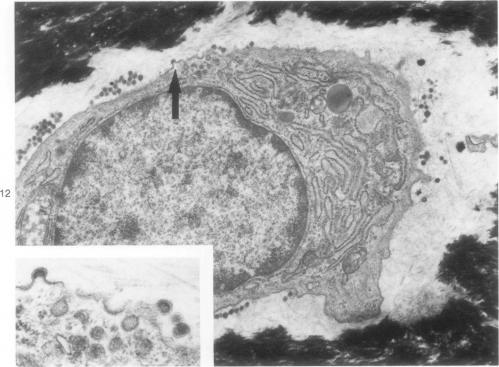
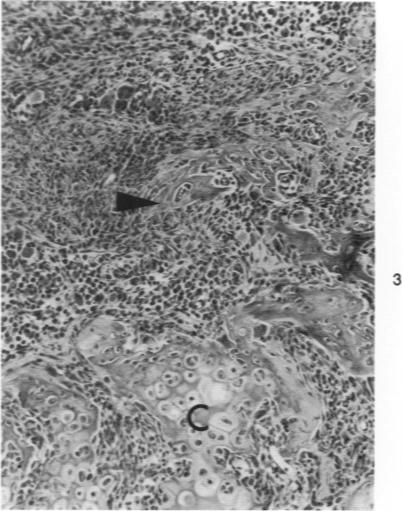
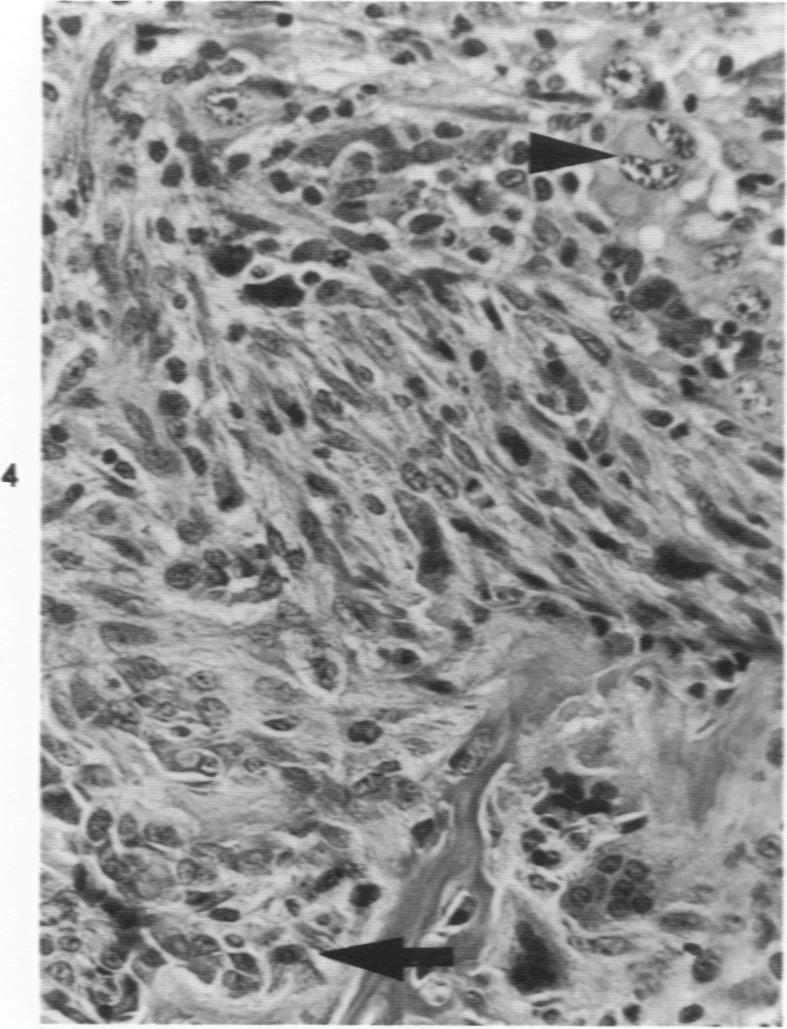
Osteosarcomas were produced by the intratibial inoculation of New Zealand black rats with Moloney sarcoma virus (MSV) at 1 day and 4 days of age. Radiographic evidence of osteosarcoma development was first demonstrated at 10 to 15 days postinoculation in both groups. Subsequent radiographic and light and electron microscopic evaluation of tumor-bearing rats demonstrated that osteosarcomas in rats inoculated at Day 4 of age were more osteoproliferative osteosarcomas than those in rats inoculated on Day 1. Rats inoculated at 4 days of age lived longer, had more slowly growing osteosarcomas, and developed a consistent tumor-associated cachexia compared to tumor-bearing rats inoculated at Day 1. Both groups of rats had a 93% metastasis rate involving either sublumbar lymph nodes, lungs, or both. Tumor-bearing rats inoculated at 4 days of age had consistent elevations in both urinary hydroxyproline excretion (HOP/CR) and serum alkaline phosphatase levels, and in serum calcium levels at some time points. The high tumor incidence after a short latent period and the morphologic and biochemical similarities between the MSV-induced murine osteosarcoma and the osteosarcoma in human beings makes this discrete tumor and a valuable animal model for the evaluation of new therapeutic regimens.
通过在1日龄和4日龄的新西兰黑鼠胫骨内接种莫洛尼肉瘤病毒(MSV)来诱发骨肉瘤。两组在接种后10至15天首次出现骨肉瘤发展的影像学证据。随后对荷瘤大鼠进行影像学、光镜和电镜评估,结果显示,4日龄接种大鼠的骨肉瘤比1日龄接种大鼠的骨肉瘤具有更多的骨增殖性。与1日龄接种的荷瘤大鼠相比,4日龄接种的大鼠存活时间更长,骨肉瘤生长更缓慢,并出现持续的肿瘤相关性恶病质。两组大鼠的转移率均为93%,转移部位为腰下淋巴结、肺或两者。4日龄接种的荷瘤大鼠尿羟脯氨酸排泄量(HOP/CR)、血清碱性磷酸酶水平以及某些时间点的血清钙水平持续升高。MSV诱导的小鼠骨肉瘤在短潜伏期后具有高肿瘤发生率,且与人类骨肉瘤在形态学和生物化学上具有相似性,这使得这种独特的肿瘤成为评估新治疗方案的有价值的动物模型。