Gershoni Jonathan M
Department of Cell Research and Immunology, George S. Wise Faculty of Life Sciences, Tel Aviv University, Tel Aviv 69978, Israel.
Curr Opin Biotechnol. 2008 Dec;19(6):644-51. doi: 10.1016/j.copbio.2008.10.001. Epub 2008 Nov 18.
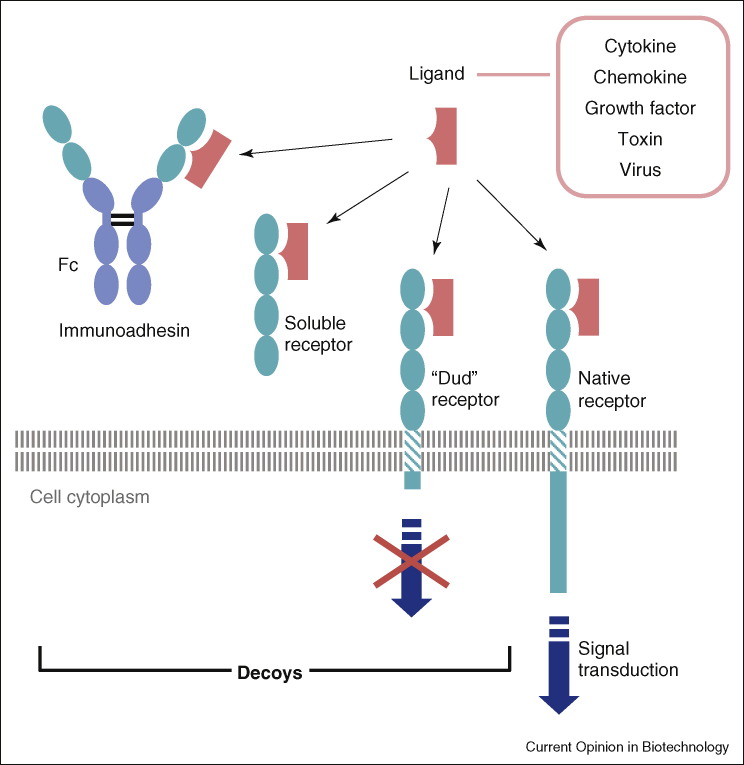
Receptor-ligand interactions are fundamental to the regulation of cell physiology, enabling the communication between cells and their environment via signal transduction. Receptors are also exploited by toxins and infectious agents to mediate pathogenesis. Over the past 20 years, however, this bi-partite paradigm for cellular regulation, that is, receptors and their ligands, has been revised to include an unforeseen participant namely, soluble receptors or molecular decoys. Decoys function as nature's modifiers of potent responses such as inflammation, stimulation of cell proliferation and triggering apoptosis. Decoys not only provide the means to fine tune the regulation of these phenomena; they also serve as potential leads for the development of recombinant anti-toxins, anti-viral agents and novel therapeutics for combating cancer and inflammatory disease.
受体 - 配体相互作用是细胞生理学调节的基础,通过信号转导实现细胞与其环境之间的通讯。毒素和传染因子也利用受体来介导发病机制。然而,在过去20年中,这种细胞调节的二元模式,即受体及其配体,已被修订为包括一个意想不到的参与者,即可溶性受体或分子诱饵。诱饵作为强大反应(如炎症、细胞增殖刺激和触发细胞凋亡)的天然调节剂发挥作用。诱饵不仅提供了微调这些现象调节的手段;它们还作为开发重组抗毒素、抗病毒药物以及对抗癌症和炎症性疾病的新型疗法的潜在线索。