• 文献检索
  • 文档翻译
  • 深度研究
  • 学术资讯
  • Suppr Zotero 插件Zotero 插件
  • 邀请有礼
  • 套餐&价格
  • 历史记录
应用&插件
Suppr Zotero 插件Zotero 插件浏览器插件Mac 客户端Windows 客户端微信小程序
定价
高级版会员购买积分包购买API积分包
服务
文献检索文档翻译深度研究API 文档MCP 服务
关于我们
关于 Suppr公司介绍联系我们用户协议隐私条款
关注我们

Suppr 超能文献

核心技术专利:CN118964589B侵权必究
粤ICP备2023148730 号-1Suppr @ 2026

文献检索

告别复杂PubMed语法,用中文像聊天一样搜索,搜遍4000万医学文献。AI智能推荐,让科研检索更轻松。

立即免费搜索

文件翻译

保留排版,准确专业,支持PDF/Word/PPT等文件格式,支持 12+语言互译。

免费翻译文档

深度研究

AI帮你快速写综述,25分钟生成高质量综述,智能提取关键信息,辅助科研写作。

立即免费体验

味觉皮层神经元群在单次舔舐中就能预测并区分不同的味觉刺激物。

Ensembles of gustatory cortical neurons anticipate and discriminate between tastants in a single lick.

作者信息

Stapleton Jennifer R, Lavine Michael L, Nicolelis Miguel A L, Simon Sidney A

机构信息

Department of Neurobiology, Duke University, Durham, NC 27710, USA.

出版信息

Front Neurosci. 2007 Oct 15;1(1):161-74. doi: 10.3389/neuro.01.1.1.012.2007. eCollection 2007 Nov.

DOI:10.3389/neuro.01.1.1.012.2007
PMID:18982126
原文链接:https://pmc.ncbi.nlm.nih.gov/articles/PMC2570088/
Abstract

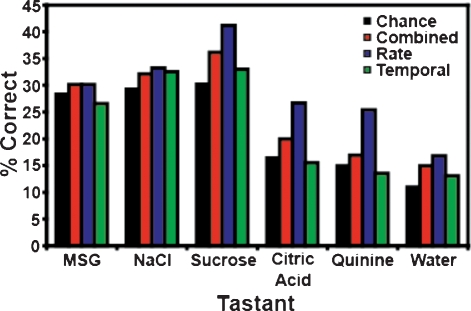
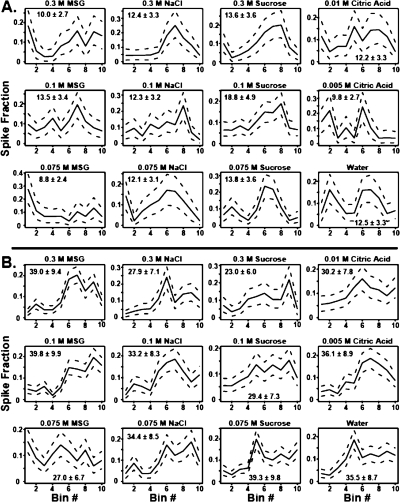
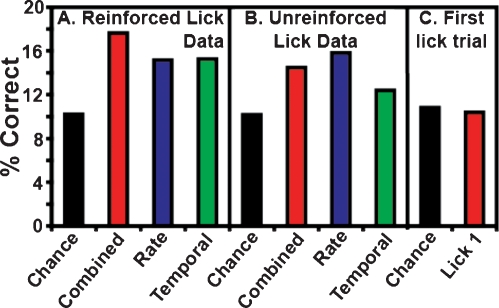
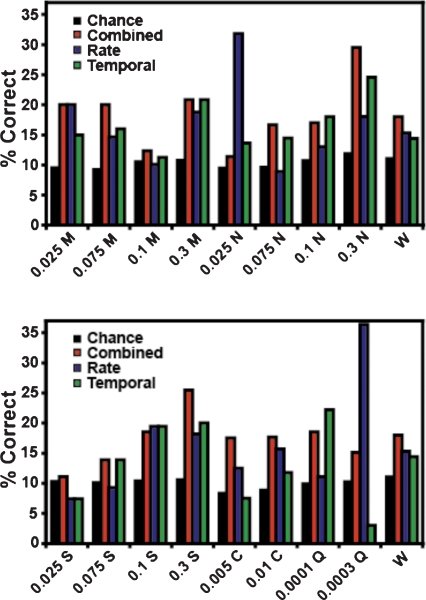
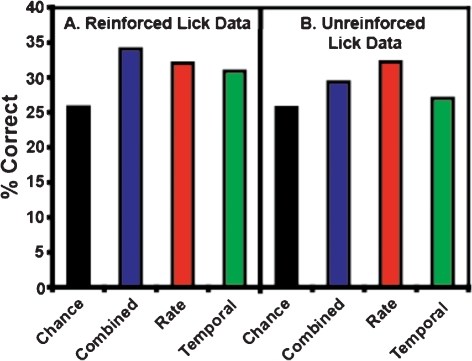
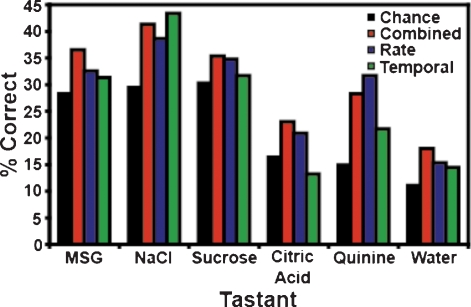
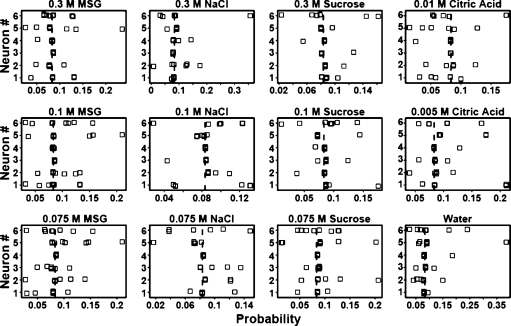
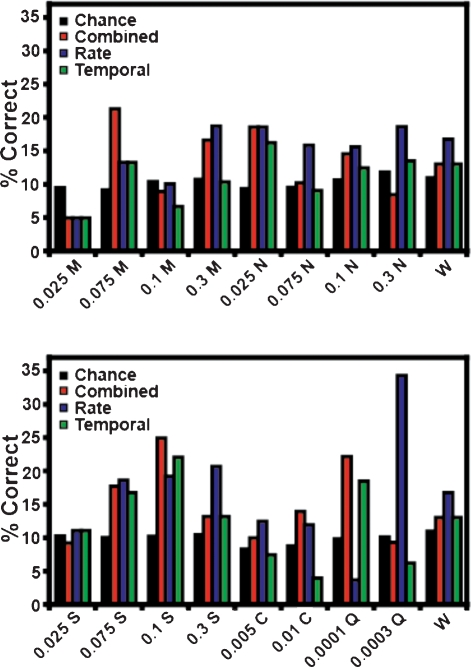
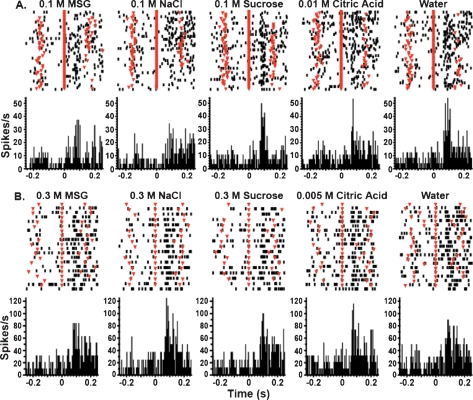
The gustatory cortex (GC) processes chemosensory and somatosensory information and is involved in learning and anticipation. Previously we found that a subpopulation of GC neurons responded to tastants in a single lick (Stapleton et al., 2006). Here we extend this investigation to determine if small ensembles of GC neurons, obtained while rats received blocks of tastants on a fixed ratio schedule (FR5), can discriminate between tastants and their concentrations after a single 50 muL delivery. In the FR5 schedule subjects received tastants every fifth (reinforced) lick and the intervening licks were unreinforced. The ensemble firing patterns were analyzed with a Bayesian generalized linear model whose parameters included the firing rates and temporal patterns of the spike trains. We found that when both the temporal and rate parameters were included, 12 of 13 ensembles correctly identified single tastant deliveries. We also found that the activity during the unreinforced licks contained signals regarding the identity of the upcoming tastant, which suggests that GC neurons contain anticipatory information about the next tastant delivery. To support this finding we performed experiments in which tastant delivery was randomized within each block and found that the neural activity following the unreinforced licks did not predict the upcoming tastant. Collectively, these results suggest that after a single lick ensembles of GC neurons can discriminate between tastants, that they may utilize both temporal and rate information, and when the tastant delivery is repetitive ensembles contain information about the identity of the upcoming tastant delivery.

摘要

味觉皮层(GC)处理化学感觉和躯体感觉信息,并参与学习和预期过程。此前我们发现,GC神经元的一个亚群对单次舔舐中的味觉刺激有反应(斯台普顿等人,2006年)。在此,我们扩展这项研究,以确定在大鼠按固定比率时间表(FR5)接受成组味觉刺激时获得的GC神经元小集群,在单次给予50微升味觉刺激后,是否能够区分不同的味觉刺激及其浓度。在FR5时间表中,实验对象每第五次(强化)舔舐时接受味觉刺激,中间的舔舐不给予强化。使用贝叶斯广义线性模型分析集群放电模式,其参数包括放电频率和尖峰序列的时间模式。我们发现,当同时纳入时间和频率参数时,13个集群中有12个正确识别了单次味觉刺激的给予。我们还发现,未强化舔舐期间的活动包含有关即将到来的味觉刺激的身份信息,这表明GC神经元包含有关下一次味觉刺激给予的预期信息。为支持这一发现,我们进行了实验,在每个组内随机给予味觉刺激,发现未强化舔舐后的神经活动无法预测即将到来的味觉刺激。总体而言,这些结果表明,单次舔舐后,GC神经元集群能够区分不同的味觉刺激,它们可能利用时间和频率信息,并且当味觉刺激的给予是重复性的时,集群包含有关即将到来的味觉刺激给予的身份信息。
https://cdn.ncbi.nlm.nih.gov/pmc/blobs/2503/2570088/a0a0184c340d/fnins-01-161-g011.jpg
https://cdn.ncbi.nlm.nih.gov/pmc/blobs/2503/2570088/eda309cd37c1/fnins-01-161-g001.jpg
https://cdn.ncbi.nlm.nih.gov/pmc/blobs/2503/2570088/cdd5353c5d0b/fnins-01-161-g002.jpg
https://cdn.ncbi.nlm.nih.gov/pmc/blobs/2503/2570088/0b97fc15db3f/fnins-01-161-g003.jpg
https://cdn.ncbi.nlm.nih.gov/pmc/blobs/2503/2570088/976cbbb2f195/fnins-01-161-g004.jpg
https://cdn.ncbi.nlm.nih.gov/pmc/blobs/2503/2570088/775008438794/fnins-01-161-g005.jpg
https://cdn.ncbi.nlm.nih.gov/pmc/blobs/2503/2570088/df79f58fd506/fnins-01-161-g006.jpg
https://cdn.ncbi.nlm.nih.gov/pmc/blobs/2503/2570088/710f159c69b6/fnins-01-161-g007.jpg
https://cdn.ncbi.nlm.nih.gov/pmc/blobs/2503/2570088/ac5b1d19f31c/fnins-01-161-g008.jpg
https://cdn.ncbi.nlm.nih.gov/pmc/blobs/2503/2570088/3c3033811db4/fnins-01-161-g009.jpg
https://cdn.ncbi.nlm.nih.gov/pmc/blobs/2503/2570088/337bb6283fab/fnins-01-161-g010.jpg
https://cdn.ncbi.nlm.nih.gov/pmc/blobs/2503/2570088/a0a0184c340d/fnins-01-161-g011.jpg
https://cdn.ncbi.nlm.nih.gov/pmc/blobs/2503/2570088/eda309cd37c1/fnins-01-161-g001.jpg
https://cdn.ncbi.nlm.nih.gov/pmc/blobs/2503/2570088/cdd5353c5d0b/fnins-01-161-g002.jpg
https://cdn.ncbi.nlm.nih.gov/pmc/blobs/2503/2570088/0b97fc15db3f/fnins-01-161-g003.jpg
https://cdn.ncbi.nlm.nih.gov/pmc/blobs/2503/2570088/976cbbb2f195/fnins-01-161-g004.jpg
https://cdn.ncbi.nlm.nih.gov/pmc/blobs/2503/2570088/775008438794/fnins-01-161-g005.jpg
https://cdn.ncbi.nlm.nih.gov/pmc/blobs/2503/2570088/df79f58fd506/fnins-01-161-g006.jpg
https://cdn.ncbi.nlm.nih.gov/pmc/blobs/2503/2570088/710f159c69b6/fnins-01-161-g007.jpg
https://cdn.ncbi.nlm.nih.gov/pmc/blobs/2503/2570088/ac5b1d19f31c/fnins-01-161-g008.jpg
https://cdn.ncbi.nlm.nih.gov/pmc/blobs/2503/2570088/3c3033811db4/fnins-01-161-g009.jpg
https://cdn.ncbi.nlm.nih.gov/pmc/blobs/2503/2570088/337bb6283fab/fnins-01-161-g010.jpg
https://cdn.ncbi.nlm.nih.gov/pmc/blobs/2503/2570088/a0a0184c340d/fnins-01-161-g011.jpg

相似文献

1
Ensembles of gustatory cortical neurons anticipate and discriminate between tastants in a single lick.味觉皮层神经元群在单次舔舐中就能预测并区分不同的味觉刺激物。
Front Neurosci. 2007 Oct 15;1(1):161-74. doi: 10.3389/neuro.01.1.1.012.2007. eCollection 2007 Nov.
2
Rapid taste responses in the gustatory cortex during licking.舔舐过程中味觉皮层的快速味觉反应。
J Neurosci. 2006 Apr 12;26(15):4126-38. doi: 10.1523/JNEUROSCI.0092-06.2006.
3
Active Licking Shapes Cortical Taste Coding.主动舔舐塑造皮质味觉编码。
J Neurosci. 2022 Nov 16;42(46):8658-8669. doi: 10.1523/JNEUROSCI.0942-22.2022. Epub 2022 Oct 4.
4
Dynamic and multimodal responses of gustatory cortical neurons in awake rats.清醒大鼠味觉皮层神经元的动态和多模态反应
J Neurosci. 2001 Jun 15;21(12):4478-89. doi: 10.1523/JNEUROSCI.21-12-04478.2001.
5
Cortical processing of chemosensory and hedonic features of taste in active licking mice.主动舔舐小鼠中味觉的化学感觉和愉悦特征的皮质处理。
J Neurophysiol. 2020 May 1;123(5):1995-2009. doi: 10.1152/jn.00069.2020. Epub 2020 Apr 22.
6
Distinct neural ensembles in the rat gustatory cortex encode salt and water tastes.大鼠味觉皮层中的不同神经集合体编码盐和水的味道。
J Physiol. 2012 Jul 1;590(13):3169-84. doi: 10.1113/jphysiol.2012.233486. Epub 2012 May 8.
7
Behavioral and neural responses to gustatory stimuli delivered non-contingently through intra-oral cannulas.通过口腔内插管非偶然性给予味觉刺激后的行为和神经反应。
Physiol Behav. 2007 Nov 23;92(4):629-42. doi: 10.1016/j.physbeh.2007.05.038. Epub 2007 May 21.
8
Taste-specific neuronal ensembles in the gustatory cortex of awake rats.清醒大鼠味觉皮层中特定味觉的神经元集群。
J Neurosci. 2002 Mar 1;22(5):1850-7. doi: 10.1523/JNEUROSCI.22-05-01850.2002.
9
Not so fast: taste stimulus coding time in the rat revisited.别急:重新审视大鼠味觉刺激编码时间。
Front Integr Neurosci. 2012 May 31;6:27. doi: 10.3389/fnint.2012.00027. eCollection 2012.
10
Processing of Intraoral Olfactory and Gustatory Signals in the Gustatory Cortex of Awake Rats.清醒大鼠味觉皮层中口腔内嗅觉和味觉信号的处理
J Neurosci. 2017 Jan 11;37(2):244-257. doi: 10.1523/JNEUROSCI.1926-16.2016.

引用本文的文献

1
Licking microstructure behavior classifies a spectrum of emotional states in mice.舔舐微观结构行为可对小鼠的一系列情绪状态进行分类。
Front Syst Neurosci. 2025 Aug 13;19:1623084. doi: 10.3389/fnsys.2025.1623084. eCollection 2025.
2
Temporal progression along discrete coding states during decision-making in the mouse gustatory cortex.在小鼠味觉皮层的决策过程中,离散编码状态的时间进展。
PLoS Comput Biol. 2023 Feb 7;19(2):e1010865. doi: 10.1371/journal.pcbi.1010865. eCollection 2023 Feb.
3
Sweet Taste Is Complex: Signaling Cascades and Circuits Involved in Sweet Sensation.

本文引用的文献

1
Behavioral and neural responses to gustatory stimuli delivered non-contingently through intra-oral cannulas.通过口腔内插管非偶然性给予味觉刺激后的行为和神经反应。
Physiol Behav. 2007 Nov 23;92(4):629-42. doi: 10.1016/j.physbeh.2007.05.038. Epub 2007 May 21.
2
Differential spatial representation of taste modalities in the rat gustatory cortex.大鼠味觉皮层中味觉模式的差异空间表征。
J Neurosci. 2007 Feb 7;27(6):1396-404. doi: 10.1523/JNEUROSCI.5188-06.2007.
3
The neural mechanisms of gustation: a distributed processing code.
甜味很复杂:甜味感知中涉及的信号级联和回路。
Front Hum Neurosci. 2021 Jun 22;15:667709. doi: 10.3389/fnhum.2021.667709. eCollection 2021.
4
Layer- and Cell Type-Specific Response Properties of Gustatory Cortex Neurons in Awake Mice.清醒小鼠味觉皮层神经元的层和细胞类型特异性反应特性。
J Neurosci. 2020 Dec 9;40(50):9676-9691. doi: 10.1523/JNEUROSCI.1579-19.2020. Epub 2020 Nov 10.
5
Cortical processing of chemosensory and hedonic features of taste in active licking mice.主动舔舐小鼠中味觉的化学感觉和愉悦特征的皮质处理。
J Neurophysiol. 2020 May 1;123(5):1995-2009. doi: 10.1152/jn.00069.2020. Epub 2020 Apr 22.
6
Central taste anatomy and physiology.中枢味觉解剖学与生理学。
Handb Clin Neurol. 2019;164:187-204. doi: 10.1016/B978-0-444-63855-7.00012-5.
7
Modulation of taste processing by temperature.温度对味觉加工的调节作用。
Am J Physiol Regul Integr Comp Physiol. 2017 Oct 1;313(4):R305-R321. doi: 10.1152/ajpregu.00089.2017. Epub 2017 Aug 9.
8
Breadth of tuning in taste afferent neurons varies with stimulus strength.味觉传入神经元的调谐广度随刺激强度而变化。
Nat Commun. 2015 Sep 16;6:8171. doi: 10.1038/ncomms9171.
9
Multisensory Processing of Gustatory Stimuli.味觉刺激的多感官处理
Chemosens Percept. 2008 Jun;1(2):95-102. doi: 10.1007/s12078-008-9014-4.
10
Encoding and tracking of outcome-specific expectancy in the gustatory cortex of alert rats.清醒大鼠味觉皮层中特定结果预期的编码与追踪
J Neurosci. 2014 Sep 24;34(39):13000-17. doi: 10.1523/JNEUROSCI.1820-14.2014.
味觉的神经机制:一种分布式处理编码。
Nat Rev Neurosci. 2006 Nov;7(11):890-901. doi: 10.1038/nrn2006.
4
State-dependent modulation of time-varying gustatory responses.时变味觉反应的状态依赖性调制。
J Neurophysiol. 2006 Dec;96(6):3183-93. doi: 10.1152/jn.00804.2006. Epub 2006 Aug 23.
5
Gustatory processing: a dynamic systems approach.味觉加工:一种动态系统方法。
Curr Opin Neurobiol. 2006 Aug;16(4):420-8. doi: 10.1016/j.conb.2006.06.011. Epub 2006 Jul 13.
6
Rapid taste responses in the gustatory cortex during licking.舔舐过程中味觉皮层的快速味觉反应。
J Neurosci. 2006 Apr 12;26(15):4126-38. doi: 10.1523/JNEUROSCI.0092-06.2006.
7
Altering expectancy dampens neural response to aversive taste in primary taste cortex.改变预期会减弱初级味觉皮层对厌恶味道的神经反应。
Nat Neurosci. 2006 Mar;9(3):435-42. doi: 10.1038/nn1645. Epub 2006 Feb 5.
8
Insular cortex is involved in consolidation of object recognition memory.岛叶皮质参与物体识别记忆的巩固。
Learn Mem. 2005 Sep-Oct;12(5):447-9. doi: 10.1101/lm.97605. Epub 2005 Sep 15.
9
What makes us tick? Functional and neural mechanisms of interval timing.是什么让我们如此行事?间隔计时的功能和神经机制。
Nat Rev Neurosci. 2005 Oct;6(10):755-65. doi: 10.1038/nrn1764.
10
Orbitofrontal ensemble activity monitors licking and distinguishes among natural rewards.眶额整体活动监测舔舐行为并区分自然奖赏。
J Neurophysiol. 2006 Jan;95(1):119-33. doi: 10.1152/jn.00467.2005. Epub 2005 Aug 24.