Hiller Y, Bayer E A, Wilchek M
Department of Biophysics, Weizmann Institute of Science, Rehovot, Israel.
Biochem J. 1991 Sep 1;278 ( Pt 2)(Pt 2):573-85. doi: 10.1042/bj2780573.
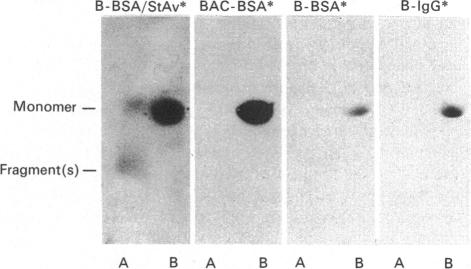
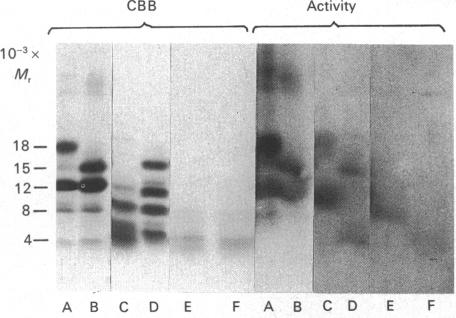
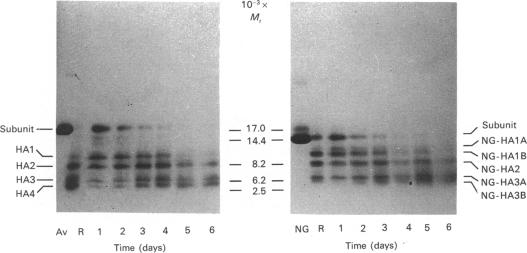
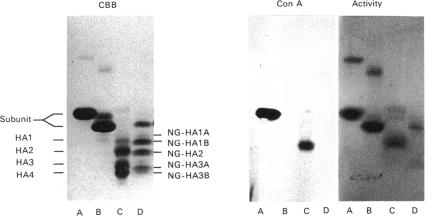
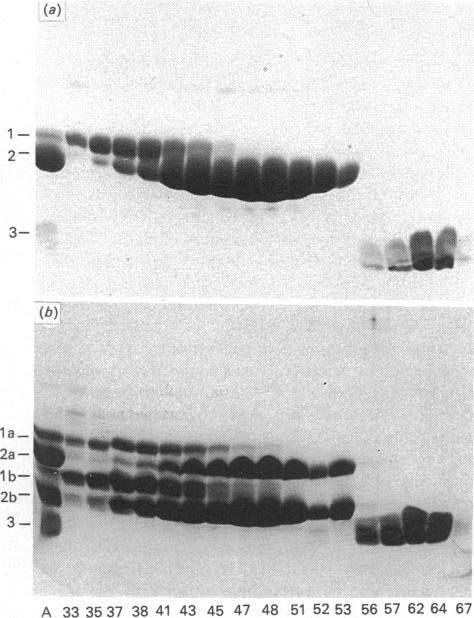
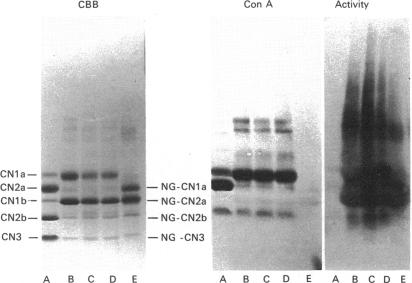
The object of this study was to define minimized biotin-binding fragments, or 'prorecognition sites', of either the egg-white glycoprotein avidin or its bacterial analogue streptavidin. Because of the extreme stability to enzymic hydrolysis, fragments of avidin were prepared by chemical means and examined for their individual biotin-binding capacity. Treatment of avidin with hydroxylamine was shown to result in new cleavage sites in addition to the known Asn-Gly cleavage site (position 88-89 in avidin). Notably, the Asn-Glu and Asp-Lys peptide bonds (positions 42-43 and 57-58 respectively) were readily cleaved; in addition, lesser levels of hydrolysis of the Gln-Pro (61-62) and Asn-Asp (12-13 and 104-105) bonds could be detected. The smallest biotin-binding peptide fragment, derived from hydroxylamine cleavage of either native or non-glycosylated avidin, was identified to comprise residues 1-42. CNBr cleavage resulted in a 78-amino acid-residue fragment (residues 19-96) that still retained activity. The data ascribe an important biotin-binding function to the overlapping region (residues 19-42) of avidin, which bears the single tyrosine moiety. This contention was corroborated by synthesizing a tridecapeptide corresponding to residues 26-38 of avidin; this peptide was shown to recognize biotin. Streptavidin was not susceptible to either enzymic or chemical cleavage methods used in this work. The approach taken in this study enabled the experimental distinction between the chemical and structural elements of the binding site. The capacity to assign biotin-binding activity to the tyrosine-containing domain of avidin underscores its primary chemical contribution to the binding of biotin by avidin.
本研究的目的是确定蛋清糖蛋白抗生物素蛋白或其细菌类似物链霉抗生物素蛋白的最小生物素结合片段,即“前识别位点”。由于抗生物素蛋白对酶解具有极高的稳定性,因此通过化学方法制备了抗生物素蛋白片段,并检测了它们各自的生物素结合能力。结果表明,用羟胺处理抗生物素蛋白,除了已知的天冬酰胺-甘氨酸裂解位点(抗生物素蛋白中的第88-89位)外,还会产生新的裂解位点。值得注意的是,天冬酰胺-谷氨酸和天冬氨酸-赖氨酸肽键(分别位于第42-43位和第57-58位)很容易被裂解;此外,还能检测到谷氨酰胺-脯氨酸(61-62)以及天冬酰胺-天冬氨酸(12-13和104-105)键的较低程度的水解。通过对天然或非糖基化抗生物素蛋白进行羟胺裂解得到的最小生物素结合肽片段被确定为由第1-42位残基组成。溴化氰裂解产生了一个仍保留活性的78个氨基酸残基的片段(第19-96位残基)。这些数据表明抗生物素蛋白中带有单个酪氨酸部分的重叠区域(第19-42位残基)具有重要的生物素结合功能。合成对应于抗生物素蛋白第26-38位残基的十三肽证实了这一论点;该肽显示出能识别生物素。链霉抗生物素蛋白对本研究中使用的酶解或化学裂解方法均不敏感。本研究采用的方法能够在结合位点的化学和结构元素之间进行实验区分。将生物素结合活性赋予抗生物素蛋白含酪氨酸结构域的能力突出了其对抗生物素蛋白结合生物素的主要化学贡献。