Meiler Flurina, Zumkehr Judith, Klunker Sven, Rückert Beate, Akdis Cezmi A, Akdis Mübeccel
Swiss Institute of Allergy and Asthma Research, University of Zurich, 7270 Davos, Switzerland.
J Exp Med. 2008 Nov 24;205(12):2887-98. doi: 10.1084/jem.20080193. Epub 2008 Nov 10.
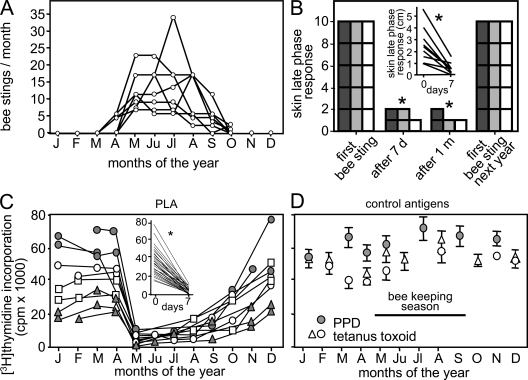
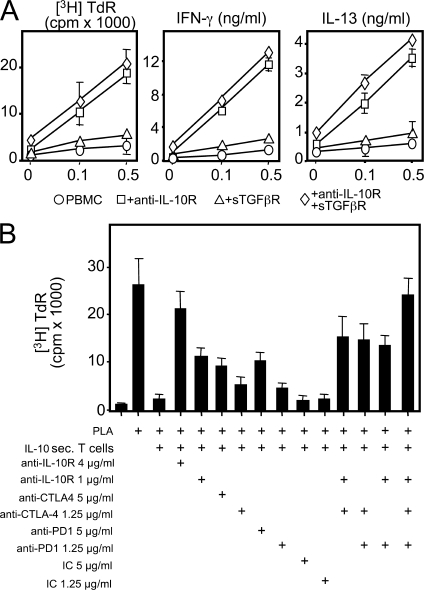
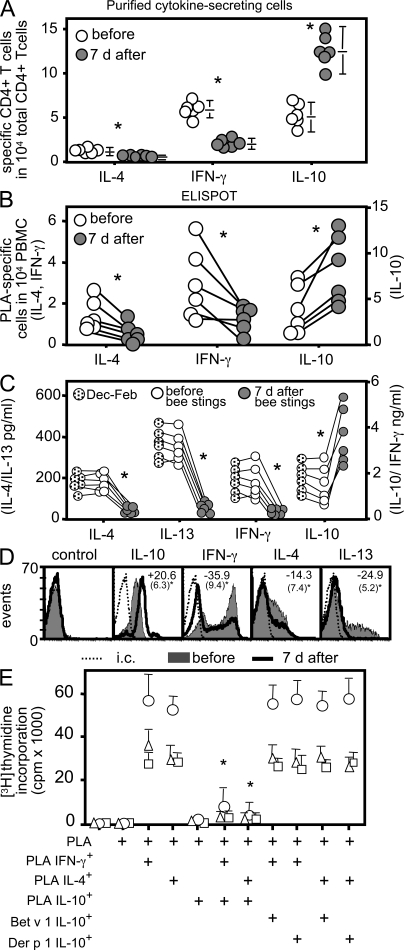
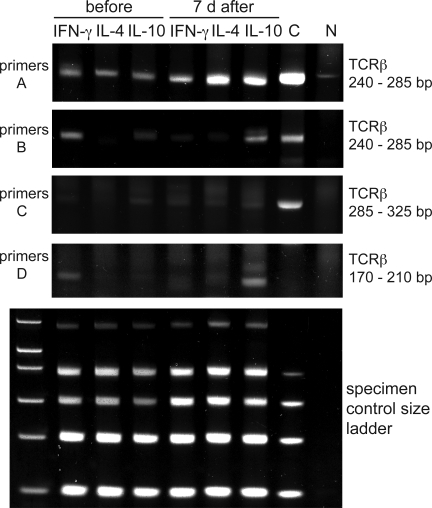
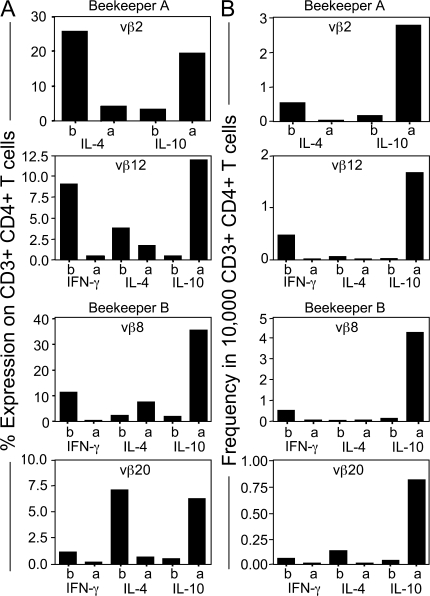
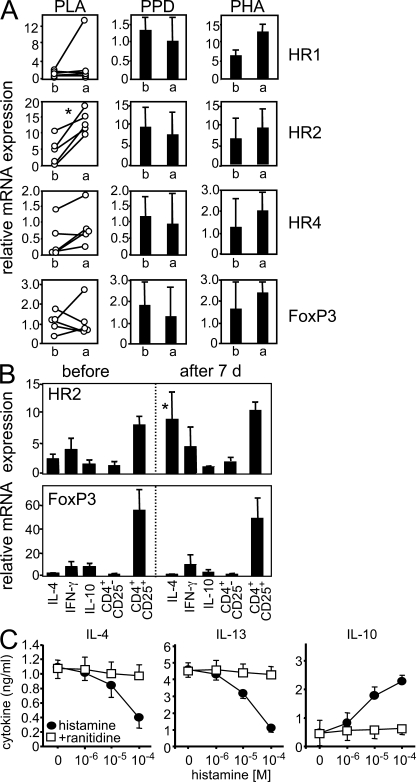
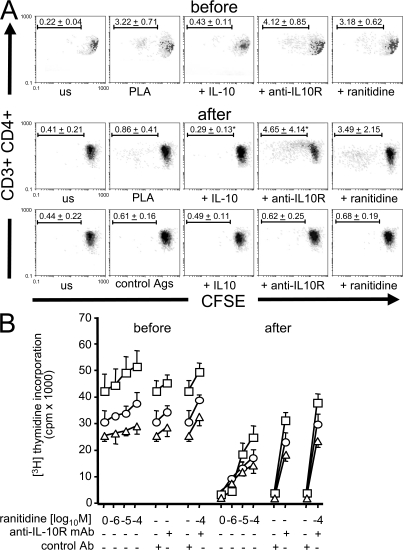
High dose bee venom exposure in beekeepers by natural bee stings represents a model to understand mechanisms of T cell tolerance to allergens in healthy individuals. Continuous exposure of nonallergic beekeepers to high doses of bee venom antigens induces diminished T cell-related cutaneous late-phase swelling to bee stings in parallel with suppressed allergen-specific T cell proliferation and T helper type 1 (Th1) and Th2 cytokine secretion. After multiple bee stings, venom antigen-specific Th1 and Th2 cells show a switch toward interleukin (IL) 10-secreting type 1 T regulatory (Tr1) cells. T cell regulation continues as long as antigen exposure persists and returns to initial levels within 2 to 3 mo after bee stings. Histamine receptor 2 up-regulated on specific Th2 cells displays a dual effect by directly suppressing allergen-stimulated T cells and increasing IL-10 production. In addition, cytotoxic T lymphocyte-associated antigen 4 and programmed death 1 play roles in allergen-specific T cell suppression. In contrast to its role in mucosal allergen tolerance, transforming growth factor beta does not seem to be an essential player in skin-related allergen tolerance. Thus, rapid switch and expansion of IL-10-producing Tr1 cells and the use of multiple suppressive factors represent essential mechanisms in immune tolerance to a high dose of allergens in nonallergic individuals.
养蜂人通过自然蜂蛰而高剂量接触蜂毒,这是一种了解健康个体中T细胞对过敏原耐受性机制的模型。非过敏体质的养蜂人持续高剂量接触蜂毒抗原,会导致与蜂蛰相关的T细胞介导的皮肤迟发性肿胀减轻,同时过敏原特异性T细胞增殖以及1型辅助性T细胞(Th1)和2型辅助性T细胞(Th2)细胞因子分泌受到抑制。多次蜂蛰后,毒液抗原特异性Th1和Th2细胞会向分泌白细胞介素(IL)-10的1型调节性T细胞(Tr1)转变。只要抗原暴露持续存在,T细胞调节就会持续,并且在蜂蛰后2至3个月内恢复到初始水平。特异性Th2细胞上上调的组胺受体2通过直接抑制过敏原刺激的T细胞和增加IL-10的产生发挥双重作用。此外,细胞毒性T淋巴细胞相关抗原4和程序性死亡蛋白1在过敏原特异性T细胞抑制中发挥作用。与它在黏膜过敏原耐受性中的作用不同,转化生长因子β似乎不是皮肤相关过敏原耐受性中的关键因素。因此,产生IL-10的Tr1细胞的快速转变和扩增以及多种抑制因子的作用是非过敏个体对高剂量过敏原产生免疫耐受的重要机制。