Jin Suk-Won, Patterson Cam
Carolina Cardiovascular Biology Center, University of North Carolina, Chapel Hill, NC 27599-7126, USA.
Arterioscler Thromb Vasc Biol. 2009 May;29(5):623-9. doi: 10.1161/ATVBAHA.107.161539. Epub 2008 Nov 13.
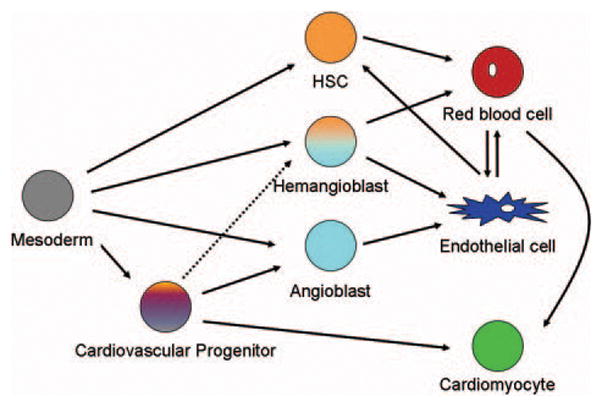
Previous studies on cellular and molecular mechanisms that regulate vascular development identified key signaling pathways and transcription factors. These findings supported the notion that the formation of vasculature is predominantly regulated by genetic programs, which is generally accepted. However, recent progress in understanding nongenetic factors that can modify the preprogrammed genetic mechanisms added another layer of complexity to our current understanding of vascular development. Here, we briefly summarize historic viewpoints and evolutionary perspectives on vascular development. We also review the cellular and molecular mechanisms that govern the emergence of the endothelial lineage and the subsequent process of vasculogenesis during development, with an emphasis on vascular endothelial growth factor and angiopoietin signaling cascades. Finally, we discuss epigenetic factors such as hemodynamic forces and hypoxic responses that can modulate and override the predetermined genetic mechanisms of vascular development.
先前关于调节血管发育的细胞和分子机制的研究确定了关键信号通路和转录因子。这些发现支持了血管形成主要由遗传程序调控这一普遍接受的观点。然而,在理解可改变预先设定的遗传机制的非遗传因素方面的最新进展,为我们当前对血管发育的理解增添了另一层复杂性。在这里,我们简要总结关于血管发育的历史观点和进化视角。我们还回顾了在发育过程中控制内皮谱系出现及随后血管生成过程的细胞和分子机制,重点是血管内皮生长因子和血管生成素信号级联反应。最后,我们讨论了诸如血流动力学力和缺氧反应等表观遗传因素,它们可以调节并超越血管发育的预定遗传机制。