Bingle Lewis E H, Rajasekar Karthik V, Muntaha Sidra tul, Nadella Vinod, Hyde Eva I, Thomas Christopher M
School of Biosciences, University of Birmingham, Edgbaston, Birmingham B15 2TT, UK.
Mol Microbiol. 2008 Dec;70(6):1502-14. doi: 10.1111/j.1365-2958.2008.06498.x. Epub 2008 Oct 17.
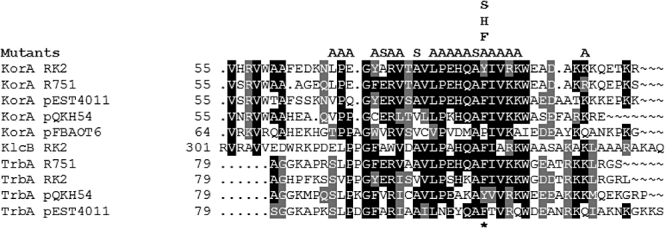
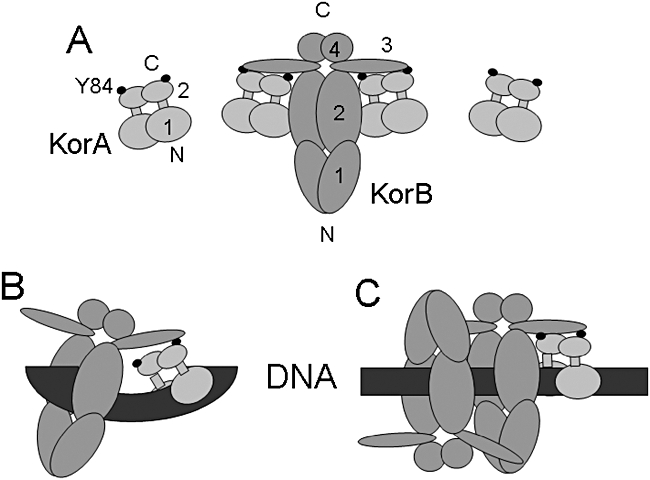
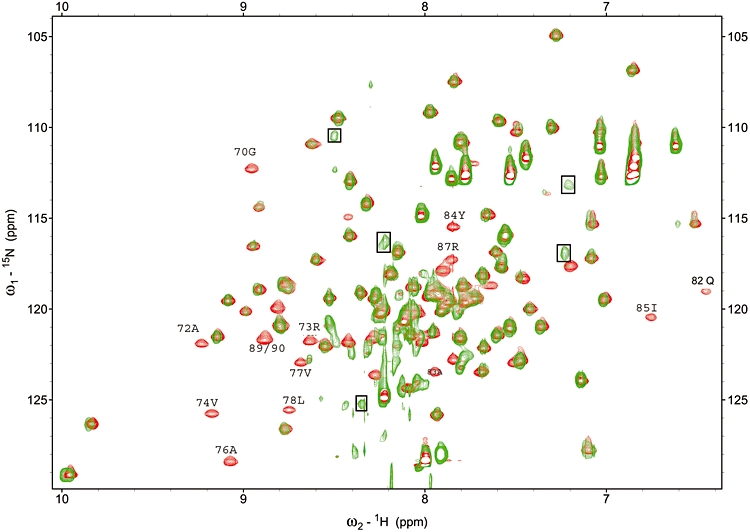
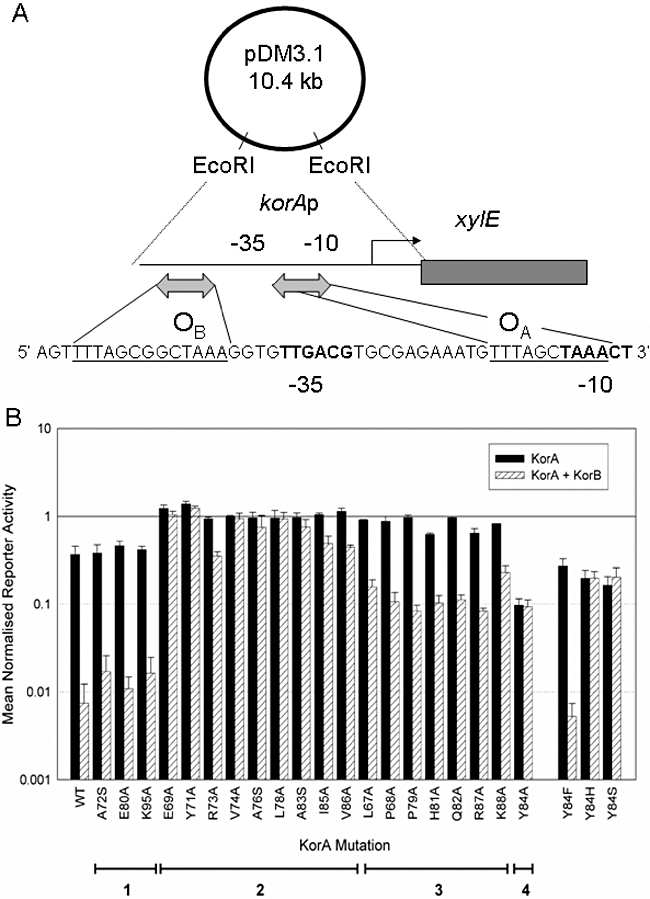
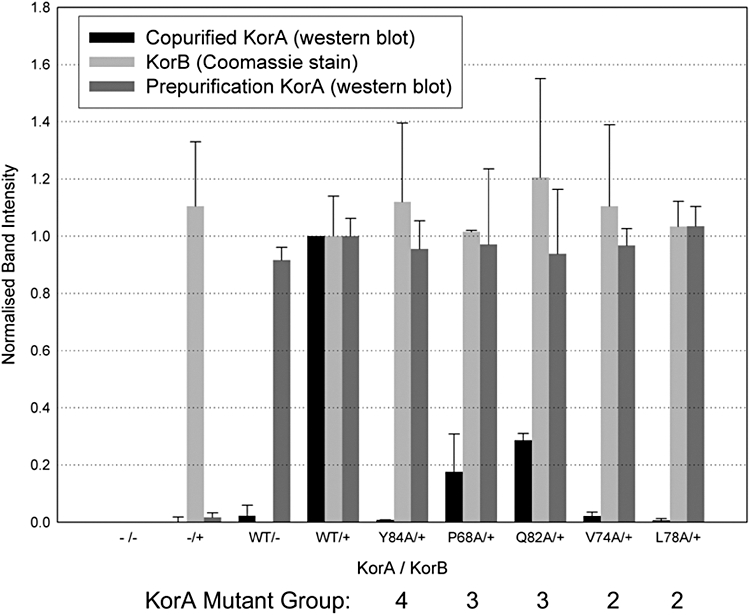
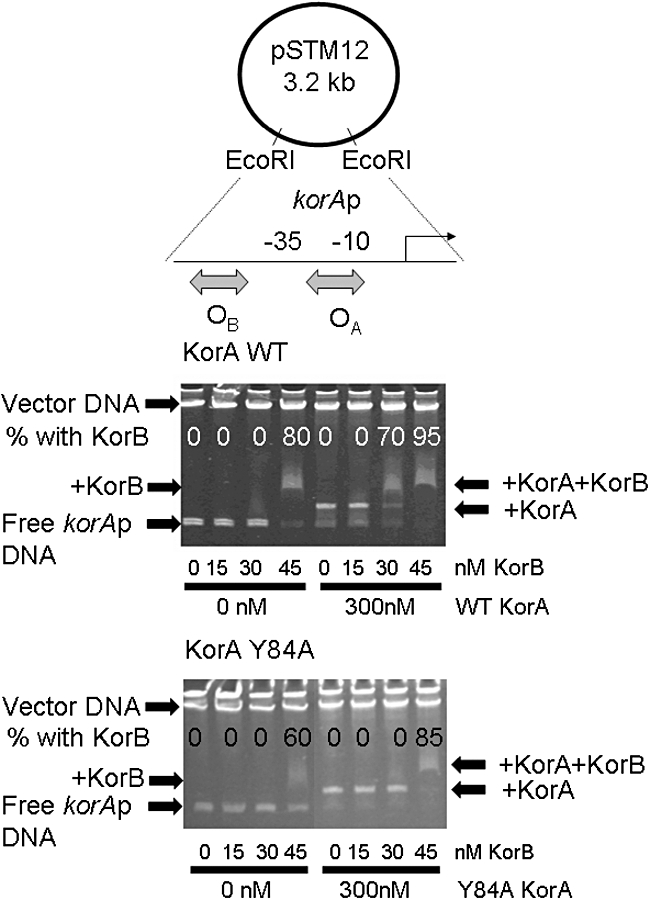
A central feature of broad host range IncP-1 plasmids is the set of regulatory circuits that tightly control plasmid core functions under steady-state conditions. Cooperativity between KorB and either KorA or TrbA repressor proteins is a key element of these circuits and deletion analysis has implicated the conserved C-terminal domain of KorA and TrbA in this interaction. By NMR we show that KorA and KorB interact directly and identify KorA amino acids that are affected on KorB binding. Studies on mutants showed that tyrosine 84 (or phenylalanine, in some alleles) is dispensable for repressor activity but critical for the specific interaction with KorB in both in vivo reporter gene assays and in vitro electrophoretic mobility shift and co-purification assays. This confirms that direct and specific protein-protein interactions are responsible for the cooperativity observed between KorB and its corepressors and lays the basis for determining the biological importance of this cooperativity.
广宿主范围IncP-1质粒的一个核心特征是一组调控回路,这些回路在稳态条件下严格控制质粒的核心功能。KorB与KorA或TrbA阻遏蛋白之间的协同作用是这些回路的关键要素,缺失分析表明KorA和TrbA保守的C末端结构域参与了这种相互作用。通过核磁共振,我们表明KorA和KorB直接相互作用,并确定了与KorB结合时受影响的KorA氨基酸。对突变体的研究表明,酪氨酸84(或某些等位基因中的苯丙氨酸)对于阻遏活性是可有可无的,但在体内报告基因检测以及体外电泳迁移率变动和共纯化检测中,对于与KorB的特异性相互作用至关重要。这证实了直接和特异性的蛋白质-蛋白质相互作用是KorB与其共阻遏物之间观察到的协同作用的原因,并为确定这种协同作用的生物学重要性奠定了基础。