Gregor Margaret F, Yang Ling, Fabbrini Elisa, Mohammed B Selma, Eagon J Christopher, Hotamisligil Gökhan S, Klein Samuel
Department of Genetics and Complex Diseases, Harvard School of Public Health, Boston, Massachusetts, USA.
Diabetes. 2009 Mar;58(3):693-700. doi: 10.2337/db08-1220. Epub 2008 Dec 9.
Obesity is associated with insulin resistance and type 2 diabetes, although the mechanisms linking these pathologies remain undetermined. Recent studies in rodent models revealed endoplasmic reticulum (ER) stress in adipose and liver tissues and demonstrated that ER stress could cause insulin resistance. Therefore, we tested whether these stress pathways were also present in obese human subjects and/or regulated by weight loss.
Eleven obese men and women (BMI 51.3 +/- 3.0 kg/m2) were studied before and 1 year after gastric bypass (GBP) surgery. We examined systemic insulin sensitivity using hyperinsulinemic-euglycemic clamp studies before and after surgery and collected subcutaneous adipose and liver tissues to examine ER stress markers.
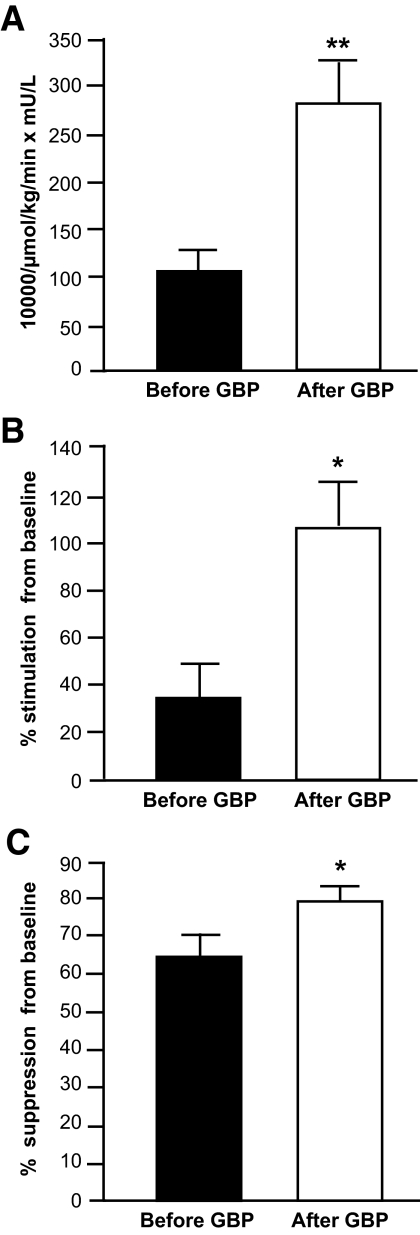
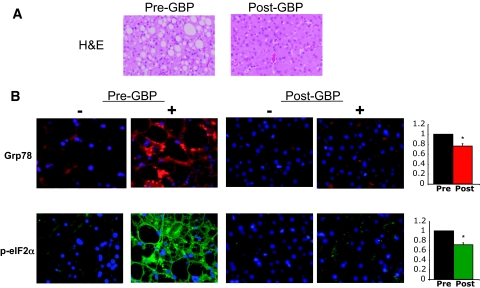
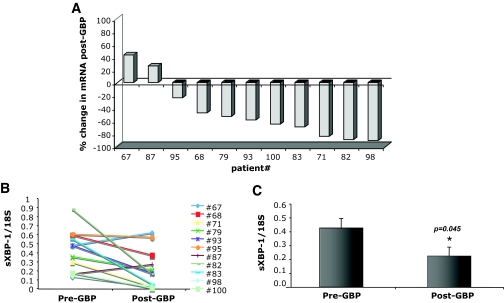
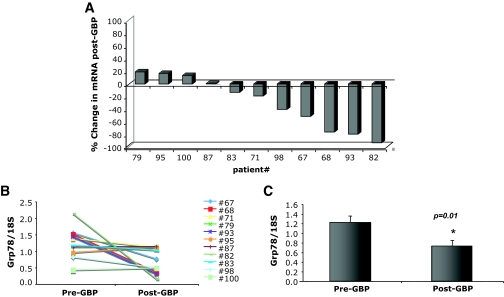
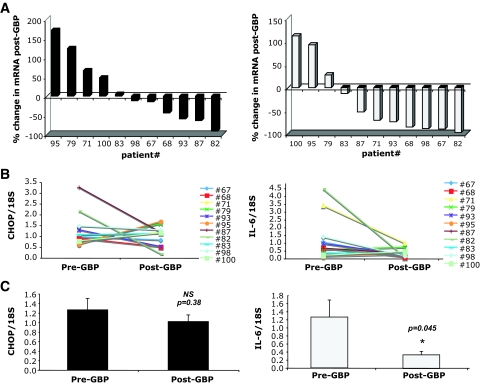
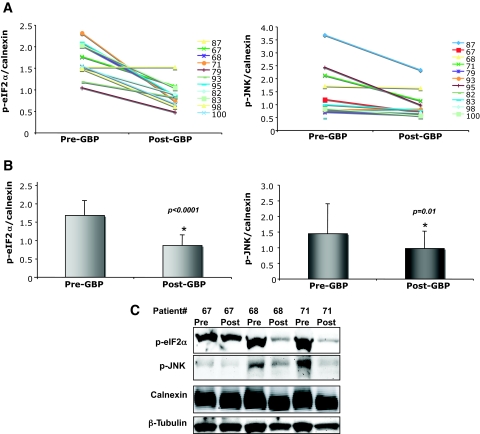
Subjects lost 39 +/- 9% body wt at 1 year after GBP surgery (P < 0.001), which was associated with a marked improvement in hepatic, skeletal muscle, and adipose tissue insulin sensitivity. Markers of ER stress in adipose tissue significantly decreased with weight loss. Specifically, glucose-regulated protein 78 (Grp78) and spliced X-box binding protein-1 (sXBP-1) mRNA levels were reduced, as were phosphorylated elongation initiation factor 2alpha (eIF2alpha) and stress kinase c-Jun NH2-terminal kinase 1 (JNK1) (all P values <0.05). Liver sections from a subset of subjects showed intense staining for Grp78 and phosphorylated eIF2alpha before surgery, which was reduced in post-GBP sections.
This study presents important evidence that ER stress pathways are present in selected tissues of obese humans and that these signals are regulated by marked weight loss and metabolic improvement. Hence, this suggests the possibility of a relationship between obesity-related ER stress and metabolic dysfunction in obese humans.
肥胖与胰岛素抵抗及2型糖尿病相关,尽管连接这些病理状态的机制仍未明确。最近在啮齿动物模型中的研究揭示了脂肪组织和肝脏组织中的内质网(ER)应激,并表明ER应激可导致胰岛素抵抗。因此,我们测试了这些应激途径是否也存在于肥胖人类受试者中以及是否受体重减轻的调节。
对11名肥胖男性和女性(BMI 51.3±3.0 kg/m2)在胃旁路(GBP)手术前及术后1年进行研究。我们在手术前后使用高胰岛素-正常血糖钳夹研究检查全身胰岛素敏感性,并收集皮下脂肪和肝脏组织以检查ER应激标志物。
GBP手术后1年,受试者体重减轻了39±9%(P<0.001),这与肝脏、骨骼肌和脂肪组织胰岛素敏感性的显著改善相关。脂肪组织中ER应激标志物随体重减轻而显著降低。具体而言,葡萄糖调节蛋白78(Grp78)和剪接的X盒结合蛋白-1(sXBP-1)的mRNA水平降低,磷酸化的延伸起始因子2α(eIF2α)和应激激酶c-Jun氨基末端激酶1(JNK1)也降低(所有P值<0.05)。一部分受试者术前肝脏切片显示Grp78和磷酸化eIF2α染色强烈,GBP术后切片中染色减少。
本研究提供了重要证据,表明ER应激途径存在于肥胖人类的特定组织中,并且这些信号受显著体重减轻和代谢改善的调节。因此,这提示了肥胖相关的ER应激与肥胖人类代谢功能障碍之间存在关联的可能性。