Moore Thomas J, Alsabeeh Nour, Apovian Caroline M, Murphy Megan C, Coffman Gerald A, Cullum-Dugan Diana, Jenkins Mark, Cabral Howard
Boston University Medical Center, Boston, MA 02118, USA.
J Med Internet Res. 2008 Dec 12;10(4):e52. doi: 10.2196/jmir.1114.
The dietary habits of Americans are creating serious health concerns, including obesity, hypertension, diabetes, cardiovascular disease, and even some types of cancer. While considerable attention has been focused on calorie reduction and weight loss, approaches are needed that will not only help the population reduce calorie intake but also consume the type of healthy, well-balanced diet that would prevent this array of medical complications.
To design an Internet-based nutrition education program and to explore its effect on weight, blood pressure, and eating habits after 12 months of participation.
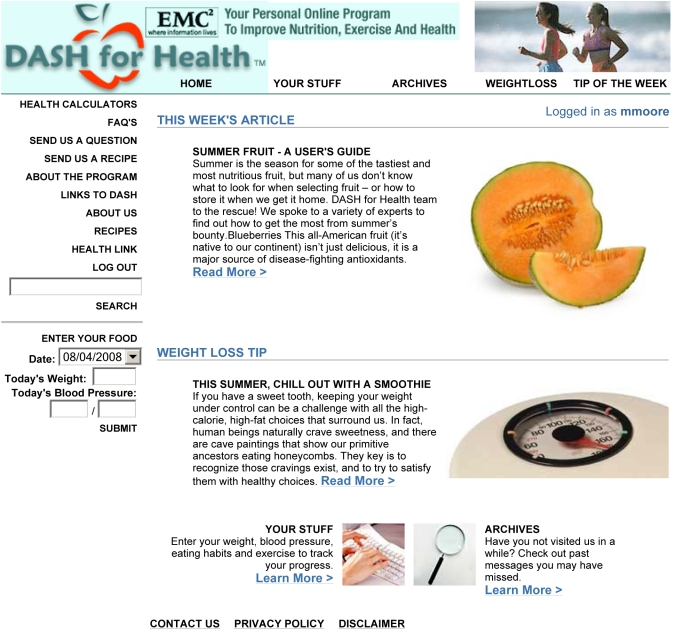
We designed the DASH for Health program to provide weekly articles about healthy nutrition via the Internet. Dietary advice was based on the DASH diet (Dietary Approaches to Stop Hypertension). The program was offered as a free benefit to the employees of EMC Corporation, and 2834 employees and spouses enrolled. Enrollees voluntarily entered information about themselves on the website (food intake), and we used these self-entered data to determine if the program had any effect. Analyses were based upon the change in weight, blood pressure, and food intake between the baseline period (before the DASH program began) and the 12th month. To be included in an outcome, a subject had to have provided both a baseline and 12th-month entry.
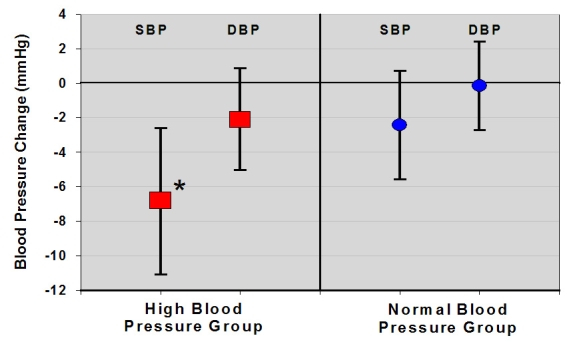
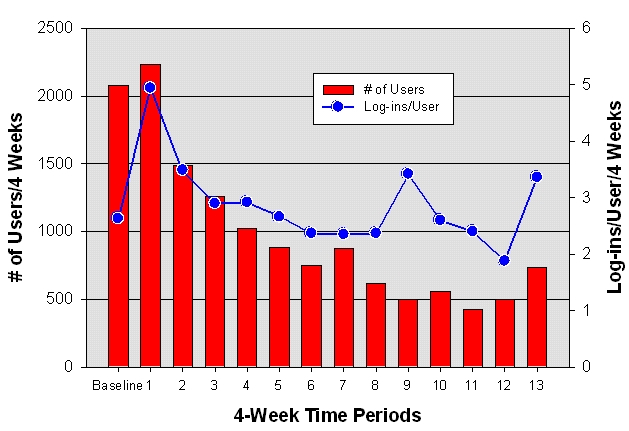
After 12 months, 735 of 2834 original enrollees (26%) were still actively using the program. For subjects who were overweight/obese (body mass index > 25; n = 151), weight change at 12 months was -4.2 lbs (95% CI: -2.2, -6.2; P < .001). For subjects with hypertension or prehypertension at baseline (n = 62), systolic blood pressure fell 6.8 mmHg at 12 months (CI: -2.6, -11.0; P < .001; n = 62). Diastolic pressure fell 2.1 mmHg (P = .16). Based upon self-entered food surveys, enrollees (n = 181) at 12 months were eating significantly more fruits, more vegetables, and fewer grain products. They also reduced consumption of carbonated beverages. Enrollees who had visited the website more often tended to have greater blood pressure and weight loss effect, suggesting that use of the DASH for Health program was at least partially responsible for the benefits we observed.
We have found that continued use of a nutrition education program delivered totally via the Internet, with no person-to-person contact with health professionals, is associated with significant weight loss, blood pressure lowering, and dietary improvements after 12 months. Effective programs like DASH for Health, delivered via the Internet, can provide benefit to large numbers of subjects at low cost and may help address the nutritional public health crisis.
美国人的饮食习惯引发了严重的健康问题,包括肥胖、高血压、糖尿病、心血管疾病,甚至某些类型的癌症。尽管人们相当关注减少热量摄入和体重减轻,但需要一些方法,不仅能帮助人们减少热量摄入,还能让他们食用有助于预防一系列医疗并发症的健康、均衡饮食。
设计一个基于互联网的营养教育项目,并探讨参与12个月后该项目对体重、血压和饮食习惯的影响。
我们设计了“健康饮食法”(DASH for Health)项目,通过互联网每周提供有关健康营养的文章。饮食建议基于“饮食预防高血压法”(DASH饮食)。该项目作为一项免费福利提供给EMC公司的员工,共有2834名员工及其配偶报名参加。参与者在网站上自愿输入自己的信息(食物摄入量),我们利用这些自行输入的数据来确定该项目是否有任何效果。分析基于基线期(DASH项目开始前)和第12个月之间体重、血压和食物摄入量的变化。要纳入结果分析,受试者必须提供基线期和第12个月的输入信息。
12个月后,2834名原始参与者中有735人(26%)仍在积极使用该项目。对于超重/肥胖的受试者(体重指数>25;n = 151),12个月时体重变化为-4.2磅(95%置信区间:-2.2,-6.2;P <.001)。对于基线时患有高血压或高血压前期的受试者(n = 62),12个月时收缩压下降了6.8 mmHg(置信区间:-2.6,-11.0;P <.001;n = 62)。舒张压下降了2.1 mmHg(P = 0.16)。根据自行输入的食物调查,12个月时的参与者(n = 181)食用的水果和蔬菜明显增多,谷物产品减少。他们还减少了碳酸饮料的消费。访问网站更频繁的参与者往往血压和体重减轻效果更明显,这表明使用“健康饮食法”项目至少部分促成了我们观察到的益处。
我们发现,持续使用一个完全通过互联网提供、无需与健康专业人员进行面对面接触的营养教育项目,在12个月后会带来显著的体重减轻、血压降低和饮食改善。像“健康饮食法”这样通过互联网提供的有效项目,可以以低成本为大量受试者带来益处,并可能有助于应对营养公共卫生危机。