Lahoute Charlotte, Sotiropoulos Athanassia, Favier Marilyne, Guillet-Deniau Isabelle, Charvet Claude, Ferry Arnaud, Butler-Browne Gillian, Metzger Daniel, Tuil David, Daegelen Dominique
Institut Cochin, Université Paris Descartes, CNRS (UMR 8104), Paris, France.
PLoS One. 2008;3(12):e3910. doi: 10.1371/journal.pone.0003910. Epub 2008 Dec 11.
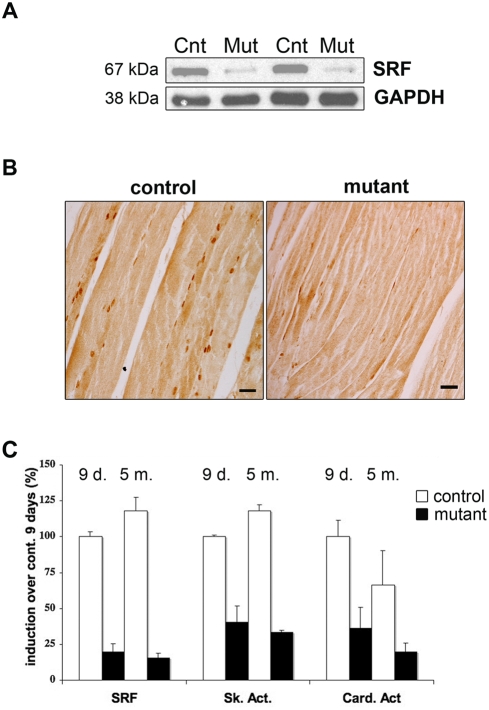
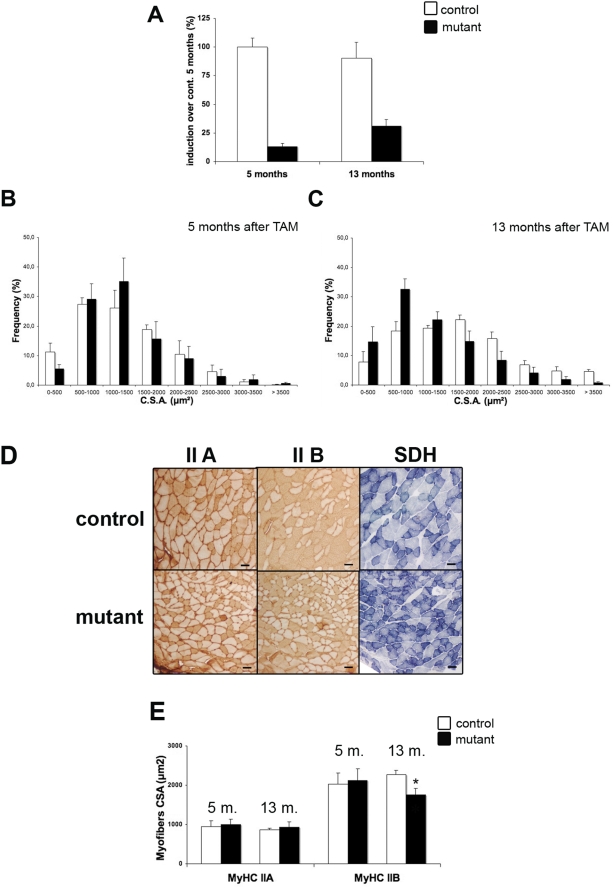
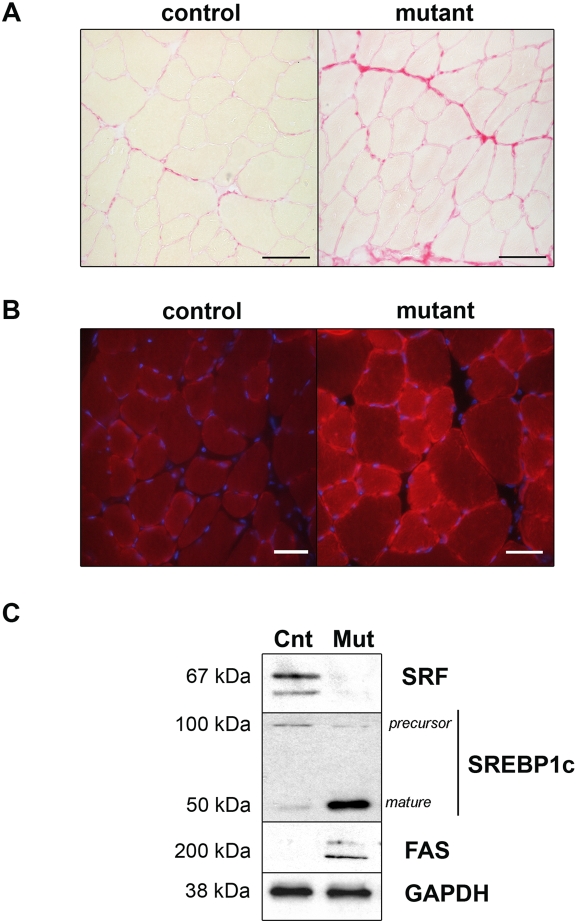
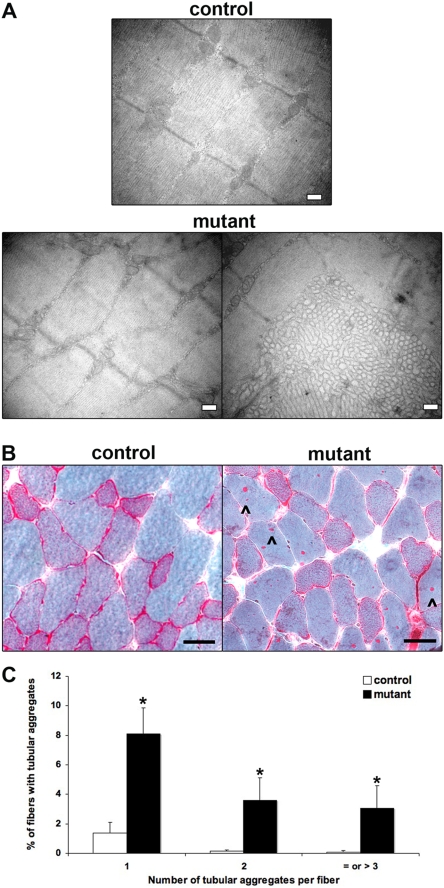
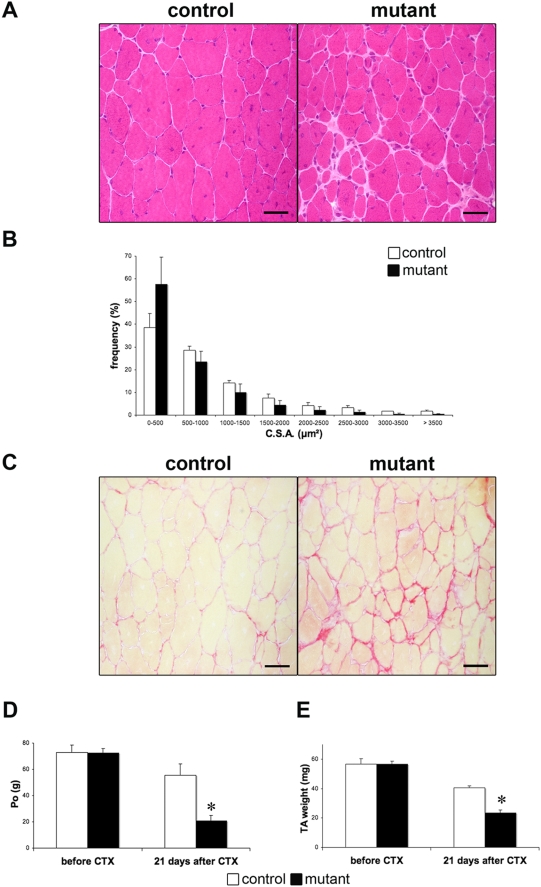
Aging is associated with a progressive loss of muscle mass, increased adiposity and fibrosis that leads to sarcopenia. At the molecular level, muscle aging is known to alter the expression of a variety of genes but very little is known about the molecular effectors involved. SRF (Serum Response Factor) is a crucial transcription factor for muscle-specific gene expression and for post-natal skeletal muscle growth. To assess its role in adult skeletal muscle physiology, we developed a post-mitotic myofiber-specific and tamoxifen-inducible SRF knockout model. Five months after SRF loss, no obvious muscle phenotype was observed suggesting that SRF is not crucial for myofiber maintenance. However, mutant mice progressively developed IIB myofiber-specific atrophy accompanied by a metabolic switch towards a more oxidative phenotype, muscular lipid accumulation, sarcomere disorganization and fibrosis. After injury, mutant muscles exhibited an altered regeneration process, showing smaller regenerated fibers and persistent fibrosis. All of these features are strongly reminiscent of abnormalities encountered in aging skeletal muscle. Interestingly, we also observed an important age associated decrease in SRF expression in mice and human muscles. Altogether, these results suggest that a naturally occurring SRF down-regulation precedes and contributes to the muscle aging process. Indeed, triggering SRF loss in the muscles of mutant mice results in an accelerated aging process.
衰老与肌肉质量的逐渐丧失、肥胖增加以及导致肌肉减少症的纤维化有关。在分子水平上,已知肌肉衰老会改变多种基因的表达,但对于其中涉及的分子效应器却知之甚少。血清反应因子(SRF)是肌肉特异性基因表达和出生后骨骼肌生长的关键转录因子。为了评估其在成年骨骼肌生理学中的作用,我们构建了一种有丝分裂后肌纤维特异性且可由他莫昔芬诱导的SRF基因敲除模型。在SRF缺失五个月后,未观察到明显的肌肉表型,这表明SRF对肌纤维维持并非至关重要。然而,突变小鼠逐渐出现IIB型肌纤维特异性萎缩,并伴有向更具氧化型表型的代谢转变、肌肉脂质积累、肌节紊乱和纤维化。损伤后,突变肌肉表现出再生过程改变,再生纤维更小且纤维化持续存在。所有这些特征都强烈让人联想到衰老骨骼肌中出现的异常情况。有趣的是,我们还观察到小鼠和人类肌肉中SRF表达随年龄增长而显著下降。总之,这些结果表明,自然发生的SRF下调先于并促成了肌肉衰老过程。事实上,在突变小鼠的肌肉中引发SRF缺失会导致加速衰老过程。