Institute of Physiological Chemistry, Ulm University, Albert-Einstein-Allee 11, 89081, Ulm, Germany.
Sci Rep. 2020 Mar 24;10(1):5281. doi: 10.1038/s41598-020-62231-4.
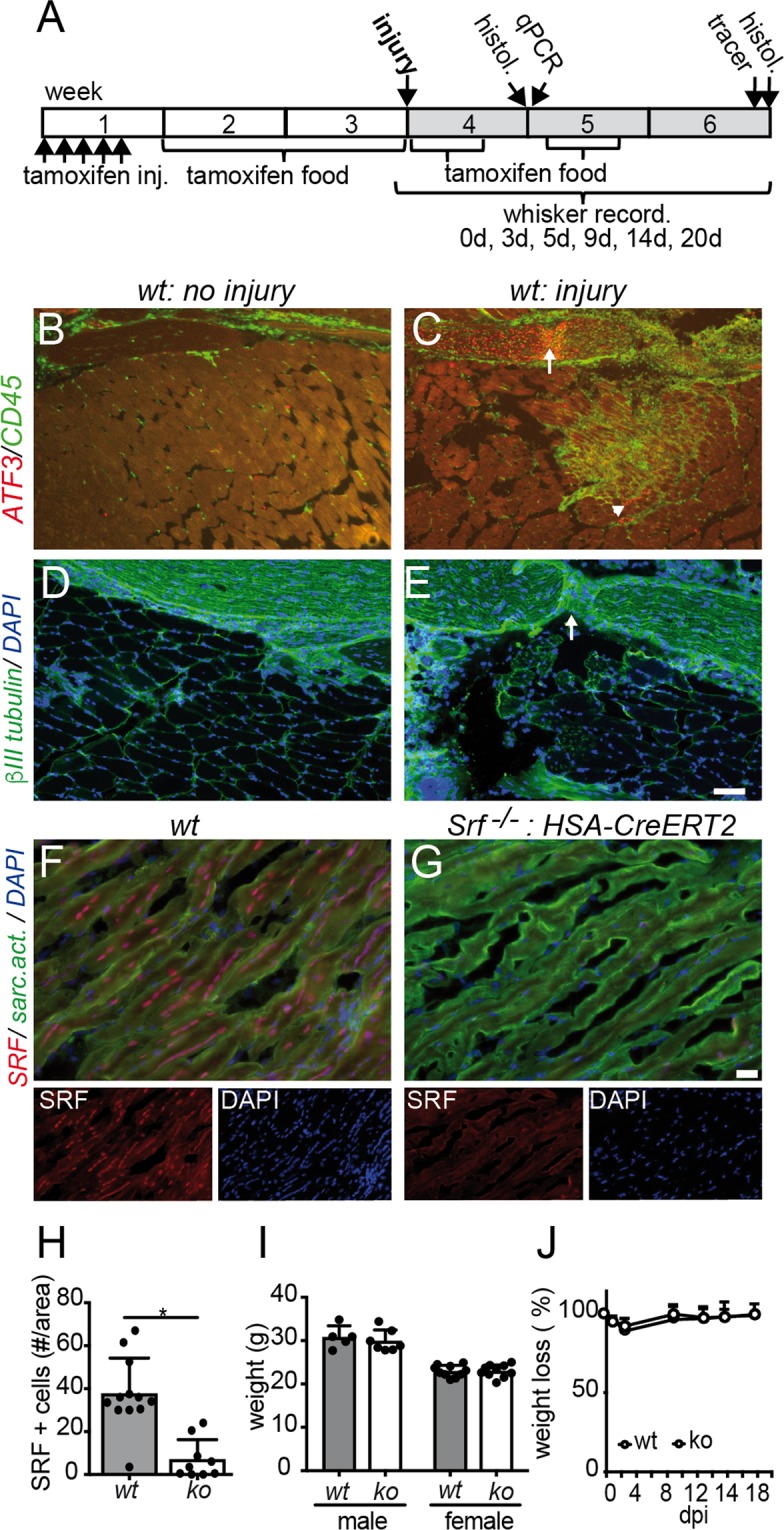
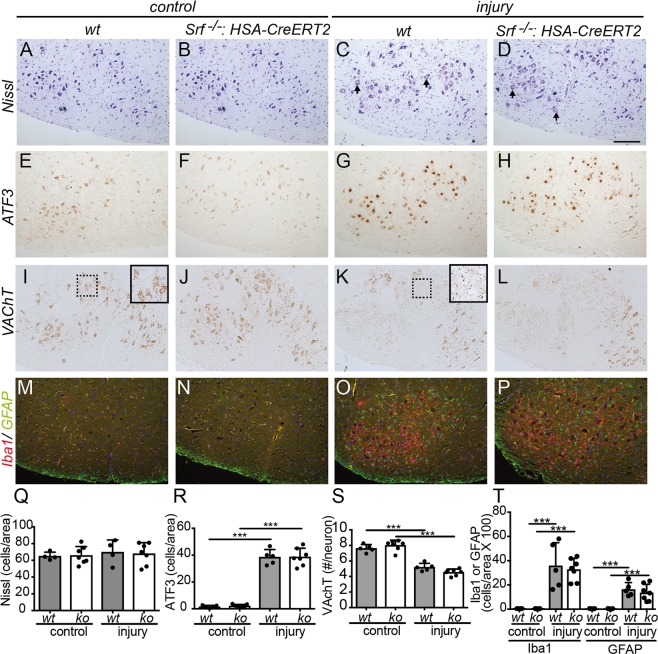
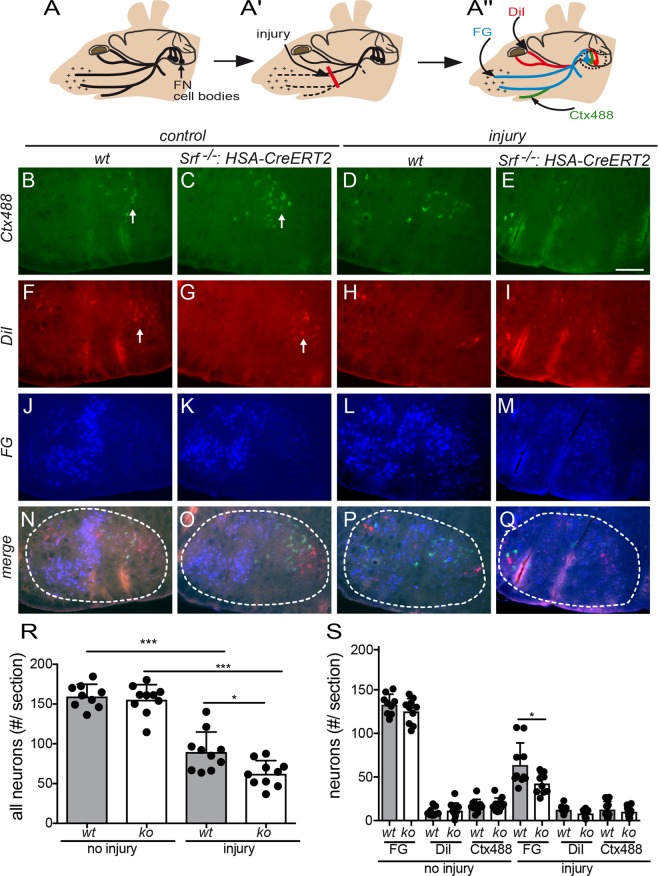
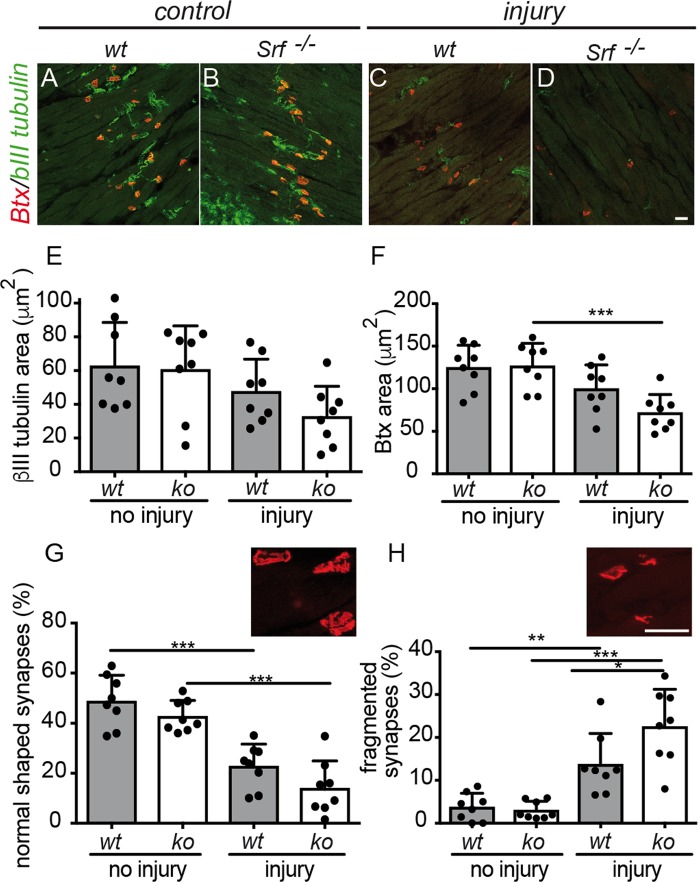
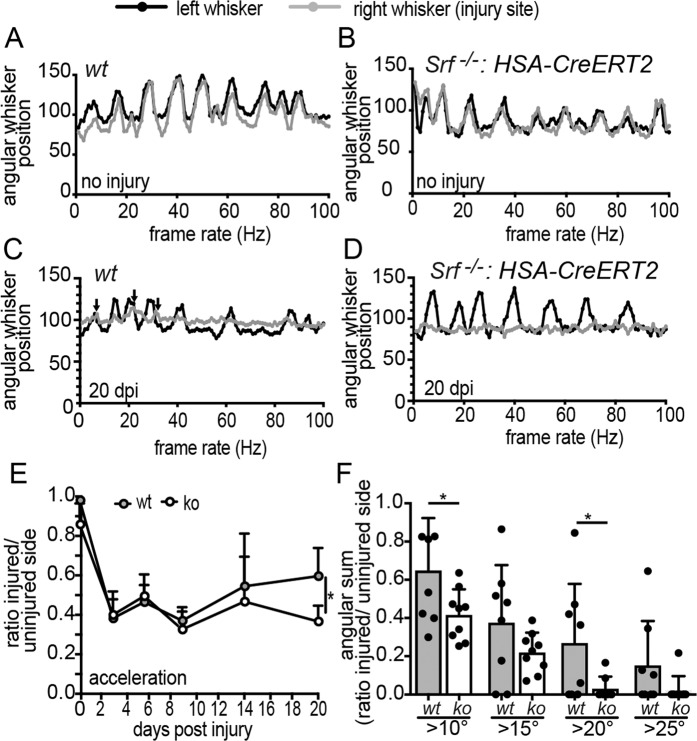
Traumatic injury of peripheral nerves typically also damages nerve surrounding tissue including muscles. Hence, molecular and cellular interactions of neighboring damaged tissues might be decisive for successful axonal regeneration of injured nerves. So far, the contribution of muscles and muscle-derived molecules to peripheral nerve regeneration has only poorly been studied. Herein, we conditionally ablated SRF (serum response factor), an important myofiber transcription factor, in skeletal muscles of mice. Subsequently, the impact of this myofiber-restricted SRF deletion on peripheral nerve regeneration, i.e. facial nerve injury was analyzed. Quantification of facial nerve regeneration by retrograde tracer transport, inspection of neuromuscular junctions (NMJs) and recovery of whisker movement revealed reduced axonal regeneration upon muscle specific Srf deletion. In contrast, responses in brainstem facial motor neuron cell bodies such as regeneration-associated gene (RAG) induction of Atf3, synaptic stripping and neuroinflammation were not overly affected by SRF deficiency. Mechanistically, SRF in myofibers appears to stimulate nerve regeneration through regulation of muscular satellite cell (SC) proliferation. In summary, our data suggest a role of muscle cells and SRF expression within muscles for regeneration of injured peripheral nerves.
周围神经的创伤性损伤通常也会损害包括肌肉在内的神经周围组织。因此,相邻受损组织的分子和细胞相互作用可能对受伤神经的轴突再生起决定性作用。到目前为止,肌肉和肌肉衍生分子对周围神经再生的贡献还没有得到很好的研究。在这里,我们在小鼠的骨骼肌中条件性地敲除了 SRF(血清反应因子),这是一种重要的肌纤维转录因子。随后,分析了这种肌纤维特异性 SRF 缺失对周围神经再生(即面神经损伤)的影响。通过逆行示踪剂运输定量面神经再生、检查运动终板(NMJs)和恢复胡须运动,发现肌肉特异性 Srf 缺失后轴突再生减少。相比之下,脑桥面神经运动神经元胞体的反应,如 Atf3 的再生相关基因(RAG)诱导、突触剥离和神经炎症,不受 SRF 缺乏的过度影响。从机制上讲,肌纤维中的 SRF 似乎通过调节肌肉卫星细胞(SC)的增殖来刺激神经再生。总之,我们的数据表明肌肉细胞和肌肉内的 SRF 表达在受伤周围神经的再生中起作用。