Ricchetti Eric T, Reddy Sudheer C, Ansorge Heather L, Zgonis Miltiadis H, Van Kleunen Jonathan P, Liechty Kenneth W, Soslowsky Louis J, Beredjiklian Pedro K
McKay Orthopaedic Research Laboratory, University of Pennsylvania, Philadelphia, PA, USA.
J Hand Surg Am. 2008 Dec;33(10):1843-52. doi: 10.1016/j.jhsa.2008.07.020.
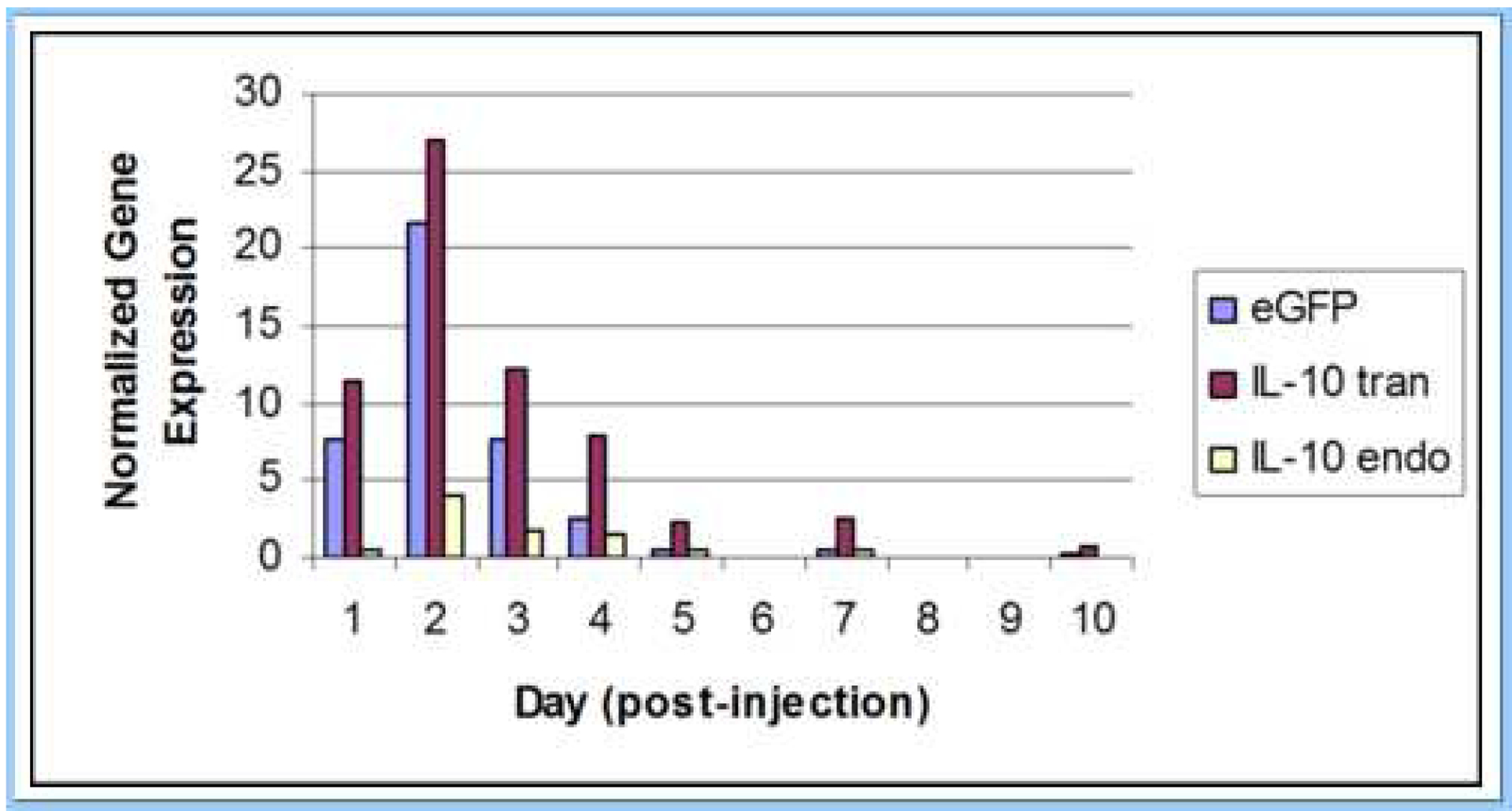
Interleukin-10 (IL-10) is a potent anti-inflammatory cytokine shown to inhibit scar formation in fetal wound healing. The role of IL-10 in adult tendon healing and scar formation, however, remains unknown. The objective of this study is to investigate the effect of IL-10 overexpression on the properties of adult healing tendon using a well-established murine model of tendon injury and a lentiviral-mediated method of IL-10 overexpression.
A murine model of patellar tendon injury was used and animals divided into 3 groups. Mice received bilateral patellar tendon injections with a lentiviral vector containing an IL-10 transgene (n = 34) or no transgene (n = 34). Control mice (n = 34) received injections of sterile saline. All animals then were subjected to bilateral, central patellar tendon injuries 2 days after injection and were killed at 5, 10, 21, and 42 days after injury. IL-10 content was analyzed by immunohistochemistry (n = 4/group). Tendon healing was evaluated by histology (n = 4/group) and biomechanical analysis (n = 10/group).
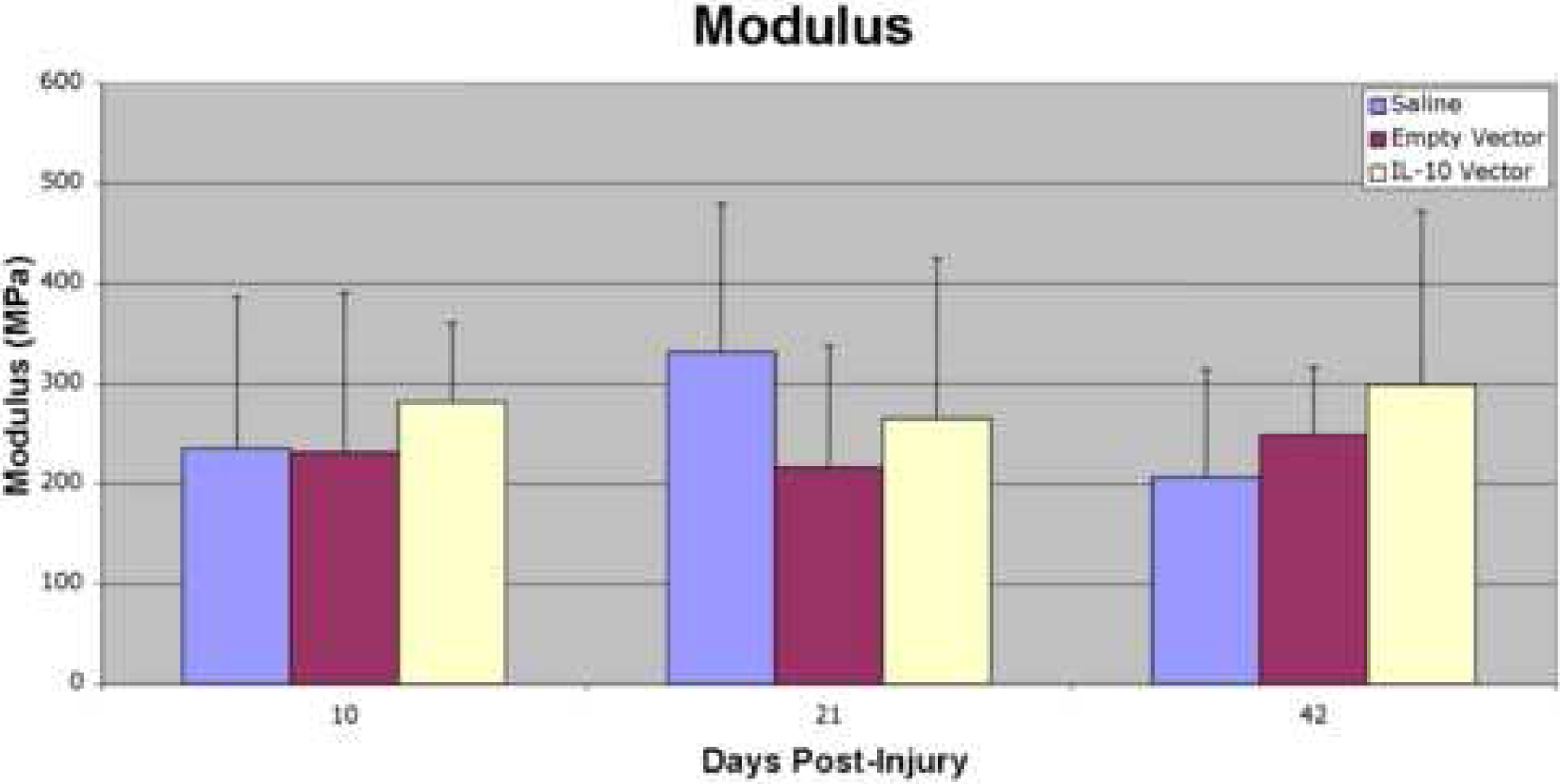
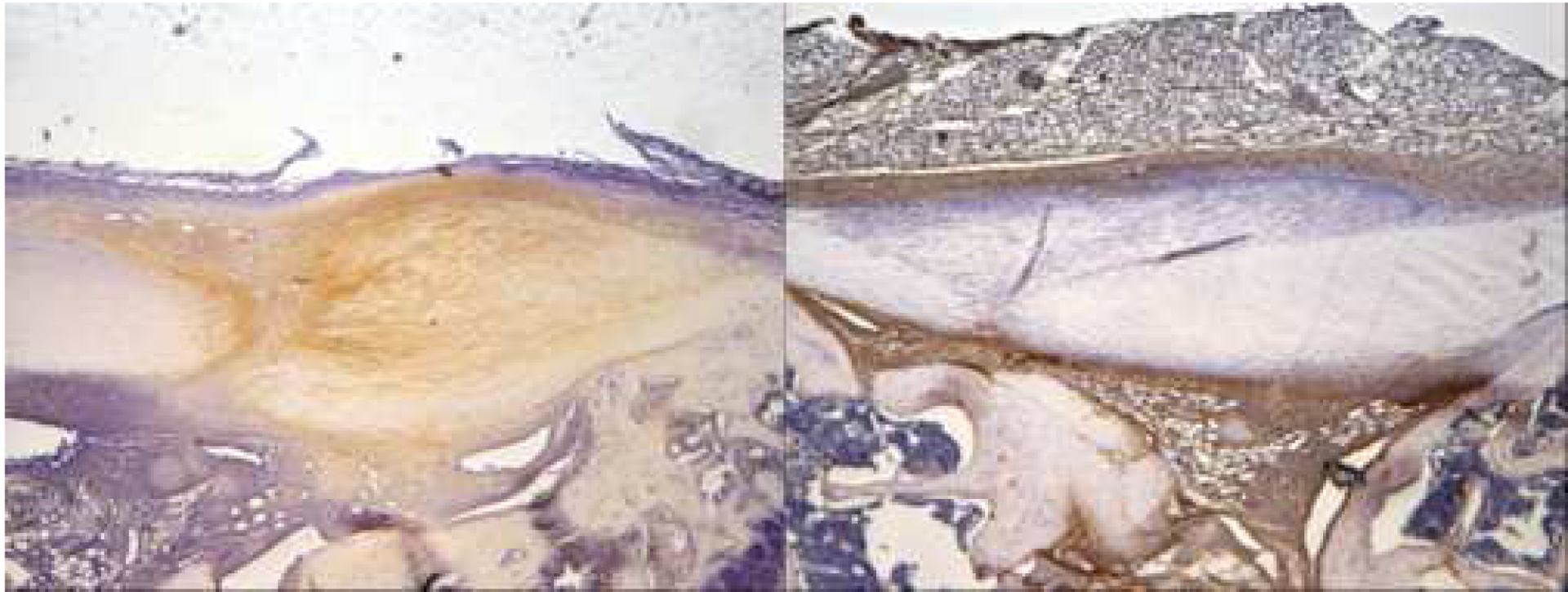
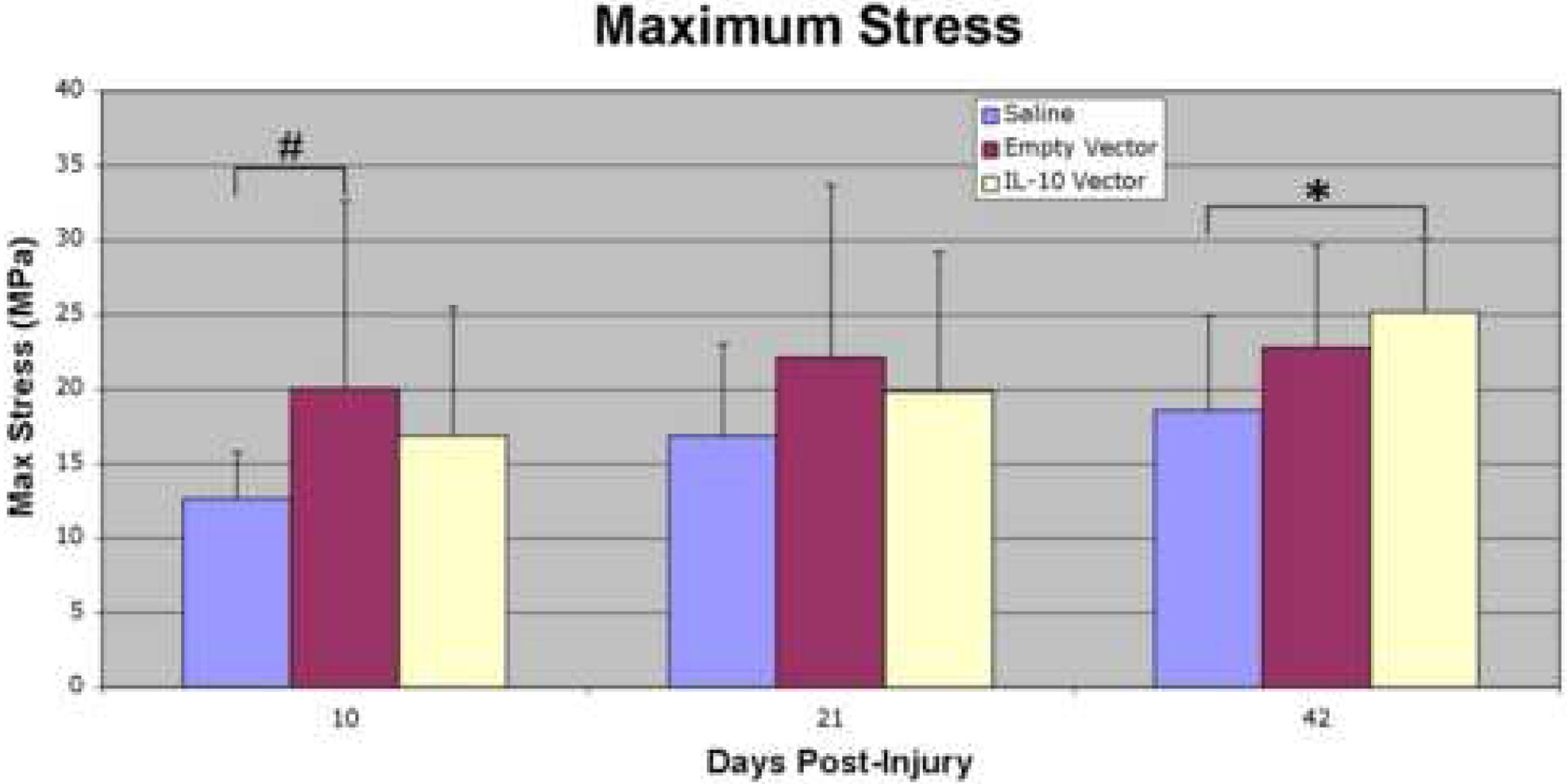
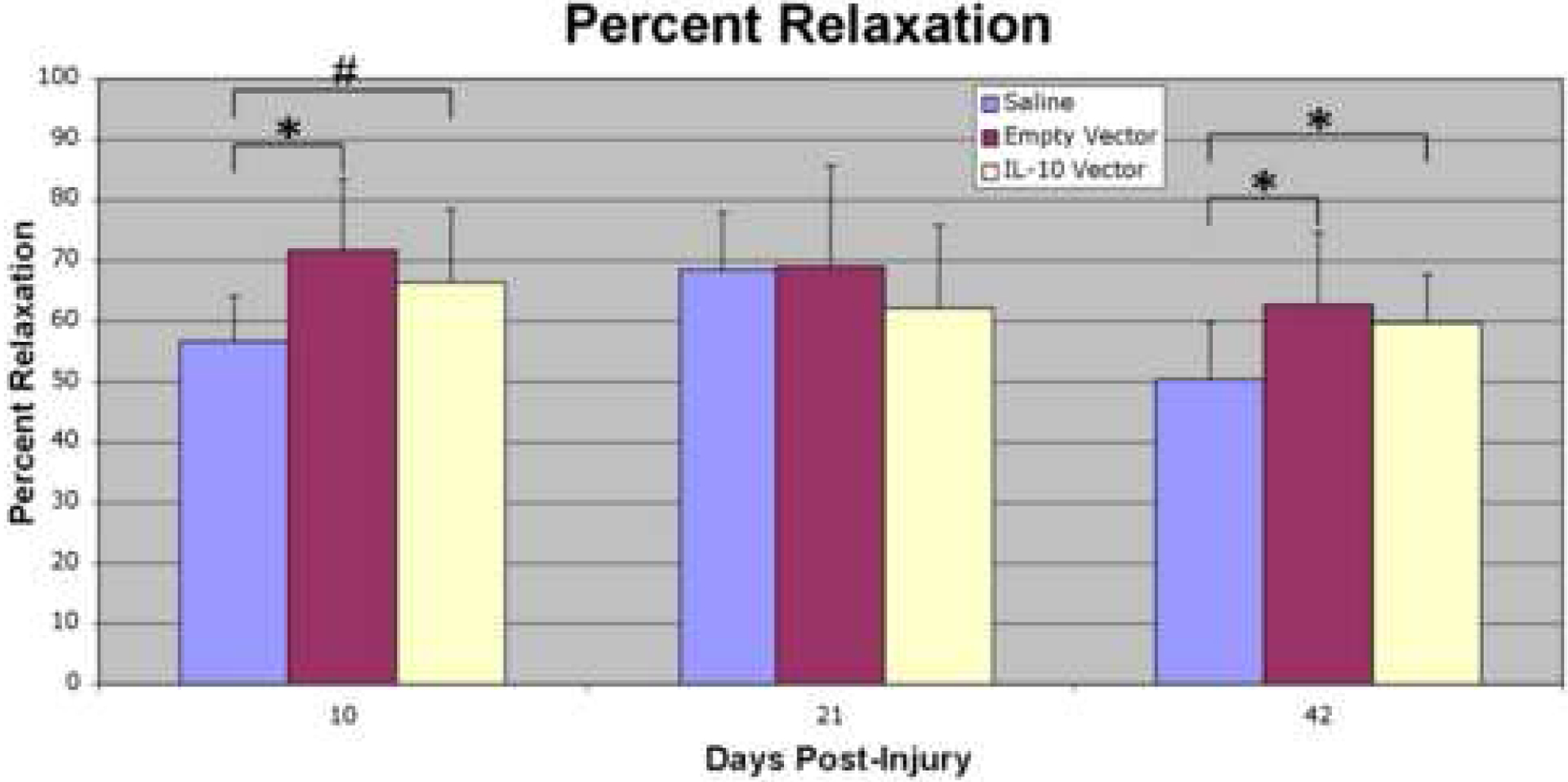
Overexpression of IL-10 in patellar tendon was confirmed after injection of the lentiviral vector. IL-10 immunostaining was increased at day 10 in the IL-10 group relative to that in controls. Histologically, there was no significant difference in angular deviation between groups at day 21, but a trend toward decreased angular deviation in controls relative to that in empty vector group mice was seen at day 42. Biomechanically, the IL-10 group showed significantly increased maximum stress at day 42 relative to that in controls. Percent relaxation showed a trend toward an increase at day 10 and a significant increase at day 42 in the IL-10 group relative to that in controls.
This study demonstrates successful gene transfer of IL-10 into adult murine patellar tendon using a lentiviral vector. Although the effects of overexpression of IL-10 on adult tendon healing have not yet been fully elucidated, the current study may help to further clarify the mechanisms of tendon injury and repair.
白细胞介素-10(IL-10)是一种强效抗炎细胞因子,已被证明可抑制胎儿伤口愈合中的瘢痕形成。然而,IL-10在成人肌腱愈合和瘢痕形成中的作用尚不清楚。本研究的目的是使用成熟的小鼠肌腱损伤模型和慢病毒介导的IL-10过表达方法,研究IL-10过表达对成人愈合肌腱特性的影响。
采用小鼠髌腱损伤模型,将动物分为3组。小鼠双侧髌腱注射含IL-10转基因的慢病毒载体(n = 34)或不含转基因的慢病毒载体(n = 34)。对照小鼠(n = 34)注射无菌生理盐水。所有动物在注射后2天接受双侧中央髌腱损伤,并在损伤后5、10、21和42天处死。通过免疫组织化学分析IL-10含量(每组n = 4)。通过组织学(每组n = 4)和生物力学分析(每组n = 10)评估肌腱愈合情况。
注射慢病毒载体后,证实髌腱中IL-10过表达。与对照组相比,IL-10组在第10天时IL-10免疫染色增加。组织学上,在第21天时各组之间的角度偏差无显著差异,但在第42天时,与空载体组小鼠相比,对照组的角度偏差有减小的趋势。生物力学方面,与对照组相比,IL-10组在第42天时最大应力显著增加。相对于对照组,IL-10组在第10天时松弛百分比有增加的趋势,在第42天时显著增加。
本研究证明使用慢病毒载体成功将IL-10基因转移到成年小鼠髌腱中。虽然IL-10过表达对成人肌腱愈合的影响尚未完全阐明,但本研究可能有助于进一步阐明肌腱损伤和修复的机制。