Uyeda Josef C, Arnold Stevan J, Hohenlohe Paul A, Mead Louise S
Department of Zoology, Oregon State University, Corvallis, Oregon 97331, USA.
Evolution. 2009 Mar;63(3):583-94. doi: 10.1111/j.1558-5646.2008.00589.x. Epub 2008 Dec 12.
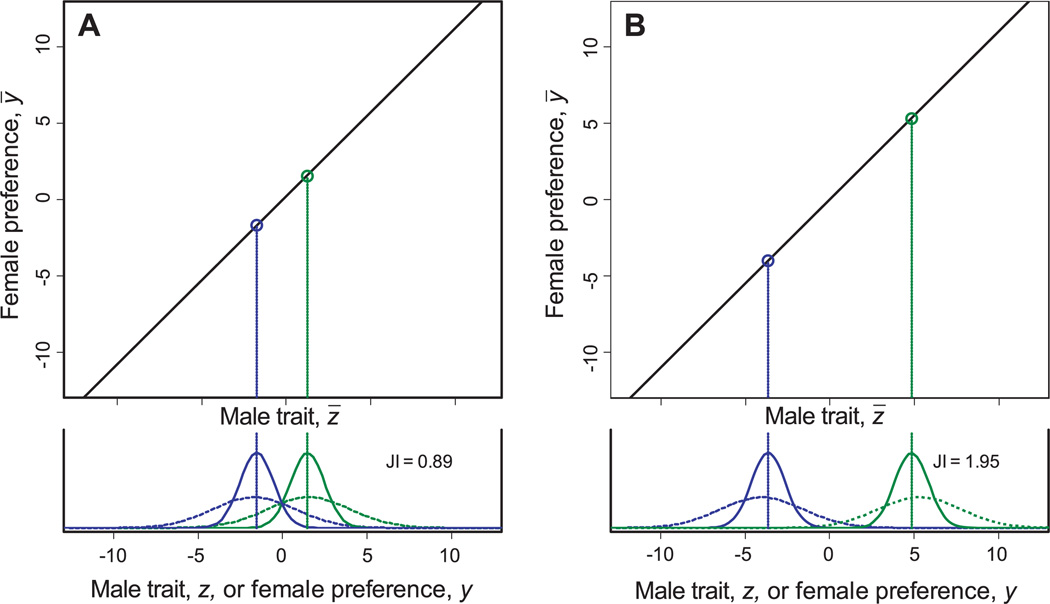
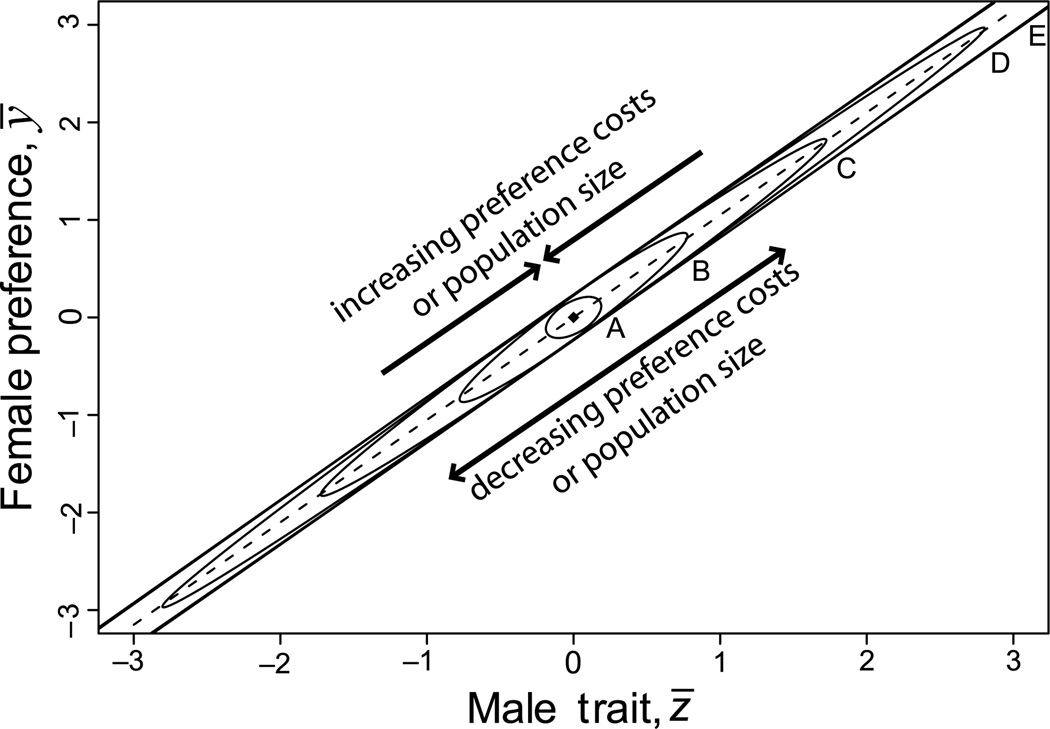
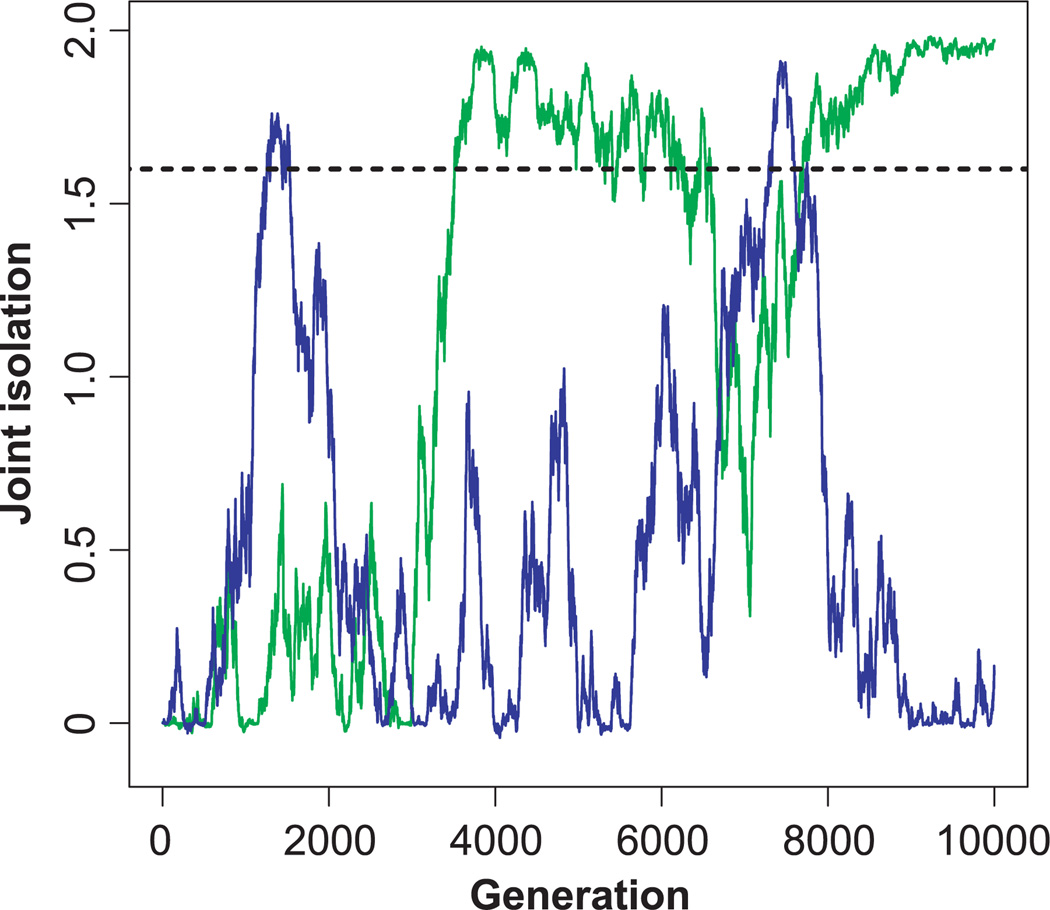
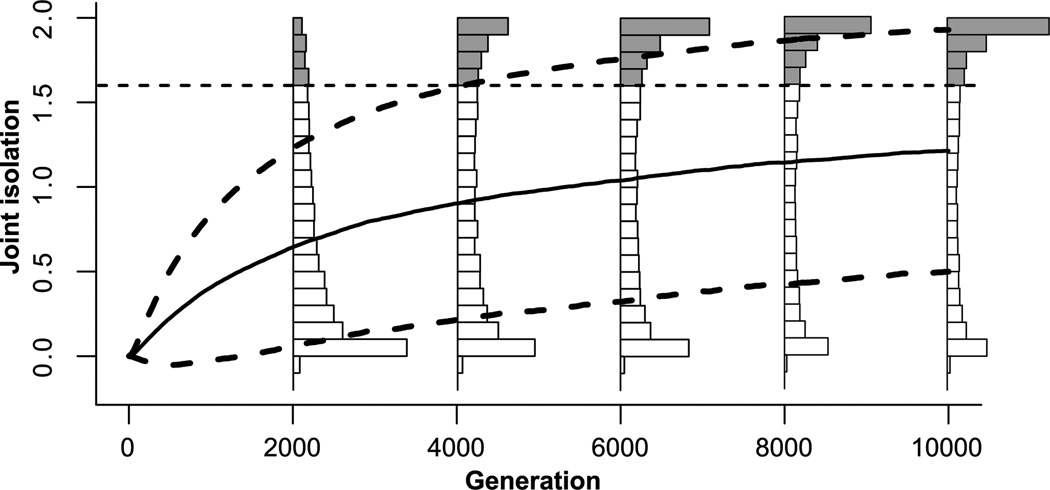
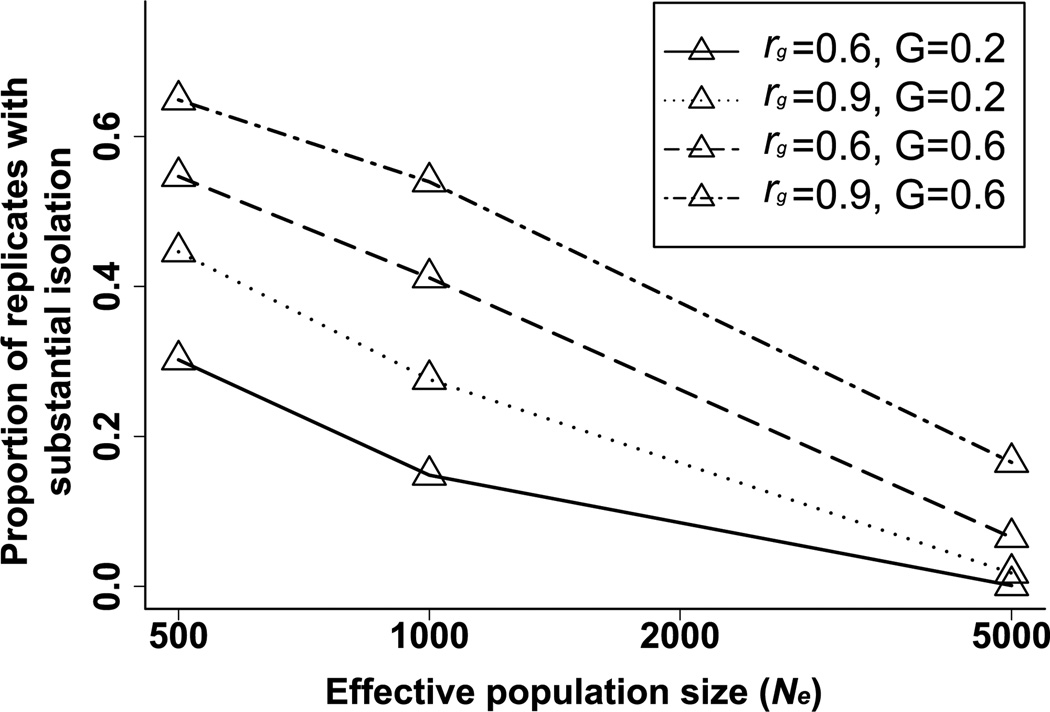
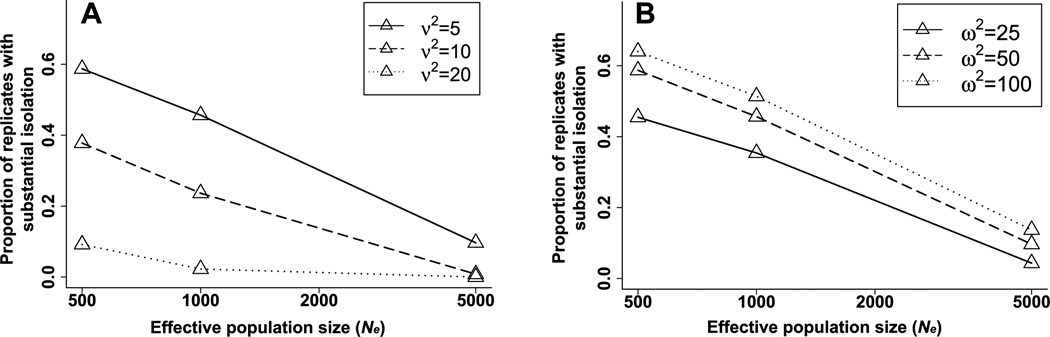
Quantitative genetic models of sexual selection have generally failed to provide a direct connection to speciation and to explore the consequences of finite population size. The connection to speciation has been indirect because the models have treated only the evolution of male and female traits and have stopped short of modeling the evolution of sexual isolation. In this article we extend Lande's (1981) model of sexual selection to quantify predictions about the evolution of sexual isolation and speciation. Our results, based on computer simulations, support and extend Lande's claim that drift along a line of equilibria can rapidly lead to sexual isolation and speciation. Furthermore, we show that rapid speciation can occur by drift in populations of appreciable size (N(e) >or= 1000). These results are in sharp contrast to the opinion of many researchers and textbook writers who have argued that drift does not play an important role in speciation. We argue that drift may be a powerful amplifier of speciation under a wide variety of modeling assumptions, even when selection acts directly on female mating preferences.
性选择的定量遗传模型通常未能建立与物种形成的直接联系,也未能探究有限种群规模的后果。与物种形成的联系一直是间接的,因为这些模型仅处理了雄性和雌性性状的进化,并未对性隔离的进化进行建模。在本文中,我们扩展了兰德(1981年)的性选择模型,以量化关于性隔离和物种形成进化的预测。我们基于计算机模拟的结果支持并扩展了兰德的观点,即沿着平衡线的漂变能够迅速导致性隔离和物种形成。此外,我们表明,在相当规模的种群(有效种群大小N(e)≥1000)中,漂变能够导致快速的物种形成。这些结果与许多研究人员和教科书作者的观点形成了鲜明对比,他们认为漂变在物种形成中并不起重要作用。我们认为,即使选择直接作用于雌性的交配偏好,在各种建模假设下,漂变也可能是物种形成的有力放大器。