Lomiento Mariana, Jiang Zhaoshi, D'Addabbo Pietro, Eichler Evan E, Rocchi Mariano
Department of Genetics and Microbiology, University of Bari, Via Amendola 165/A, Bari 70126, Italy.
Genome Biol. 2008;9(12):R173. doi: 10.1186/gb-2008-9-12-r173. Epub 2008 Dec 16.
Evolutionary-new centromeres (ENCs) result from the seeding of a centromere at an ectopic location along the chromosome during evolution. The novel centromere rapidly acquires the complex structure typical of eukaryote centromeres. This phenomenon has played an important role in shaping primate karyotypes. A recent study on the evolutionary-new centromere of macaque chromosome 4 (human 6) showed that the evolutionary-new centromere domain was deeply restructured, following the seeding, with respect to the corresponding human region assumed as ancestral. It was also demonstrated that the region was devoid of genes. We hypothesized that these two observations were not merely coincidental and that the absence of genes in the seeding area constituted a crucial condition for the evolutionary-new centromere fixation in the population.
To test our hypothesis, we characterized 14 evolutionary-new centromeres selected according to conservative criteria. Using different experimental approaches, we assessed the extent of genomic restructuring. We then determined the gene density in the ancestral domain where each evolutionary-new centromere was seeded.
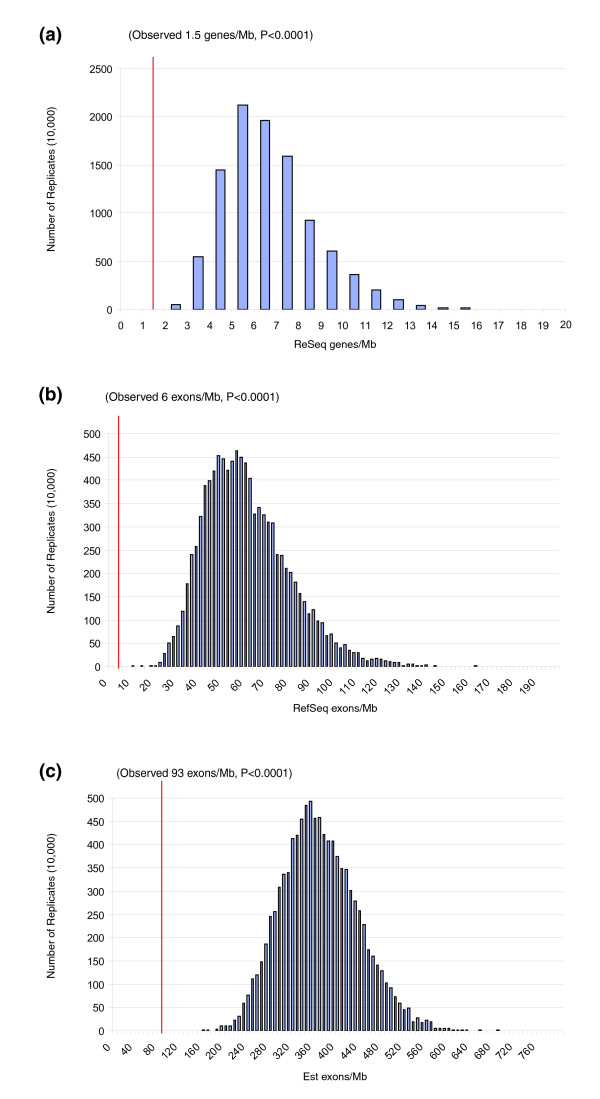
Our study suggests that restructuring of the seeding regions is an intrinsic property of novel evolutionary centromeres that could be regarded as potentially detrimental to the normal functioning of genes embedded in the region. The absence of genes, which was found to be of high statistical significance, appeared as a unique favorable scenario permissive of evolutionary-new centromere fixation in the population.
进化新着丝粒(ENC)是在进化过程中着丝粒在染色体上的异位位置播种产生的。新着丝粒迅速获得真核生物着丝粒典型的复杂结构。这种现象在塑造灵长类核型中发挥了重要作用。最近一项关于猕猴4号染色体(人类6号染色体)进化新着丝粒的研究表明,相对于假定为祖先的相应人类区域,进化新着丝粒区域在播种后发生了深度重组。还证明该区域没有基因。我们假设这两个观察结果并非偶然,并且播种区域中基因的缺失构成了进化新着丝粒在群体中固定的关键条件。
为了检验我们的假设,我们对根据保守标准选择的14个进化新着丝粒进行了表征。使用不同的实验方法,我们评估了基因组重组的程度。然后我们确定了每个进化新着丝粒播种的祖先区域中的基因密度。
我们的研究表明,播种区域的重组是新进化着丝粒的固有特性,这可能被认为对该区域中嵌入的基因的正常功能有潜在损害。基因缺失具有高度统计学意义,似乎是群体中允许进化新着丝粒固定的唯一有利情况。